Choosing the right capture card can make your livestream look sharper, run more smoothly, and feel far more professional to clients, customers, and internal teams.
This roundup of the best capture cards for business livestreaming focuses on reliability, video quality, latency, and compatibility so you can match the right model to your production needs.
Best 10 Capture Cards for Business Livestreaming Picks for 2026
Premium External Pick
Elgato 4K X for USB-C Streaming

- USB 3.2 Gen 2 for ultra-low latency
- HDMI 2.1 with 4K144 capture and 1080p240 recording
- Works with OBS, Zoom, Teams, and more
Best For: Portable business livestreaming and conferencing
High-End Internal Pick

- Internal PCIe card for desktop setups
- 4K60 HDR capture with 8K60 passthrough
- Supports dual-PC workflows and major apps
Best For: Fixed workstation and dual-PC streaming rigs
Budget-Friendly Hybrid Pick

- Captures up to 2K 30fps or 1080p 60fps
- USB-A and USB-C ports with plug-and-play setup
- HDMI loop-out for zero-latency preview
Best For: Simple, affordable streaming and monitoring
Easy Setup Pick
AVerMedia StreamLine MINI+ GC311G2

- Plug-and-play with no drivers needed
- 4K60 HDR passthrough and 1080p60 recording
- Works with OBS and AVerMedia Streaming Center
Best For: Beginner-friendly business livestream setups
Premium Camera-Input Pick
Elgato Cam Link 4K for DSLR and Mirrorless

- 1080p60 and up to 4K60 capture with compatible cameras
- Ultra-low latency for synced audio/video
- Works with DSLR, camcorder, action cam, and iPhone
Best For: Camera-first business livestreams and virtual presentations
Most Flexible HDMI Pick
Guermok 4K60 Capture Card with Audio

- 4K@60FPS capture plus 4K@60Hz passthrough
- 3.5mm audio input and mic output
- Plug-and-play across Windows, macOS, Linux, Android, and PadOS
Best For: Teams that need HDMI capture with monitoring and audio controls
Budget HDMI Starter
VIXLW 1080P60 USB 3.0 Capture Card

- Plug-and-play USB 3.0 capture with no external power
- HDMI loop-out for real-time monitoring
- Mic-in support for commentary
Best For: Simple 1080p business livestreaming on a budget
Portable USB-C Option
Guermok 4K USB3.0 HDMI Capture Card
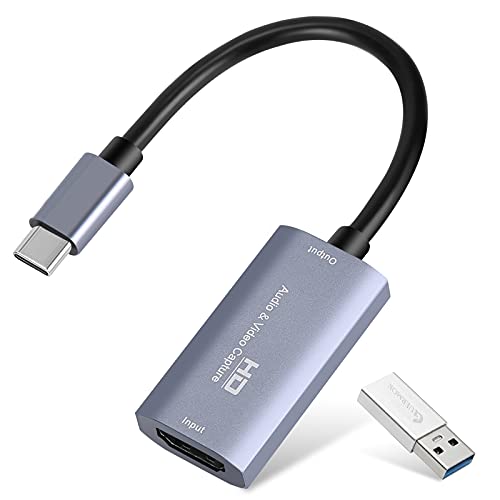
- 4K@30Hz input with 1080p 60FPS capture
- Plug-and-play over USB 3.0 or USB-C
- Compatible with OBS, Zoom, Windows, Mac, Linux, Android
Best For: Mobile business livestreams and quick meeting capture
Flexible Multi-Device Choice
VIXLW 4K USB3.0 HDMI Capture Card

- 4K@30Hz input with 1080p 60FPS capture
- Works with Windows, Mac, Linux, Android, OBS, and Zoom
- Compact plug-and-play design with low latency
Best For: Mixed-device business livestreaming and meeting setups
Budget-Friendly Pick
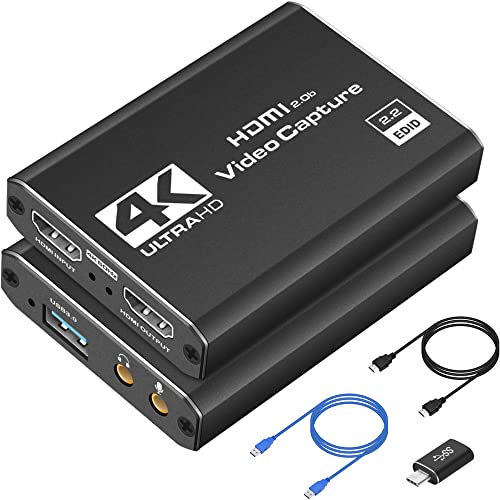
- 4K HDMI capture with 1080p 60FPS recording
- Works with OBS Studio, Streamlabs, and XSplit
- Compact, portable design for travel and events
Best For: Budget-conscious webinars and portable business capture
Premium External Pick – Elgato 4K X for USB-C Streaming
For capture cards for business livestreaming, the Elgato 4K X is a strong external choice if you want flexible compatibility and very low latency. It works with OBS, Streamlabs, Restream, Zoom, Teams, and more, so it fits everything from polished client demos to multi-platform broadcasts.
Best For: Teams and creators who need a portable capture card for business livestreaming across meetings, webinars, and live broadcasts.
Pros:
- USB 3.2 Gen 2 support keeps capture and gameplay closely synchronized with ultra-low latency.
- HDMI 2.1 in/out supports up to 4K144 capture and up to 1080p240 recording.
- VRR passthrough helps maintain smooth visuals with less screen tearing.
- Works with major streaming and conferencing apps including OBS, Zoom, Teams, and Twitch Studio.
Cons:
- Best results depend on having a compatible USB 3.2 Gen 2 port.
- Some supported capture modes require newer hardware and software requirements.
Overall, the 4K X is a versatile external capture option for users who want wide app support and next-gen passthrough in a compact setup.
High-End Internal Pick – Elgato 4K Pro PCIe Capture
If you are building a dedicated workstation for capture cards for business livestreaming, the Elgato 4K Pro is aimed at users who want an internal PCIe solution with strong passthrough and recording support. It is designed to work with OBS, Streamlabs, Restream, Zoom, Teams, and similar apps for professional workflows.
Best For: Desktop setups and dual-PC workflows that need an internal PCIe capture card for business livestreaming.
Pros:
- Internal PCIe design suits fixed desktop installations.
- HDMI 2.1 in/out supports 4K60 HDR capture and up to 1080p240 recording.
- 8K60 passthrough and VRR support help preserve a smooth local viewing experience.
- Compatible with major streaming and conferencing apps, including OBS, Zoom, and Teams.
Cons:
- Requires a Windows 10 system and a PCIe slot.
- Less convenient than an external card for travel or quick setup changes.
The 4K Pro is a practical fit when you want a more permanent, high-performance capture solution for a business streaming PC.
Budget-Friendly Hybrid Pick – UGREEN 2K Capture Card
For capture cards for business livestreaming on a tighter budget, the UGREEN model covers the essentials with plug-and-play setup and broad device support. It captures up to 2K 30fps or 1080p 60fps and adds loop-out monitoring, which is useful for simple live demos and recorded presentations.
Best For: Budget-conscious users who need a simple external capture card for business livestreaming and monitoring.
Pros:
- Supports up to 2K 30fps capture and 1080p 60fps recording.
- HDMI loop-out enables real-time preview and zero-latency monitoring.
- USB-A and USB-C connectivity makes it flexible across laptops and desktops.
- Plug-and-play design with no external power supply required.
Cons:
- 4K capture is not supported.
- PS4 and PS5 use requires HDCP to be turned off.
This is a solid value pick when you need broad compatibility and straightforward operation more than top-end capture specs.
Easy Setup Pick – AVerMedia StreamLine MINI+ GC311G2
Among capture cards for business livestreaming, the AVerMedia StreamLine MINI+ stands out for fast setup and a beginner-friendly workflow. It supports 4K60 HDR passthrough while recording in 1080p60, and it works with OBS plus AVerMedia’s own Streaming Center for quick going-live sessions.
Best For: Users who want a simple plug-and-play capture card for business livestreaming with easy software setup.
Pros:
- Plug-and-play USB capture card with no drivers needed.
- 4K60 HDR passthrough with 1080p60 recording.
- Ultra-low latency helps keep audio, video, and gameplay in sync.
- Works with OBS, CameraFi, Camo Studio, and AVerMedia Streaming Center.
Cons:
- Capture resolution tops out at 1080p60 rather than 4K recording.
- Some system requirements are specific to newer Windows, macOS, or iPadOS versions.
This model makes sense when quick setup and dependable pass-through matter more than maximum recording resolution.
Premium Camera-Input Pick – Elgato Cam Link 4K for DSLR and Mirrorless
If you want capture cards for business livestreaming that make a DSLR or mirrorless camera look like a polished webcam, the Elgato Cam Link 4K is built for that job. It connects through USB 3.0 and is designed for clean, low-latency camera capture, making it a strong fit for meetings, demos, webinars, and live presentations where image quality matters.
Best For: Businesses that want to turn a camera into a pro-level webcam for livestreams and virtual presentations.
Pros:
- Supports 1080p60 and up to 4K60 capture with a compatible camera
- Ultra-low latency helps keep audio and video in sync
- Works with DSLR, mirrorless cameras, camcorders, action cams, and even iPhone
- Includes an iPad preview use case for real-time monitoring
Cons:
- Requires a compatible camera to get the highest capture quality
- USB-A design may be less convenient on newer USB-C-only setups without adapters
For teams that prioritize a clean camera-first workflow, this model stands out for turning existing gear into a streaming-ready source. It is less of a general-purpose HDMI switch and more of a focused camera bridge, which is exactly what many business livestream setups need.
Most Flexible HDMI Pick – Guermok 4K60 Capture Card with Audio
Among capture cards for business livestreaming, this Guermok model is the most versatile if you need HDMI capture, passthrough, and audio inputs in one compact device. It supports up to 4K@60FPS capture over USB 3.0, includes 4K@60Hz HDMI passthrough for monitoring, and adds 3.5mm audio input plus mic output for commentary or external sound sources.
Best For: Live production setups that need HDMI capture, passthrough monitoring, and external audio integration.
Pros:
- Captures up to 4K@60FPS with 4K@60Hz passthrough
- Supports 2K@120FPS and 1080P@120FPS high-frame-rate input
- Includes 3.5mm audio input and microphone output
- Plug-and-play with broad support across Windows, macOS, Linux, Android, and PadOS
Cons:
- USB 2.0 limits resolution to 1080P
- Highest-performance use depends on a USB 3.0 or higher port
This is a practical pick for businesses that stream from multiple device types and want more control over monitoring and audio. Its broad compatibility makes it easier to fit into mixed workspaces, from live demos to webinar capture and screen mirroring.
Budget HDMI Starter – VIXLW 1080P60 USB 3.0 Capture Card
If you need a simple, lower-cost option for capture cards for business livestreaming, this VIXLW card covers the basics without adding much setup friction. It offers plug-and-play capture over USB 3.0, supports up to 1080p capture, and includes HDMI loop-out for live monitoring while you present or stream.
Best For: Small teams or solo presenters who want a straightforward HDMI capture card for 1080p streaming.
Pros:
- Plug-and-play setup with no driver or external power needed
- HDMI loop-out supports real-time monitoring with no delay
- Works with Windows and Mac OS
- Includes mic-in support for external commentary
Cons:
- Capture tops out at 1080p rather than higher 4K recording
- Output is limited to up to 2K30Hz according to the supplied notes
For straightforward business livestreams, this card is a dependable entry point because it focuses on the essentials: easy setup, HDMI passthrough, and webcam-style recognition. It is a better fit for teams prioritizing simplicity and cost control over advanced resolution support.
Portable USB-C Option – Guermok 4K USB3.0 HDMI Capture Card
If you need capture cards for business livestreaming that can handle meetings, demos, and lightweight production work, this Guermok model keeps the setup simple. It supports up to 4K@30Hz input and records at 1080p 60FPS, with plug-and-play operation over USB 3.0 or USB-C for quick use with common streaming and conferencing tools.
Best For: Portable business livestreams, online meetings, and quick capture setups where ease of use matters most.
Pros:
- Supports 4K@30Hz input and 1080p 60FPS capture for smooth live output.
- Plug-and-play design with no external power or extra drivers required.
- Works with Windows, Mac OS, Linux, Android, OBS, Zoom, and major streaming platforms.
- Compact aluminum-alloy build is easy to carry for outdoor or mobile sessions.
Cons:
- Notes specify it is for capture use only, not direct screen casting to a monitor or TV.
- Audio setup may require restarting OBS after configuration.
- USB 3.0 is recommended to maintain bandwidth and resolution.
For teams that value portability and broad compatibility over advanced production features, this is a practical no-fuss choice. It fits well as a backup or mobile capture solution for business livestreaming workflows.
Flexible Multi-Device Choice – VIXLW 4K USB3.0 HDMI Capture Card
Among capture cards for business livestreaming, this VIXLW unit stands out for teams that want simple setup across laptops, tablets, and cameras. It accepts 4K@30Hz input, captures at 1080p 60FPS or 2K@30Hz, and uses a USB 3.0/Type-C connection for straightforward streaming, recording, or video meetings.
Best For: Creators and business users who want a compact capture card that works across many devices and software setups.
Pros:
- 4K@30Hz HDMI input with up to 1080p 60FPS recording.
- Ultra-low latency design with aluminum alloy shell for stable heat dissipation.
- Plug-and-play operation with no driver or external power required.
- Wide compatibility with Windows, macOS, Linux, Android, OBS, Zoom, VLC, and more.
Cons:
- Tablet users need OTG enabled before connecting.
- Best results depend on using a USB 3.0 connection.
- The notes emphasize testing the HDMI source first to confirm audio and video output.
This is a strong general-purpose choice if you need one capture device that can move between business livestreams, cameras, and meeting rooms. Its broad compatibility makes it especially useful for mixed-device environments.
Budget-Friendly Pick – Dcyfol 4K HDMI Capture Card
If you want capture cards for business livestreaming that are easy to set up and travel with, this Dcyfol model is built around a straightforward plug-and-play workflow. It supports 4K HDMI capture with 1080p 60FPS recording, making it a sensible option for live demos, webinars, and recording sessions on Windows or Mac systems.
Best For: Small business streams, webinars, and portable recording setups that need simple operation and broad device support.
Pros:
- Captures 4K HDMI sources while recording at 1080p 60FPS.
- Plug-and-play USB setup with support for OBS Studio, Streamlabs, and XSplit.
- Compatible with PS5, PS4, Switch, Xbox, DSLR cameras, and PCs.
- Compact 1 x 1 x 2.7 inch design is easy to pack for travel or event use.
Cons:
- Requires a USB 3.0 port for proper operation.
- Compatibility is listed for MacOS and Windows only in the supplied details.
- Not aimed at advanced production features beyond basic capture and preview.
Overall, this is a practical budget-friendly capture card for business teams that need dependable streaming without a complicated setup. It balances portability, software support, and common device compatibility well.
How We Picked the Best Capture Cards for Business Livestreaming
We prioritized Capture Cards for Business Livestreaming that balance stable performance, clear video output, and straightforward setup. The strongest options support clean 1080p or 4K capture, low latency monitoring, and broad compatibility with common streaming and conferencing workflows.
We also favored models that make sense for real business use: dependable connectivity, sensible passthrough options, and hardware that can handle recurring live events, webinars, product demos, training sessions, and interviews without adding complexity.
Quick Comparison
For most teams, the best choice depends on source device and production goals. USB capture cards are usually the easiest to deploy for laptops and portable setups. Internal PCIe models are better for dedicated workstations that need maximum performance. Camera-centric options like the Cam Link style are ideal when the goal is to turn a DSLR or camcorder into a polished webcam.
Key Buying Factors for Capture Cards for Business Livestreaming
Resolution and Frame Rate
For presentations and webinars, 1080p60 is often enough and keeps workflows simple. If you need more flexibility for premium demos, multi-camera production, or futureproofing, consider 4K capture or 4K passthrough. Higher frame rates can improve motion clarity, but they are only useful if your camera, computer, and platform support them.
Latency and Passthrough
Low latency matters when you are switching scenes, demonstrating products, or speaking live with guests. Passthrough lets you monitor the original signal on a separate display while capturing a feed for your software, which can reduce delays and improve confidence on camera.
Connection Type and Compatibility
USB 3.0 models are typically easiest for business users who need a plug-and-play solution. USB-C can simplify modern laptop connections, while internal capture cards are best for desktop systems with available expansion slots. Always confirm support for your operating system, streaming software, and source devices before buying.
Audio Handling
Businesses often overlook audio, but clean sound matters as much as video. Look for capture cards that support reliable embedded audio, external mic workflows, or easy monitoring so voiceovers, interviews, and demonstrations stay intelligible.
Who Should Buy Which Capture Cards for Business Livestreaming?
If you want the simplest setup for meetings, webinars, and live product demos, a standard USB capture card is usually the safest choice. If your business uses a dedicated streaming PC and needs higher-end throughput, an internal card is a stronger long-term investment. If you plan to use a camera as your main source, a compact camera capture solution is the most practical path. For teams buying Capture Cards for Business Livestreaming, the best option is the one that fits your source gear, production frequency, and technical comfort level rather than the one with the highest specs on paper.