The best RAID enclosures for data security make it easier to protect important files, expand storage, and recover from a drive failure without committing to a full NAS. The right model depends on your drive type, capacity target, RAID needs, and connection speed.
This roundup compares 10 diskless enclosures covering two-, four-, five-, and ten-bay designs, including hardware RAID, USB-C connectivity, cooling, and support for both 2.5-inch and 3.5-inch SATA drives.
Best 10 Raid Enclosures for Data Security Picks for 2026
QNAP TR-004
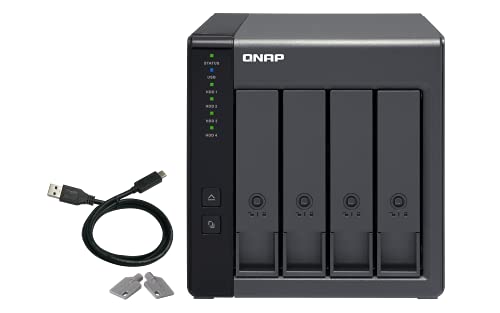
- Four-bay USB Type-C direct-attached storage
- Supports RAID 0, 1, 5, JBOD, and individual disks
- Lockable bays and metal enclosure
Best For: QNAP backup, direct-attached redundancy, and expandable desktop storage
NEWQ Dual-Bay

- Dual M.2 2280 NVMe SSD bays
- RAID 1 mirroring plus offline clone mode
- 20Gbps USB 3.2 data transfer
Best For: Portable NVMe redundancy, cloning, and high-speed file handling
TERRAMASTER D2-320

- Two-bay SATA DAS with RAID 0, 1, JBOD, and Single
- RAID 1 rebuilds after drive replacement
- USB 3.2 Gen 2 supports up to 10Gbps
Best For: Straightforward mirrored backups and flexible SATA storage
ORICO 9848RU3

- Four 3.5-inch bays and up to 88TB capacity
- Eight RAID and disk configuration modes
- 150W power supply with aluminum cooling design
Best For: High-capacity media, project storage, and flexible multi-drive backups
Best Overall Hardware RAID
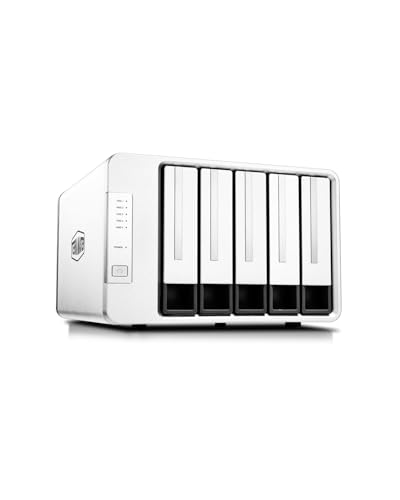
- Five-bay hardware RAID enclosure
- Supports RAID 5, 1, 10, 0, and Single
- Up to 120TB with hot spare support
Best For: High-capacity, redundancy-focused storage
Best High-Speed Four-Bay Option

- Four bays and six RAID modes
- Up to 104TB of storage
- USB 3.2 Gen 2x2 up to 20Gbps
Best For: Professional high-capacity storage workflows
Best Compact Mirrored Storage

- Two-bay RAID enclosure for SATA drives
- RAID 1 mirroring with drive replacement recovery
- Tool-free, hot-swappable design
Best For: Simple personal or small-business mirrored storage
High-Capacity Pick
Yottamaster PS500RC3 5-Bay RAID Enclosure

- Five bays support 2.5-inch and 3.5-inch SATA drives
- RAID 0/1/3/5/10, JBOD, and CLONE modes
- Up to 110TB stated capacity with USB-C connectivity
Best For: Large media libraries and demanding desktop storage workflows
Compact RAID Pick
CENMATE 2-Bay Aluminum RAID Enclosure

- Two bays support 2.5-inch and 3.5-inch SATA drives
- Includes RAID 0, RAID 1, Normal, and JBOD modes
- USB-A/C 3.0 connectivity with aluminum cooling design
Best For: Personal or small-office two-drive storage setups
Maximum-Bay Pick

- Ten bays support 2.5-inch and 3.5-inch SATA drives
- Eight listed RAID and storage modes for flexible configurations
- USB 3.0 and eSATA connectivity with up to 200TB stated capacity
Best For: Large archives and multi-drive direct-attached storage systems
QNAP TR-004 – 4-Bay Hardware RAID DAS
QNAP TR-004 4 Bay USB Type-C Direct Attached Storage (DAS) with hardware RAID (Diskless)
Check Price On AmazonThe QNAP TR-004 is a practical choice among RAID enclosures for data security when you need a directly attached, diskless storage unit with flexible hardware RAID. It connects over USB Type-C to Windows, macOS, or Linux systems and can also serve as external backup storage for a QNAP NAS.
Best For: Users seeking a lockable four-drive DAS for RAID 1 or RAID 5 storage, NAS backup, or capacity expansion.
Pros:
- Supports RAID 0, 1, 5, JBOD, and individual-disk configurations.
- Four 3.5-inch SATA drive bays accommodate larger storage setups.
- Lockable bays and a metal enclosure add practical physical protection.
- Works with Windows, macOS, and Linux through USB Type-C.
Cons:
- Ships diskless, so drives must be purchased separately.
- It is a DAS rather than a NAS and does not run NAS applications.
- QNAP NAS compatibility has specific model and QTS version limitations.
The TR-004 stands out for users who want hardware-managed redundancy without deploying another network appliance. Check compatibility carefully if connecting it to a QNAP NAS, particularly because its storage pool cannot be combined with the NAS pool.
NEWQ Dual-Bay – NVMe RAID and Clone Enclosure
The NEWQ dual-bay enclosure is designed for buyers comparing RAID enclosures for data security in a compact NVMe format. It accepts two M.2 2280 NVMe SSDs and offers RAID 1 mirroring, RAID 0 performance, JBOD, and offline cloning over a USB 3.2 connection.
Best For: Professionals who need portable dual-SSD redundancy, fast transfers, or convenient drive cloning.
Pros:
- RAID 1 automatically mirrors data across the two SSDs.
- Supports RAID 0, RAID 1, JBOD, and direct clone mode.
- 20Gbps transfer speeds suit large files and data-intensive work.
- Tool-free installation and an aluminum casing improve portability and usability.
Cons:
- Compatible with M.2 2280 NVMe SSDs rather than 3.5-inch hard drives.
- It is an enclosure only and does not include SSD storage.
- High-capacity dual-drive setups may require the auxiliary USB-C input for stable operation.
This model is a focused option for fast, portable SSD storage rather than a general-purpose desktop array. RAID 1 is the relevant mode when redundancy matters most, while clone mode adds a useful offline duplication workflow.
TERRAMASTER D2-320 – 2-Bay USB RAID Enclosure
The TERRAMASTER D2-320 is a two-bay DAS for shoppers evaluating RAID enclosures for data security with SATA hard drives or SSDs. Its USB 3.2 Gen 2 interface supports fast direct-attached transfers, while RAID 1 provides mirrored storage and automatic recovery after replacing a damaged drive.
Best For: Home and small-office users who want a simple two-drive backup enclosure with broad Windows, Mac, and Linux support.
Pros:
- Supports RAID 0, RAID 1, JBOD, and Single modes.
- RAID 1 mirrors data and can rebuild after a failed drive is replaced.
- Accepts 3.5-inch and 2.5-inch SATA HDDs or 2.5-inch SATA SSDs.
- Tool-free trays and temperature-controlled fan simplify installation and cooling.
Cons:
- Ships diskless, so storage drives are not included.
- It is direct-attached storage, not a network-accessible NAS.
- Plastic construction may feel less substantial than an aluminum enclosure.
The D2-320 balances accessible RAID 1 protection with useful capacity flexibility. Its two-drive design is easier to configure than a larger array, while support for drives up to 22TB each gives it substantial expansion potential.
ORICO 9848RU3 – 4-Bay 88TB RAID Enclosure
The ORICO 9848RU3 is built for high-capacity desktop storage and is a strong candidate among RAID enclosures for data security. It supports four 3.5-inch SATA drives, eight configuration modes, and up to 88TB of total capacity through a USB 3.0 direct-attached connection.
Best For: Users managing large media libraries, engineering files, or multi-drive backups who need flexible RAID choices and substantial capacity.
Pros:
- Supports RAID 0, 1, 3, 5, 10, JBOD, Clone, and Clear modes.
- Four bays support drives up to 22TB each for a stated 88TB maximum.
- Built-in 150W power supply supports multi-drive operation.
- Aluminum housing, an 80mm fan, vents, and safety locks support sustained use.
Cons:
- Ships without hard drives.
- USB 3.0 transfer performance is lower than newer USB 3.2 Gen 2 enclosures.
- Only a one-year warranty is listed in the supplied specifications.
The 9848RU3 is the most capacity-oriented option in this group. Its broad RAID selection makes it adaptable, but buyers should choose the mode carefully and maintain separate backups because RAID itself is not a replacement for backup.
Best Overall Hardware RAID – TERRAMASTER D5-310
For shoppers comparing raid enclosures for data security, the TERRAMASTER D5-310 stands out with five bays, hardware-controlled RAID, and a hot spare feature. It supports RAID 5, 0, 1, 10, and Single modes, making it suitable for both redundancy-focused storage and flexible direct-attached use.
Best For: Users who need high-capacity, multi-drive storage with hardware RAID and broad Windows, macOS, and Linux compatibility.
Pros:
- Hardware RAID supports RAID 5, 0, 1, 10, and Single modes.
- Hot spare support can help replace failed drives in RAID 1, 5, or 10 configurations.
- Five bays support up to 120TB total using drives up to 24TB each.
- Includes scheduled, incremental, and differential backup software for Windows.
Cons:
- Diskless design requires purchasing compatible drives separately.
- USB 3.1 Gen 1 is rated at up to 5Gbps, below newer 20Gbps enclosures.
The D5-310 is a strong choice when data protection and expandable capacity matter more than the newest connection standard. Its hardware RAID controls and hot spare support simplify a security-minded storage setup.
Best High-Speed Four-Bay Option – ORICO 9948RC3-PRO
The ORICO 9948RC3-PRO is designed for raid enclosures for data security in demanding workflows, combining four drive bays, six RAID modes, and a USB 3.2 Gen 2×2 connection. Its built-in power supply, hot-swap support, and cooling system make it a practical fit for professional storage management.
Best For: Video editors, enterprise IT users, and research or AI professionals who need fast, high-capacity multi-drive storage.
Pros:
- Offers RAID 0, 1, 5, 10, JBOD, and Normal modes.
- Supports up to 104TB across four 3.5-inch SATA drives.
- USB 3.2 Gen 2×2 provides up to 20Gbps with a compatible USB4 connection.
- Aluminum construction, cooling grille, and a low-noise 45dB fan support sustained operation.
Cons:
- Thunderbolt connections are limited to about 10Gbps according to the supplied specifications.
- Changing RAID modes erases drive contents, so backups are required before reconfiguration.
- Includes a one-year warranty.
With RAID 5 and RAID 10 available alongside a fast USB interface, the ORICO is well suited to performance-oriented users. Its capacity and hot-swap design add practical flexibility, provided the host connection can take advantage of its speed.
Best Compact Mirrored Storage – ICY BOX IB-RD3720-CU3
The ICY BOX IB-RD3720-CU3 offers a straightforward approach to raid enclosures for data security, with two bays for 2.5-inch or 3.5-inch SATA drives and a physical switch for selecting RAID modes. RAID 1 provides mirrored storage, while hot swapping and active cooling make routine drive management easier.
Best For: Individuals and small businesses seeking a compact, easy-to-configure mirrored backup enclosure.
Pros:
- Supports RAID 0, RAID 1, Single, and Large modes through an integrated DIP switch.
- RAID 1 mirrors data and supports automatic recovery after drive replacement.
- Tool-free trays and hot swapping simplify installation and drive changes.
- Temperature-controlled fan, status LEDs, and USB-A/USB-C connectivity add practical convenience.
Cons:
- Two bays and 5Gbps USB connectivity offer less expansion and speed than larger newer models.
- It does not list RAID 5 or RAID 10 support.
- RAID configuration still requires backing up important data before use.
The ICY BOX is a sensible choice for users prioritizing simple mirrored protection over maximum capacity. Its physical RAID selector, hot-swap capability, and compact two-drive design keep setup and maintenance approachable.
High-Capacity Pick – Yottamaster PS500RC3 5-Bay RAID Enclosure
For shoppers comparing raid enclosures for data security, the Yottamaster PS500RC3 combines five drive bays with flexible RAID options and up to 110TB of stated capacity. Its USB-C connection, aluminum construction, and temperature-controlled cooling make it a practical choice for large desktop or video-storage workflows.
Best For: Photographers, video editors, and users managing large backups or media libraries.
Pros:
- Supports RAID 0/1/3/5/10, JBOD, and CLONE modes.
- Holds up to five 2.5-inch or 3.5-inch SATA HDDs or SSDs, with up to 110TB stated capacity.
- Includes removable trays, USB 3.1 Type-C connectivity, and an intelligent 80mm fan.
Cons:
- Five-drive operation requires total drive power consumption of no more than 78W unless additional power is supplied.
- New drives may need formatting and partitioning before recognition.
- USB transfer speed is rated up to 5Gbps rather than a faster USB standard.
The PS500RC3 stands out when capacity and RAID flexibility matter more than compact size. Hardware and software RAID options add setup flexibility, while the cooling system supports sustained use; however, buyers should verify drive power requirements and maintain separate backups.
Compact RAID Pick – CENMATE 2-Bay Aluminum RAID Enclosure
Among raid enclosures for data security, this two-bay CENMATE model offers a simpler setup for personal or small-office storage. It supports RAID 0 and RAID 1 alongside Normal and JBOD modes, and includes both USB-A and USB-C 3.0 cable compatibility.
Best For: Users who want a compact two-drive enclosure with basic RAID flexibility.
Pros:
- Supports RAID 0, RAID 1, Normal, and JBOD modes.
- Accepts 2.5-inch and 3.5-inch SATA HDDs or SSDs up to 20TB per drive.
- Aluminum housing, cooling fan, USB-A/C 3.0 connectivity, and plug-and-play support for Windows, Mac, and Linux.
Cons:
- The fan is rated around 40–50 decibels and may be noticeable in quiet spaces.
- Changing or resetting RAID configurations may cause data loss and requires following the reset procedure.
- Mac systems do not have RAID software support according to the supplied notes.
This CENMATE enclosure is a straightforward option when two drives are enough and RAID 1 redundancy is the main goal. Its capacity and compatibility are useful for everyday backups, but the audible fan and RAID setup precautions should be considered before purchase.
Maximum-Bay Pick – CENMATE 10-Bay RAID Enclosure
For buyers needing extensive direct-attached storage, this CENMATE model is one of the largest raid enclosures for data security in this roundup. It provides ten bays, multiple RAID layouts, USB 3.0 and eSATA connectivity, and stated support for up to 200TB with compatible drives.
Best For: Enterprise-style desktop storage, large archives, and users managing many SATA drives.
Pros:
- Ten bays accept 2.5-inch and 3.5-inch SATA HDDs or SSDs.
- Offers eight listed modes, including CLONE, RAID 0, RAID 5, RAID 50, RAID 00, LARGE, and NORMAL.
- Includes USB 3.0 and eSATA connections, a 12V power adapter, and two cooling fans.
Cons:
- At least two drives are required, with one installed in each five-drive group.
- RAID changes can format drives and require a specific power, switch, and reset procedure.
- Fans are rated around 40–50 decibels; the enclosure is not ideal for noise-sensitive environments.
The 10-bay design offers substantial expansion for a DAS rather than a NAS, but it demands careful installation. Load and test drives individually, confirm compatibility—particularly for 20TB models—and make a complete backup before configuring RAID.
How We Picked These Raid Enclosures for Data Security
We selected enclosures across several storage needs rather than treating bay count as the only measure of value. Our criteria included RAID modes, drive compatibility, maximum supported capacity, hardware versus software RAID, connection standards, cooling, installation convenience, and overall suitability for backup workflows.
Because these are diskless products, the enclosure is only part of the system. Your drives, backup schedule, power protection, and RAID configuration all affect real-world data safety. RAID can improve availability after a drive failure, but it is not a substitute for an independent backup.
Quick Comparison
| Best For | Recommended Type | What to Look For |
|---|---|---|
| Portable SSD protection | Dual-bay M.2 enclosure | NVMe compatibility, cloning, RAID 1, and USB 3.2 Gen 2×2 |
| Home and office backups | Two- or four-bay SATA enclosure | RAID 1 or RAID 5 support, cooling, and simple setup |
| Large media libraries | Five-bay enclosure | High capacity, fan control, and reliable sustained transfers |
| Maximum local capacity | Ten-bay enclosure | Drive compatibility, power delivery, cooling, and host connectivity |
Key Buying Factors for Raid Enclosures for Data Security
Choose the Right RAID Level
RAID 1 mirrors data across two drives and is usually the simplest choice for personal documents and critical backups. RAID 5 can offer better usable capacity in multi-bay systems while tolerating one failed drive, but rebuilding may take considerable time. RAID 0 improves speed and capacity with no redundancy, so it should not hold the only copy of important data. JBOD treats disks independently and can be useful when flexibility matters more than redundancy.
Check Drive and Capacity Support
Confirm whether the enclosure accepts SATA HDDs, SATA SSDs, M.2 NVMe drives, or a combination. Also check supported drive sizes and total capacity. A five-bay or ten-bay model may offer substantial expansion, but the host computer, operating system, partition format, and included power supply can limit practical capacity.
Match the Connection to Your Workflow
USB 3.0 is adequate for routine backups, while USB 3.2 Gen 2 and Gen 2×2 can reduce transfer times when the computer supports the same standard. A fast enclosure cannot overcome a slower host port or hard drive. For sustained transfers, prioritize cooling and stable power as much as headline interface speed.
Prioritize Cooling and Recovery Features
Fans, aluminum construction, ventilation, drive-status indicators, and tool-free trays can improve long-term usability. Look for clear RAID controls and verify how the enclosure signals a failed drive. Before installing disks, read the manual to understand RAID creation, migration, replacement, and rebuild behavior.
Who Should Buy Which Raid Enclosures for Data Security?
Choose a compact dual-bay SSD enclosure if you need fast portable storage, cloning, or a mirrored setup for smaller data sets. A two-bay SATA unit is a practical fit for basic home backups and RAID 1. Four-bay models offer a useful balance of capacity, redundancy, and desk space for offices and media collections. Five-bay enclosures suit users who need more capacity or additional RAID flexibility. A ten-bay enclosure is best for demanding local archives and large collections, provided you have adequate cooling, power, and a backup plan beyond the enclosure.