A reliable business mesh Wi-Fi system can eliminate dead zones, support busy device networks, and make connectivity easier to manage across offices, retail spaces, and professional workspaces. The right setup depends on more than advertised speed: coverage, backhaul design, Ethernet ports, security tools, and scalability all matter.
We compare 10 mesh systems spanning affordable Wi-Fi 6 models and newer Wi-Fi 7 platforms, helping you match network performance and features to your space, internet plan, and workload.
Best 10 Business Mesh Wifi System Picks for 2026
Best Value Coverage

- Wi-Fi 6 coverage up to 6,500 square feet
- Supports up to 150 devices
- Three Gigabit ports per unit with wired backhaul
Best For: Small offices and home businesses needing broad, flexible coverage
Best Wi-Fi 7 Upgrade

- Supports plans up to 2.5 Gbps
- Wi-Fi 7 with MLO and TrueMesh software
- Covers up to 6,000 square feet
Best For: Small offices wanting multi-gigabit, future-ready Wi-Fi
Best for Capacity
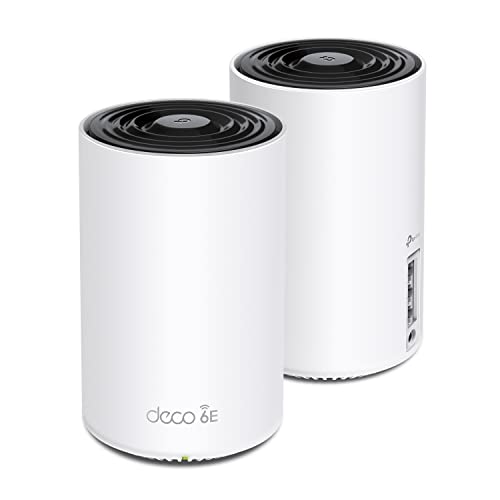
- Tri-band Wi-Fi 6E with a 6 GHz band
- Supports up to 200 devices
- Up to 5,500 square feet of coverage
Best For: Busy offices with compatible Wi-Fi 6E devices
Best Simple Gigabit Option

- Supports plans up to a gigabit
- Covers up to 4,500 square feet
- TrueMesh routing and app-based setup
Best For: Small offices wanting simple, reliable gigabit Wi-Fi
Top Performance Pick
TP-Link Deco BE63 Wi-Fi 7 Mesh

- Covers up to 5,800 sq. ft. and 200+ devices
- Tri-band Wi-Fi 7 with up to 10,000 Mbps advertised speed
- Multiple 2.5G ports, USB 3.0, and 10G connectivity
Best For: Large, device-heavy networks needing extensive wired and wireless capacity
Best Three-Pack Value

- Three nodes cover up to 6,000 sq. ft.
- Wi-Fi 7 speeds up to 5 Gbps
- Simple app setup with enhanced backhaul
Best For: Small workspaces needing wide coverage and straightforward management
Best for Small Businesses

- Covers up to 6,000 sq. ft. and 600+ devices
- Supports plans up to 5 Gbps with 5 GbE ports
- Automated TrueMesh and connection optimization
Best For: High-density home and small-business networks with demanding bandwidth needs
Best with Extra Features
TP-Link Deco X15 Wi-Fi 6 3-Pack
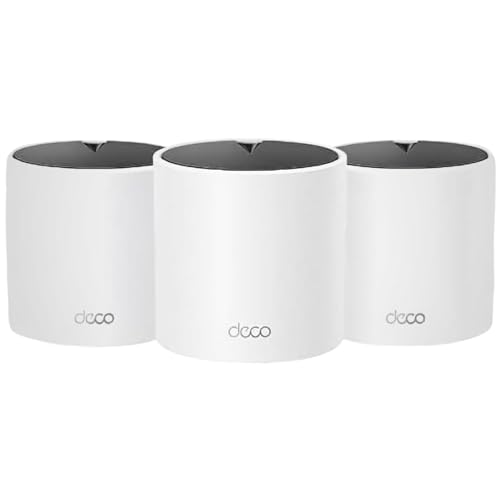
- Wi-Fi 6 dual-band mesh for up to 5,600 sq. ft.
- Supports up to 120 connected devices
- Six Gigabit Ethernet ports with wired backhaul
Best For: Small offices and home-work networks needing broad, affordable coverage
Best for High-Density Networks

- Tri-band Wi-Fi 7 with up to 8,647 Mbps on 6 GHz
- Covers up to 8,100 sq. ft. and 200+ devices
- 10Gbps, 2.5Gbps, and 1Gbps ports on every unit
Best For: Large, device-heavy offices with multi-gigabit networking
Best Midrange Wi-Fi 7 Pick

- Dual-band Wi-Fi 7 with up to 5,000 Mbps
- Covers up to 6,600 sq. ft. and 150+ devices
- 2.5Gbps Ethernet and expandable Deco mesh
Best For: Growing small businesses wanting Wi-Fi 7 without a premium tri-band system
Best Value Coverage – TP-Link Deco X55 3-Pack
For shoppers comparing a business mesh wifi system on a budget, the TP-Link Deco X55 3-pack offers broad coverage, Wi-Fi 6 performance, and plenty of wired connectivity. It covers up to 6,500 square feet, supports up to 150 devices, and can use Ethernet backhaul for more consistent node-to-node speeds.
Best For: Small offices, home businesses, and larger spaces needing dependable Wi-Fi 6 coverage and multiple Ethernet ports.
Pros:
- Up to 6,500 square feet of claimed mesh coverage.
- Supports up to 150 connected devices.
- Three Gigabit Ethernet ports on each unit, with wired backhaul support.
- Includes app management, HomeShield features, and WPA3 support.
Cons:
- Dual-band design lacks the dedicated 6 GHz band found on Wi-Fi 6E systems.
- Most internet providers require a separate modem.
The Deco X55 is a practical business mesh wifi system for users who value coverage, device capacity, and wired expansion over the newest wireless standard. Its three-pack and Ethernet backhaul support make it especially flexible for offices with multiple work areas.
Best Wi-Fi 7 Upgrade – Amazon eero 7 3-Pack
The Amazon eero 7 is a forward-looking business mesh wifi system for offices with fast internet plans and many connected devices. Its three units cover up to 6,000 square feet, support plans up to 2.5 Gbps, and include dual 2.5 GbE ports on each router.
Best For: Small businesses and home offices that want Wi-Fi 7 features, multi-gigabit support, and simple app-based management.
Pros:
- Supports internet plans up to 2.5 Gbps.
- Two auto-sensing 2.5 GbE ports per unit.
- Three-pack supports 120-plus devices and covers up to 6,000 square feet.
- Includes TrueMesh, TrueRoam, and TrueChannel software features.
Cons:
- Advanced security features require an optional eero Plus subscription.
- It is a dual-band system rather than a tri-band model.
Choose the eero 7 when multi-gigabit networking and Wi-Fi 7 future-proofing matter more than extensive built-in security without a subscription. Its software-driven roaming and straightforward setup are useful for smaller teams without dedicated network staff.
Best for Capacity – TP-Link Deco XE75 2-Pack
The TP-Link Deco XE75 is a strong business mesh wifi system choice when capacity and reduced wireless interference are priorities. Its tri-band Wi-Fi 6E design adds a 6 GHz band that can serve compatible devices or provide a dedicated backhaul between the two nodes.
Best For: Small offices with compatible Wi-Fi 6E devices, busy networks, and a need for efficient wireless backhaul.
Pros:
- Tri-band Wi-Fi 6E delivers combined speeds up to 5,400 Mbps.
- 6 GHz band can reduce interference from legacy devices.
- Claims coverage up to 5,500 square feet for up to 200 devices.
- Includes network security, QoS, parental controls, and IoT identification features.
Cons:
- Only two units are included, providing less placement flexibility than a three-pack.
- The 6 GHz benefits require compatible Wi-Fi 6E devices.
- Its Ethernet ports are Gigabit rather than multi-gigabit.
The Deco XE75 is the better fit for a busy workspace that can take advantage of Wi-Fi 6E. Its dedicated 6 GHz backhaul option can help maintain mesh performance, while the two-node design suits moderately large layouts.
Best Simple Gigabit Option – Amazon eero 6+ 3-Pack
The Amazon eero 6+ is a straightforward business mesh wifi system for smaller offices that need reliable gigabit-class connectivity without a complicated setup. The three-pack covers up to 4,500 square feet, connects more than 75 devices, and uses TrueMesh routing to help reduce dead spots and drop-offs.
Best For: Small offices and home-based businesses that prioritize easy installation, automatic updates, and dependable everyday Wi-Fi.
Pros:
- Supports internet plans up to a gigabit.
- Three-pack covers up to 4,500 square feet.
- Supports more than 75 connected devices.
- Built-in Thread and Zigbee smart home hub functionality.
Cons:
- Coverage and device capacity are lower than the other listed three-packs.
- Advanced security and management features require a separate subscription.
- It does not offer Wi-Fi 6E or Wi-Fi 7.
The eero 6+ makes sense when a small business wants a simple, low-maintenance mesh setup for gigabit service. Its app-led installation, automatic updates, and built-in smart home hub add convenience, though larger or more demanding offices may need a higher-capacity system.
Top Performance Pick – TP-Link Deco BE63 Wi-Fi 7 Mesh
For a business mesh wifi system that prioritizes capacity and wired flexibility, the TP-Link Deco BE63 is a strong fit. This two-pack covers up to 5,800 square feet, supports more than 200 devices, and combines tri-band Wi-Fi 7 with multi-gig Ethernet for demanding connected environments.
Best For: Large homes, home offices, and performance-focused users with many connected devices.
Pros:
- Wi-Fi 7 tri-band performance with advertised combined speeds up to 10,000 Mbps.
- Up to 5,800 square feet of coverage and support for more than 200 devices.
- Four 2.5G WAN/LAN ports, a USB 3.0 port, and a 10G WAN/LAN connection for future expansion.
- App management, AI-assisted roaming, parental controls, and IoT security features.
Cons:
- Requires a separate modem.
- Actual wireless performance varies with distance, walls, obstacles, and connected devices.
- Some advanced security features may depend on service availability or configuration.
The BE63 stands out when a network needs substantial coverage, high device capacity, and multiple fast wired connections. It is more capability than many smaller spaces require, but its hardware gives a business mesh wifi system room to grow.
Best Three-Pack Value – NETGEAR Orbi 370 Wi-Fi 7 Mesh
The NETGEAR Orbi 370 Series is a practical business mesh wifi system for spreading reliable coverage across a larger property. Its router-and-two-satellite package covers up to 6,000 square feet, supports up to 70 devices, and is designed for internet plans up to 2.5 Gbps.
Best For: Homes and small workspaces that need broad three-node coverage and simple app-based setup.
Pros:
- Three-piece system provides coverage up to 6,000 square feet.
- Wi-Fi 7 speeds up to 5 Gbps with enhanced backhaul.
- Supports cable or fiber equipment and plans up to 2.5 Gbps.
- Guided Orbi app setup, guest-network management, automatic updates, and built-in security features.
Cons:
- Supports up to 70 devices, fewer than some competing systems in this roundup.
- NETGEAR Armor security includes a 30-day trial and requires a separate subscription afterward.
- Made for use in the US only.
Orbi 370 keeps the installation straightforward while delivering the reach of a three-pack. It is a sensible choice for a small business or home office that values broad coverage and uncomplicated management over maximum device capacity.
Best for Small Businesses – Amazon eero Pro 7 Mesh
The Amazon eero Pro 7 is designed for high-bandwidth home and small-business networks. This three-pack covers up to 6,000 square feet, supports more than 600 devices, and includes two auto-sensing 5 GbE ports per unit for fast wired connections.
Best For: Small or medium-sized businesses and homes with many devices, demanding internet plans, and a preference for automated network management.
Pros:
- Supports internet plans up to 5 Gbps and wireless speeds up to 3.9 Gbps.
- Three units cover up to 6,000 square feet and support 600+ devices.
- Two auto-sensing 5 GbE ports per unit provide flexible wired connectivity.
- TrueMesh, TrueRoam, and TrueChannel help optimize connections automatically.
Cons:
- Advanced security, ad blocking, parental controls, VPN, and related tools require an optional eero Plus subscription.
- Wireless speeds and coverage depend on network conditions and device placement.
- The supplied notes do not specify a separate modem requirement or detailed port count beyond the 5 GbE ports.
With unusually high stated device capacity and 5 GbE ports, eero Pro 7 is especially appealing for busy small-business networks. Its subscription-based advanced security is worth factoring into the total cost if those features are important.
Best with Extra Features – TP-Link Deco X15 Wi-Fi 6 3-Pack
The TP-Link Deco X15 is a practical business mesh wifi system for small offices, home offices, and other spaces that need dependable whole-home coverage without moving to premium Wi-Fi 7 hardware. Its three-node Wi-Fi 6 design covers up to 5,600 square feet, supports up to 120 devices, and offers wired backhaul through Gigabit Ethernet.
Best For: Small businesses and home offices seeking broad coverage, simple management, and support for many everyday connected devices.
Pros:
- Wi-Fi 6 dual-band performance with up to 1,501 Mbps combined data rate
- Up to 5,600 square feet of coverage and support for up to 120 devices
- Six Gigabit Ethernet ports across the three-pack, with wired backhaul support
- Deco app setup, AI-assisted roaming, guest Wi-Fi, and basic network security tools
Cons:
- Dual-band design has less capacity than a tri-band system for demanding networks
- Gigabit Ethernet may limit performance on multi-gigabit internet plans
- Some advanced security features are part of TP-Link’s premium service
For a modest office or distributed home-work setup, the Deco X15 balances coverage, device capacity, and manageable cost. It is the sensible choice when Wi-Fi 6 is sufficient and multi-gig wired connectivity is not a priority.
Best for High-Density Networks – Deco 7 Pro Wi-Fi 7 3-Pack
The Deco 7 Pro is a high-capacity business mesh wifi system designed for large spaces and demanding connectivity. Its tri-band Wi-Fi 7 platform covers up to 8,100 square feet, supports more than 200 devices, and includes 10Gbps, 2.5Gbps, and 1Gbps WAN/LAN ports on each unit.
Best For: Large offices, multi-device environments, and users with multi-gigabit internet or high-performance Wi-Fi 7 equipment.
Pros:
- Tri-band Wi-Fi 7 with stated speeds up to 8,647 Mbps on 6 GHz
- Coverage up to 8,100 square feet for more than 200 devices
- 10Gbps, 2.5Gbps, and 1Gbps ports support multi-gig wired networking
- Includes USB 3.0, Multi-Link Operation, AI roaming, and VPN client/server support
Cons:
- Its capabilities may exceed the needs of smaller offices or standard broadband plans
- Wi-Fi 7 benefits depend on compatible client devices
- Requires a separate modem, and premium security features may involve additional service costs
The Deco 7 Pro is the strongest fit here for capacity and future-facing connectivity. Its extensive wired ports and tri-band architecture make it particularly suitable for businesses managing many simultaneous clients, although smaller networks may not justify the added capability.
Best Midrange Wi-Fi 7 Pick – Deco 7 BE5000 Mesh System
The Deco 7 BE5000 offers a middle ground for buyers who want a modern business mesh wifi system without stepping up to a tri-band model. Its dual-band Wi-Fi 7 design delivers up to 5,000 Mbps, covers up to 6,600 square feet, and supports more than 150 devices.
Best For: Growing small businesses that want Wi-Fi 7 features, 2.5Gbps networking, and room to expand their mesh later.
Pros:
- Wi-Fi 7 dual-band performance with up to 4,324 Mbps on 5 GHz
- Coverage up to 6,600 square feet for more than 150 devices
- 2.5Gbps Ethernet and wireless/wired backhaul help balance traffic between nodes
- Expandable with additional Deco routers and managed through the Deco app
Cons:
- Dual-band architecture offers less spectrum capacity than the Deco 7 Pro’s tri-band design
- Backhaul requires at least two Deco units
- A separate modem is required, and advanced security features may require premium service
This Deco 7 model is a sensible compromise for offices that need Wi-Fi 7 and multi-gig potential but do not require the maximum coverage or port selection of the Pro system. Its expandable design also gives smaller businesses a straightforward upgrade path.
How We Picked the Best Business Mesh Wifi System
We evaluated these systems by comparing wireless generation, coverage claims, capacity, band configuration, wired connectivity, management features, and overall suitability for small businesses. Wi-Fi 6 models can still be excellent value for standard office work, video calls, point-of-sale devices, and cloud applications. Wi-Fi 6E and Wi-Fi 7 systems are more compelling when you have newer client devices, multi-gigabit internet, heavy local transfers, or a need for additional wireless capacity.
Because real-world performance varies with building materials, interference, client hardware, and node placement, advertised square-footage figures should be treated as planning estimates rather than guarantees.
Quick Comparison
| Best For | Recommended Direction | Why It Matters |
|---|---|---|
| Value-focused offices | Wi-Fi 6 dual-band mesh | Lower cost with dependable coverage and mainstream device support |
| Busy networks | Tri-band Wi-Fi 6E or Wi-Fi 7 | More wireless capacity and better separation between clients and mesh backhaul |
| Multi-gigabit internet | Wi-Fi 7 with multi-gigabit ports | Helps take advantage of faster service and high-throughput wired devices |
| Simple administration | App-managed mesh system | Streamlines setup, monitoring, updates, and basic access controls |
Key Buying Factors for a Business Mesh Wi-Fi System
Coverage and Node Placement
Choose a system with enough nodes for the building, but avoid placing them at the far edge of coverage. Nodes need a strong connection to one another. Thick walls, metal shelving, concrete, and multiple floors may require additional access points or Ethernet backhaul.
Capacity, Bands, and Backhaul
Dual-band systems are often sufficient for smaller offices, while tri-band models can reduce congestion in larger or busier environments. A dedicated or less-contended backhaul can preserve performance when many clients are active. Wi-Fi 7 adds features such as wider channels and multi-link operation, although compatible client devices are needed to realize the benefits.
Ports, Security, and Management
Check whether each node has gigabit, 2.5Gbps, 5Gbps, or faster Ethernet ports if your business uses wired workstations, switches, NAS devices, or multi-gigabit service. Also review guest networking, automatic firmware updates, parental-style access controls, VPN support, VLAN options, and subscription requirements. Businesses handling sensitive information may need more advanced firewall, monitoring, and identity-management features than a consumer mesh app provides.
Who Should Buy Which Business Mesh Wifi System?
Choose an affordable Wi-Fi 6 system for a small office with moderate traffic, standard broadband, and mostly everyday devices. Move to Wi-Fi 6E or tri-band Wi-Fi 7 when simultaneous video meetings, wireless file transfers, scanners, cameras, and guest devices create congestion. Select a higher-end Wi-Fi 7 system when you have multi-gigabit internet, newer laptops and phones, demanding local transfers, or plans to grow the network.
Before buying, map the workspace, count wired devices, confirm your internet speed, and decide whether the system’s app-based controls are sufficient for business needs. For larger organizations or compliance-sensitive deployments, compare these mesh kits with business access points and a dedicated gateway.