The best desktop laser engravers make it easier to personalize gifts, prototype designs, cut craft materials, and produce small-batch products at home or in a workshop. The right choice depends on more than laser wattage: enclosure design, camera alignment, bed size, software, ventilation, and material compatibility all affect everyday results.
We compared 10 popular machines across diode, infrared, enclosed, and compact designs to help you match features and capabilities with your projects, workspace, and budget.
Best 10 Desktop Laser Engravers Picks for 2026
Best Dual-Laser Pick
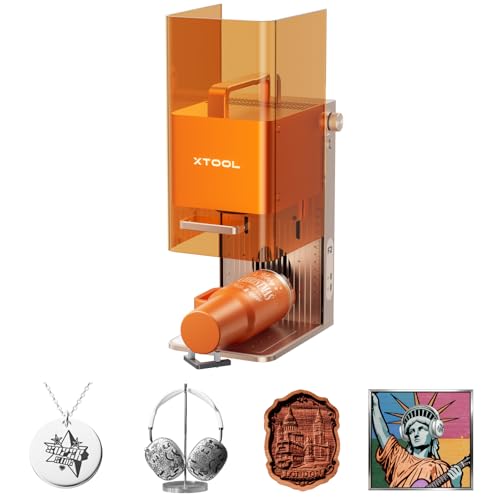
- 15W diode and 5W IR lasers
- 50MP camera with precise alignment
- Up to 6000mm/s engraving speed
Best For: Small-batch personalization and metal marking
Best Large-Format Value

- 10W blue diode laser
- 300x300mm engraving area
- Supports offline TF-card operation
Best For: Craft projects and small signage
Best Enclosed Crafting System

- Class 1 enclosed laser design
- Dual cameras for guided placement
- 10W diode laser for craft materials
Best For: Home crafting and personalized décor
Best for Large Projects

- 40W power cuts up to 18mm cherry wood
- Large bed with speeds up to 600mm/s
- Enclosed Class 1 design with multiple safety features
Best For: Large signs, batch work, and curved-item engraving
Best for Connected Workflow

- 600mm/s engraving with batch-oriented performance
- Camera preview and three-second autofocus
- Touchscreen, app control, and 80% pre-assembly
Best For: Fast, guided engraving on wood and acrylic
Best Smart Enclosed Pick
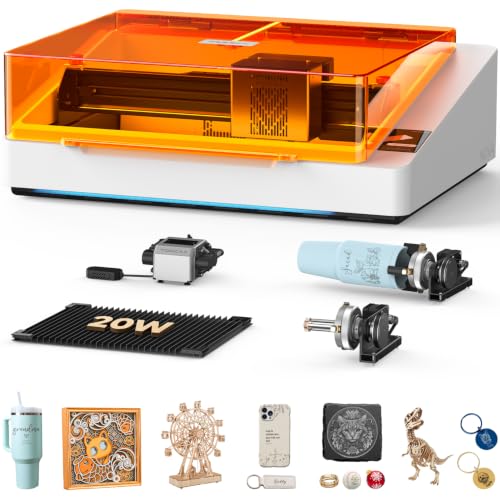
- 5MP AI camera for live positioning and calibration
- Class 1 enclosure with multiple safety features
- Includes 360° rotary support for cylindrical projects
Best For: Beginners and small businesses wanting guided, enclosed engraving
Best Heavy-Duty Pick

- 400-by-415mm workspace for larger projects
- Specified to cut 12mm wood and 5mm black acrylic
- Works with LightBurn, LaserGRBL, and SD-card workflows
Best For: Makers prioritizing workspace and cutting performance
Best Expandable Compact Pick

- AI camera, auto focus, and up to 0.1mm positioning
- Class 1 enclosed design with compact footprint
- Interchangeable platform supports multiple Falcon modules
Best For: Creators wanting guided operation and future expandability
Best Dual-Laser Pick – xTool F2
The xTool F2 stands out among desktop laser engravers for its combination of a 15W diode laser and 5W IR laser. It is designed for detailed work across more than 300 materials, with camera-assisted alignment, rapid engraving speeds, and a fully enclosed design for indoor use.
Best For: Makers and small businesses that need versatile material handling, metal color marking, and efficient small-batch personalization.
Pros:
- Dual lasers support wood cutting, 3D embossing, and vivid marking on metal.
- Built-in 50MP camera provides up to 0.1 mm alignment accuracy.
- Speeds up to 6000mm/s and optional batch-processing accessories support higher productivity.
- Fully enclosed, portable design includes a fan and supports an optional purifier.
Cons:
- Slide Extension, rotary, and purifier accessories are optional.
- Its 4.6 kg portable format may limit the size of projects compared with larger machines.
The F2 is a strong choice when flexibility matters more than a basic entry price. Its IR capability and camera system make it especially useful for personalized products and on-site customization.
Best Large-Format Value – Twotrees TTS-10 Pro
The Twotrees TTS-10 Pro is a practical option among desktop laser engravers for users who want a 300x300mm work area and a 10W blue diode laser. It supports computer, web, mobile-app, and TF-card workflows, making it suitable for both connected and offline engraving.
Best For: Hobbyists, educators, and small businesses making coasters, keychains, phone cases, jewelry, and small signs.
Pros:
- 10W optical power supports engraving on wood, bamboo, leather, acrylic, dark glass, and coated metal.
- 300x300mm work area accommodates a useful range of small projects.
- 32-bit dual-core controller supports faster processing and offline TF-card engraving.
- Works with LightBurn and LaserGRBL and includes assembly tools and a TF card.
Cons:
- Bare stainless steel and uncoated metal are not recommended without surface preparation or marking spray.
- The open desktop design requires appropriate laser-safety precautions and ventilation.
- Projects larger than about 12 inches will not fit its stated work area.
Choose the TTS-10 Pro if you value a comparatively generous work area and flexible control options. It offers useful capability for common craft materials, but metal users should pay close attention to the coating limitations.
Best Compact Beginner Pick – ACMER S1
The ACMER S1 is one of the more compact desktop laser engravers for home makers and beginners. Its 6W diode laser, 130x130mm work area, nearly preassembled design, and beginner-oriented software make it straightforward for small engraving and cutting projects.
Best For: Beginners and home users creating small designs on wood, leather, acrylic, bamboo, and similar materials.
Pros:
- 99% preassembled with a one-minute laser-head installation.
- ACMER Studio includes AI-assisted design tools and works alongside LightBurn and LaserGRBL.
- Compact 2 kg aluminum-alloy construction is easy to store and carry.
- Supports macOS, Windows, and Linux, plus common image and design file formats.
Cons:
- The 130x130mm work area is limited for larger signs or batch projects.
- Its 6W laser is better suited to smaller work and thin materials than heavy cutting.
- As a Class 4 laser, it still requires careful safety practices despite its compact size.
The S1 makes sense when workspace and setup simplicity are priorities. Its small working area limits project scale, but the preassembled design and accessible software can shorten the learning curve.
Best Enclosed Crafting System – xTool M2
The xTool M2 is an enclosed desktop laser engraver built for home crafting and DIY work. Its 10W diode laser, dual-camera positioning, templates, and Class 1 safety design make it convenient for engraving and cutting materials such as wood, leather, felt, fabric, paper, and cardstock.
Best For: Home crafters and makers who want guided setup, camera-assisted placement, and a safer enclosed machine for personalized gifts and décor.
Pros:
- Class 1 enclosed design includes real-time safety monitoring.
- Dual cameras and the Place & Go workflow help reduce positioning errors and material waste.
- xTool Studio offers templates and an integrated AI image generator.
- Supports more than 300 materials and can be expanded with optional modules.
Cons:
- The CMYK inkjet module and RA3 Lite rotary are sold separately.
- The optional 3W IR laser is required for the added fine-marking capability on metal and plastic.
- At 36.2 pounds, it is less portable than compact open-frame engravers.
The M2 is a compelling choice for users who prioritize an enclosed, guided crafting experience. Its modular design offers room to expand, but the most advanced printing and rotary features increase the total purchase cost.
Best for Large Projects – xTool S1 40W Rotary Bundle
The xTool S1 is a powerful choice among desktop laser engravers when you need a large work area, fast production, and the ability to cut thicker wood. Its enclosed, Class 1 design and included rotary bundle make it especially versatile for home workshops and larger personalized projects.
Best For: Large signs, batch production, tumblers, curved items, and demanding wood-cutting projects.
Pros:
- 40W laser cuts up to 18mm cherry wood in a single pass.
- Large 23.93-by-15.16-inch bed and speeds up to 600mm/s.
- Auto-focus, material settings, tutorials, and AI-assisted design simplify setup.
- Enclosed Class 1 design includes flame sensors, emergency stop, and lid-open protection.
Cons:
- At 86.8 pounds, it is less convenient to move than smaller desktop machines.
- Its advanced capabilities may be more than casual users need.
Choose the S1 when productivity and cutting power matter more than portability. The rotary bundle and AutoPassthrough support expand its usefulness for curved objects and projects up to 118 inches long.
Best for Connected Workflow – Creality Falcon A1 Pro 20W
The Creality Falcon A1 Pro is a practical desktop laser engraver for users who want quick setup, camera-assisted positioning, and app control. Its enclosed Class 1 design, touchscreen, and high-speed operation suit home creators and small businesses handling repeat jobs.
Best For: Fast wood and acrylic engraving, monitored workflows, and users who value automatic focusing.
Pros:
- Engraves at speeds up to 600mm/s and cuts up to 10mm basswood or 8mm black acrylic.
- HD camera preview, AI vision, red-dot ranging, and autofocus support precise placement.
- Touchscreen and app control enable cable-free operation and monitoring.
- Arrives 80% pre-assembled with enclosed Class 1 safety features.
Cons:
- The 2W infrared module for metal and plastic engraving is sold separately.
- It is compatible only with 460-by-346mm honeycomb panels.
The A1 Pro is a strong fit for streamlined production, especially when camera alignment and remote monitoring can save time. Consider the additional IR module only if you need its stated high-precision metal and plastic capabilities.
Best Portable Pick – LaserPecker LP1 Plus Mini
The LaserPecker LP1 Plus is a compact option for beginners who want a portable desktop laser engraver for small, non-metal projects. It can run from a power bank, uses a simple cross-platform app, and includes an adjustable stand for multi-angle engraving.
Best For: Portable DIY personalization on wood, leather, paper, acrylic, and other compatible non-metal materials.
Pros:
- Pocket-sized 2.4-pound design is easy to carry.
- Can start engraving in about two minutes and operate from a power bank.
- App supports importing photos and doodles for beginner-friendly projects.
- Adjustable stand and magnetic base support 360-degree engraving and small-item positioning.
Cons:
- Metal engraving is not supported.
- It is intended for smaller projects rather than large-format work.
- The lens-to-material distance must be set to 200mm using the included ruler.
This is the most convenient choice for portable personalization and casual crafting. Its limitations are straightforward: use compatible non-metal materials, follow the distance setting carefully, and expect a compact work area.
Best Smart Enclosed Pick – TOOCAA NOVA 20W
For shoppers comparing desktop laser engravers, the TOOCAA NOVA 20W stands out for its guided, camera-assisted workflow. Its enclosed Class 1 design, automatic focusing, material recognition, and built-in templates are aimed at reducing setup and guesswork for both new and experienced users.
Best For: Beginners, families, classrooms, small businesses, and creators who want an enclosed machine with smart positioning and rotary tumbler capability.
Pros:
- 5MP AI camera provides live previews, one-click calibration, and precise visual positioning.
- Automatic focus and material recognition can help reduce trial-and-error.
- Fully enclosed Class 1 design includes flame detection, emergency stop, lid-open stop, tilt protection, and child lock.
- Includes a 360° rotary system for tumblers, bottles, rings, and other cylindrical projects.
Cons:
- The machine weighs 33.3 pounds, so it is portable but not especially lightweight.
- Its feature-rich AI workflow may be more than users need for basic engraving tasks.
The NOVA 20W is a strong choice when convenience and indoor-friendly safety matter as much as laser power. Its camera, AI tools, templates, and rotary support make it particularly versatile for personalized gifts and small-business projects.
Best Heavy-Duty Pick – Creality Falcon 10W
The Creality Falcon 10W is one of the more straightforward desktop laser engravers for users who prioritize working area, cutting ability, and software flexibility. Its 15.7-by-16.3-inch workspace and fast motion system make it suitable for larger wood, acrylic, leather, and mixed-material projects.
Best For: Makers who need a spacious work area, high cutting capability, and compatibility with LightBurn, LaserGRBL, and offline SD-card operation.
Pros:
- Effective 72W power is specified to cut 12mm wood and 5mm black acrylic in one pass.
- Large 400-by-415mm work area supports bigger projects without multiple setups.
- Compressed 0.06-by-0.06mm laser spot supports detailed engraving and precise cuts.
- Supports LightBurn, LaserGRBL, and offline creation through an SD card.
Cons:
- Unlike the enclosed models in this roundup, the supplied notes do not identify it as a Class 1 fully enclosed machine.
- The product dimensions listed in the notes are incomplete, which may make workspace planning harder.
- Its included UV-filter acrylic and goggles still require users to follow careful laser-safety practices.
The Falcon 10W makes the most sense for experienced makers who value a roomy bed and broad software compatibility. It offers strong stated cutting performance, but buyers should plan their ventilation and safety setup carefully.
Best Expandable Compact Pick – Creality Falcon A1C 10W
The Creality Falcon A1C 10W is a compact option among desktop laser engravers, combining an AI camera, auto focus, and Class 1 enclosure with a modular laser platform. It is designed for users who want an easier starting workflow now and the option to expand with compatible modules and accessories later.
Best For: Home creators, classrooms, studios, and makerspaces seeking a compact enclosed engraver with guided design tools and upgrade flexibility.
Pros:
- AI camera supports automatic layout positioning with stated accuracy of up to 0.1mm.
- AI tools include one-tap photo engraving, background removal, smart layout, and setting recommendations.
- Interchangeable platform supports compatible 5W, 10W, and 1.2W Falcon modules.
- Class 1 enclosure, auto focus, and speeds up to 15,000mm/min support convenient everyday use.
Cons:
- The 150-by-150mm work area is smaller than the Falcon 10W’s workspace.
- Only one laser module is included, based on the selected model; additional capabilities require compatible accessories or modules.
- Its 31.1-pound weight may limit easy relocation despite the compact footprint.
The Falcon A1C is a practical fit for buyers who want a polished, enclosed desktop machine without committing to a fixed configuration. Its smaller work area favors gifts, signs, ornaments, and other compact projects, while the interchangeable platform leaves room to grow.
How We Picked the Best Desktop Laser Engravers
We focused on the features that most directly affect usability and finished results: laser type and output, engraving and cutting capability, work area, maximum speed, focusing method, camera assistance, enclosure and safety controls, software support, and overall suitability for beginners or experienced makers. We also considered whether each machine is better suited to flat materials, tumblers, detailed personalization, production work, or portable crafting.
Advertised power and speed are useful reference points, but they do not guarantee identical results. Material density, passes, focus accuracy, air assist, lens cleanliness, and design settings all matter. Always verify the manufacturer’s approved materials and ventilation requirements before operating a machine.
Quick Comparison
| Best For | What to Prioritize | Models to Consider |
|---|---|---|
| Beginners | Class 1 enclosure, autofocus, camera alignment, simple software | xTool M2, Creality Falcon A1C, Creality Falcon A1 Pro |
| Fast general-purpose work | Higher diode output, high movement speed, air assist | xTool S1, TOOCAA NOVA, Twotrees TTS-10 Pro |
| Detailed personalization | Fine spot size, precise focusing, camera positioning | xTool F2, ACMER S1, Creality Falcon 10W |
| Small spaces or portability | Compact footprint, adjustable stand, enclosed operation | LaserPecker LP1 Plus |
| Metal marking and color effects | Infrared capability or compatible metal-marking setup | xTool F2 |
Key Buying Factors for Desktop Laser Engravers
Laser Type and Material Compatibility
Diode lasers are versatile for wood, leather, paper, cardboard, and some acrylic. Infrared lasers are especially useful for marking certain metals and plastics, while a dual-laser system can expand material options. Check both the material list and the machine’s cutting limits rather than relying only on wattage.
Power, Speed, and Work Area
Higher optical output can reduce the number of passes needed for thicker materials, but a larger bed is often more valuable for signs, panels, and batch production. High speed helps with larger jobs, although acceleration, image detail, and material settings determine real-world throughput.
Safety, Ventilation, and Workspace
A fully enclosed Class 1 design can simplify home or classroom use by containing the beam and helping manage fumes, but it does not eliminate the need for suitable ventilation. Open-frame machines generally require more workspace precautions, eye protection, guarding, and careful supervision.
Camera, Focus, and Software
Built-in cameras can simplify material placement, preview artwork, and compensate for positioning errors. Autofocus and interchangeable platforms also reduce setup time. Before buying, confirm operating-system compatibility, supported file formats, app quality, and whether important features require a subscription.
Who Should Buy Which Desktop Laser Engravers?
Choose a compact model such as the LaserPecker LP1 Plus if portability and occasional personalization matter more than cutting large sheets. Beginners who want a contained workflow should prioritize the xTool M2, Creality Falcon A1C, or Falcon A1 Pro. For faster, larger projects, the xTool S1 or TOOCAA NOVA offers a stronger fit. If metal marking is central to your work, the dual-laser xTool F2 deserves special attention. Budget-focused makers can consider the Twotrees TTS-10 Pro, ACMER S1, or Creality Falcon 10W, provided they are comfortable with more hands-on setup and safety planning.