A good docking station can turn a laptop into a more capable desktop setup, adding monitors, wired networking, charging, and everyday ports through one connection. The right choice depends on your laptop, display requirements, operating system, and budget.
This roundup compares 10 docking stations ranging from simple dual-monitor hubs to high-bandwidth Thunderbolt 4 models designed for demanding offices and multi-display workstations.
Best 10 Docking Stations Picks for 2026
Best Budget Dual-Monitor Pick

- Dual HDMI up to 1920x1200 at 60Hz
- Six USB ports plus Ethernet and audio
- Does not charge the host laptop
Best For: Home-office productivity setups needing two HD monitors
Best Premium Thunderbolt Dock

- Supports up to four 4K displays
- Up to 130W Dell or 96W other-device charging
- 2.5GbE and enterprise security features
Best For: High-performance professional and managed office workstations
Best High-Power USB-C Dock

- 14-in-1 expansion with dual HDMI
- 160W total output and up to 100W USB-C charging
- 10Gbps data transfer for compatible peripherals
Best For: USB-C users needing dual displays and robust charging
Best Triple-Display Work Dock
Plugable USB-C Triple Display Dock

- Supports up to three HDMI monitors
- 100W charging plus Ethernet and six USB 3.0 ports
- Designed for mixed-fleet hybrid workstations
Best For: Business hot desks requiring three displays
Flexible Triple-Display Hub

- Dual HDMI plus DisplayPort for compatible Windows triple-display setups
- 10Gbps data, Gigabit Ethernet, audio, and eight USB ports
- Up to 100W PD input with 18-month warranty
Best For: Windows multi-monitor workstations needing many ports
Enterprise-Ready DisplayLink Dock
Plugable 13-in-1 Triple Monitor Dock
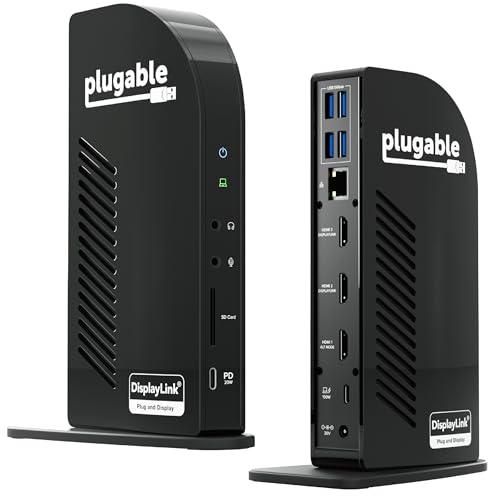
- Three extended HDMI displays through DisplayLink
- 100W laptop charging plus 20W accessory charging
- Business-focused ports and lifetime support
Best For: Office and managed multi-monitor deployments
Powered Windows Workstation Dock

- Two HDMI ports plus DisplayPort for Windows triple-display setups
- Included 110W adapter provides up to 100W laptop power
- Adds Ethernet, audio, USB, and simultaneous SD/TF access
Best For: Windows workstations with three monitors and card readers
Best for Mixed-OS Office Fleets
Dual 1080p HDMI Universal Dock

- Dual HDMI output up to 1920x1200
- USB-C and USB-A host connectivity
- 10 ports for office peripherals
Best For: Standardized dual-monitor productivity workstations
Best for Managed Business Workstations
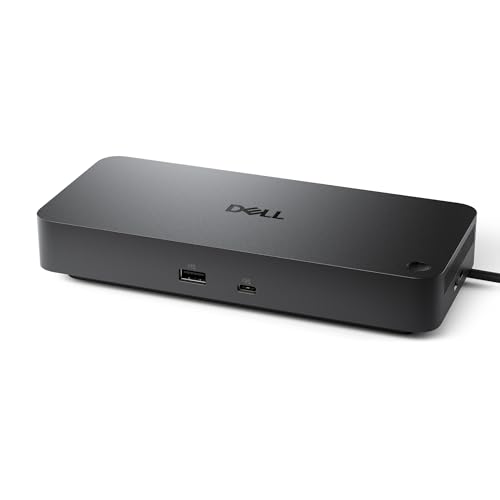
- Up to 100W laptop power delivery
- Native support for up to four displays
- Commercial manageability and three-year warranty
Best For: Business users and IT-managed Dell deployments
Best for Flexible Multi-Display Setups
MOKiN 14-in-1 Multi-Display Dock

- Two HDMI and two DisplayPort outputs
- 14 ports with Ethernet and card readers
- Up to 100W USB-C Power Delivery
Best For: Multi-monitor desks with varied peripherals and storage media
Best Budget Dual-Monitor Pick – Plugable UD-3900
If you need practical docking stations for a Windows laptop, Mac, or Chromebook, the Plugable UD-3900 combines dual HDMI output with wired networking, audio, and six USB ports. It is a productivity-focused choice, but it does require drivers for some systems and does not charge the host laptop.
Best For: Home-office users who need two HD monitors and plenty of USB connectivity for web and productivity work.
Pros:
- Supports two HDMI displays at up to 1920×1200 and 60Hz.
- Includes Gigabit Ethernet, headphone and microphone jacks, and six USB ports.
- Works with Windows, macOS, and ChromeOS, with a hybrid USB 3.0/USB-C host cable.
Cons:
- Does not charge the connected laptop.
- Not compatible with Linux or Unix systems.
- Not designed for gaming, 4K displays, DisplayPort connections, or HDCP-protected streaming.
The UD-3900 is a sensible expansion dock when dual HD monitors are enough and laptop charging is not required. Its broad port selection and two-year coverage make it a practical productivity accessory.
Best Premium Thunderbolt Dock – Dell Pro SD25TB4
The Dell Pro SD25TB4 is one of the most capable docking stations here, pairing Thunderbolt 4 connectivity with support for up to four 4K displays, fast networking, and high-power USB-C charging. Its security and remote-management features also suit managed business environments.
Best For: Professional workstations, creative teams, and IT-managed offices that need high-end multi-display connectivity.
Pros:
- Supports up to four 4K monitors through HDMI 2.1, DisplayPort 1.4, USB-C, and Thunderbolt 4.
- Provides up to 130W charging for Dell systems and 96W for other compatible devices.
- Includes 2.5GbE, Wi-Fi management, WPA3, PXE boot, MAC filtering, and DMA protection.
Cons:
- Its advanced features may be more than a basic home-office setup needs.
- Windows 10 is the only minimum operating system version specified in the supplied details.
Choose the SD25TB4 when display capacity, charging performance, and enterprise controls matter more than simplicity. It is particularly well suited to standardized business deployments and demanding desk setups.
Best High-Power USB-C Dock – Anker Prime 14-in-1
The Anker Prime 14-in-1 is a flexible USB-C option among docking stations, offering dual HDMI, fast 10Gbps data transfer, audio and Ethernet connectivity, and substantial charging output. Check your laptop’s DP Alt Mode support before buying, especially if you plan to use both external displays.
Best For: USB-C, USB4, and Thunderbolt laptop users who want dual displays, fast peripherals, and strong charging capability.
Pros:
- Offers 14 connections with dual HDMI display support.
- Provides up to 160W total output, with up to 100W through each USB-C charging port.
- Supports data speeds up to 10Gbps and works with Windows 10/11 and ChromeOS.
Cons:
- On macOS, both external displays show the same image.
- Not compatible with Linux systems.
- Display support is limited to up to 2K at 60Hz with DP 1.4 laptops or 1080p at 60Hz with DP 1.2 laptops.
The Anker Prime is a strong fit for users prioritizing charging and port density over maximum display resolution. Its macOS mirroring limitation makes it less suitable for Mac users who need two independent external desktops.
Best Triple-Display Work Dock – Plugable USB-C Triple Display Dock
The Plugable USB-C Triple Display Dock is built for docking stations used in hybrid offices and hot-desking environments. It combines three HDMI outputs, 100W laptop charging, Gigabit Ethernet, six USB-A ports, and DisplayLink support for compatible Windows, macOS, and ChromeOS systems.
Best For: Mixed-fleet business workstations that need three monitors and easy switching between compatible laptops.
Pros:
- Supports up to three HDMI displays: one 4K at 30Hz and two 1080p displays at 60Hz.
- Delivers up to 100W USB-C Power Delivery and includes Gigabit Ethernet and six USB 3.0 ports.
- Supports compatible USB-C, USB4, and Thunderbolt laptops across Windows, macOS, and ChromeOS.
Cons:
- Requires DisplayLink software for the DisplayLink-connected monitors.
- Not compatible with Linux systems.
- HDCP-protected content is not supported on DisplayLink displays.
This dock is a practical choice for organizations standardizing shared desks across Windows and Mac fleets. Its triple-display capability is useful for productivity, while the driver requirement should be planned into deployment.
Flexible Triple-Display Hub – LIONWEI 13-in-1 USB-C Dock
This LIONWEI docking station is a versatile choice for expanding a compatible Windows or Mac laptop setup. It combines dual HDMI, DisplayPort, multiple USB ports, Ethernet, audio, and up to 100W USB-C Power Delivery in a compact 13-in-1 design.
Best For: Windows users who need triple-display support, or Mac users extending to one external monitor while adding substantial connectivity.
Pros:
- Supports up to three displays on compatible Windows systems through two HDMI ports and DisplayPort.
- Offers 10Gbps USB-C and USB 3.1 data transfer, plus three USB 3.0 and two USB 2.0 ports.
- Includes Gigabit Ethernet, a 3.5mm audio/mic jack, and up to 100W PD input.
- Lightweight 140g design and an 18-month warranty.
Cons:
- Mac systems can extend only one monitor according to the supplied notes.
- The dock uses 13W, leaving up to 87W for laptop charging.
- Display performance depends on the laptop, operating system, and source capabilities.
Choose this docking station if you want a broad mix of ports and Windows-focused multi-monitor flexibility without a bulky desktop dock. Mac users should verify their display requirements before buying.
Enterprise-Ready DisplayLink Dock – Plugable 13-in-1 Triple Monitor Dock
This Plugable docking station is designed for organized office and home-office setups, with three HDMI outputs, 100W laptop charging, and DisplayLink support. It works with compatible Windows, macOS, and ChromeOS computers, though some Mac display features require software installation.
Best For: Business, education, government, and home-office users who need three extended HDMI displays and standardized USB-C connectivity.
Pros:
- Supports up to three extended HDMI displays, including 4K at 30Hz on HDMI 1.
- Provides up to 100W laptop charging and 20W charging for phones or accessories.
- Includes four USB-A 5Gbps ports, SD card access, Gigabit Ethernet, and audio in/out.
- Compatible with Windows 10+, macOS 11+, and ChromeOS systems with suitable USB-C, USB4, or Thunderbolt ports.
Cons:
- macOS requires DisplayLink Manager for multiple displays and HDMI 2 and 3.
- Protected-content playback such as Netflix and Hulu is not supported.
- It requires a driver installation for some Mac display functions.
This is a strong docking station option for managed deployments and multi-monitor productivity. Its DisplayLink approach adds flexibility for Macs, but buyers who regularly stream protected video should consider the HDCP limitation.
Powered Windows Workstation Dock – Acer 13-in-1 USB-C Dock
The Acer 13-in-1 docking station is built for a high-connectivity workstation, pairing two HDMI ports and DisplayPort with USB, Ethernet, audio, and simultaneous SD/TF card access. Its included 110W adapter can deliver up to 100W to a compatible laptop.
Best For: Windows users building a triple-monitor workstation with dedicated power, card readers, and a broad range of desktop connections.
Pros:
- Supports three independent displays on compatible Windows laptops using two HDMI outputs and DisplayPort 1.4.
- Includes a 110W power adapter capable of delivering up to 100W to the laptop.
- Provides USB-C and USB-A connectivity, Gigabit Ethernet, 3.5mm audio, and SD/TF readers.
- Aluminum construction is designed to dissipate heat, and a security slot supports cable-lock use.
Cons:
- Mac systems support mirroring rather than extended desktop mode across multiple displays.
- Triple 4K at 30Hz on Windows requires a compatible DSC-capable laptop or GPU.
- Full performance is recommended with the included power adapter and USB-C cable.
This docking station makes the most sense for a permanent Windows desk setup where display expansion, power delivery, and card-reader access matter. Mac buyers should note the stated mirroring limitation before choosing it.
Best for Mixed-OS Office Fleets – Dual 1080p HDMI Universal Dock
This Plugable docking station is a practical choice for offices that need consistent dual-monitor workstations across Windows, macOS, and ChromeOS laptops. It connects through USB-C or USB-A and provides two HDMI outputs at up to 1920×1200, though it does not charge the laptop.
Best For: Office productivity, IT-managed deployments, and mixed laptop fleets that need dual HDMI displays and broad operating-system compatibility.
Pros:
- Supports two HDMI displays from a single USB connection.
- Includes USB-C and USB-A host cables for newer and older laptops.
- Provides 10 useful ports, including Gigabit Ethernet, USB ports, and audio.
- Backed by North American-based technical support and a compatibility guarantee.
Cons:
- Does not provide laptop charging.
- macOS requires DisplayLink software installation.
- Does not support DisplayPort, HDCP content, gaming, or full-screen video playback.
Choose this model when dependable dual-screen office expansion matters more than charging or entertainment features. Its flexible host connectivity and cross-platform support make it especially useful for standardized business workstations.
Best for Managed Business Workstations – Dell Pro WD25 Dock
The Dell Pro WD25 is a business-focused docking station for modern workspaces that need charging, connectivity, and multi-display support in one unit. It delivers up to 100W to compatible laptops and natively supports up to four high-resolution displays.
Best For: Dell-led business environments, IT-managed deployments, and users who need laptop charging, flexible display support, and commercial-grade manageability.
Pros:
- Provides up to 100W of power for compatible Dell and non-Dell PCs.
- Supports up to four high-resolution displays.
- Offers USB, HDMI, DisplayPort, and Ethernet connectivity.
- Includes an ambidextrous USB-C cable and a three-year limited hardware warranty with advanced exchange.
Cons:
- Its compatibility details focus on Windows, Ubuntu, Red Hat Enterprise Linux, and ChromeOS systems.
- Only one HDMI port is listed, so additional displays may require DisplayPort.
- At 1.2 pounds, it is less travel-oriented than compact hub-style options.
The WD25 is a strong fit for structured office environments where charging, native multi-monitor support, and centralized manageability are priorities. Its sustainable design features and long warranty add value for business deployments.
Best for Flexible Multi-Display Setups – MOKiN 14-in-1 Multi-Display Dock
This MOKiN docking station packs display, networking, storage, and charging connections into a 14-in-1 design. With two HDMI ports, two DisplayPort outputs, USB ports, card readers, Ethernet, and USB-C power input, it suits users building flexible multi-monitor laptop workstations.
Best For: Laptop users who need multiple display-output options, fast peripheral connectivity, wired networking, card readers, and up to 100W USB-C Power Delivery.
Pros:
- Combines two HDMI and two DisplayPort outputs for flexible monitor configurations.
- Offers 5Gbps USB ports, Gigabit Ethernet, SD and microSD card readers, and a USB-C charging port.
- Supports up to 100W USB-C Power Delivery while the dock is in use.
- Includes a screen-lock button for quickly turning off connected displays.
Cons:
- The supplied notes list Windows and macOS support but do not specify detailed display limitations for every laptop.
- The dock’s maximum charging input is 100W, while the product highlight references 87W PD output.
- Its broad feature set may be more than needed for a basic single-monitor setup.
The MOKiN stands out when connection variety is more important than minimal size. It is particularly useful for desk setups combining several monitors, wired networking, removable storage, and frequent device charging.
How We Picked These Docking Stations
We focused on the features that matter most in daily laptop setups: display support, charging capacity, port selection, connectivity standards, compatibility, and overall use case. The selection includes universal USB 3.0 models, USB-C Docking Stations, Thunderbolt 4 systems, and compact hubs with dual- or triple-monitor support.
We also considered whether each option suits common workflows such as office productivity, remote work, creative applications, travel, and business deployments. Specifications can vary by computer, operating system, cable, and monitor, so confirm compatibility before buying.
Quick Comparison
| Best For | Recommended Type | What to Look For |
|---|---|---|
| Basic office setup | Universal USB 3.0 dock | Dual HDMI, Ethernet, USB ports |
| Modern USB-C laptops | USB-C docking station | USB-C Power Delivery and required video outputs |
| High-performance workstations | Thunderbolt 4 dock | Multiple 4K displays, fast data, high charging output |
| Triple-monitor setups | USB-C triple-display dock | Three compatible outputs and operating-system support |
| Travel and flexible use | Compact multiport hub | Small size, useful port mix, dependable power pass-through |
Key Buying Factors for Docking Stations
Display Support
Check the number of displays, maximum resolution, refresh rate, and connector types. A dock advertising 4K may support that resolution only at a particular refresh rate or with a specific host connection. Mac and Windows display behavior can also differ, especially with multiple external monitors.
Host Connection and Charging
USB-C does not automatically mean Thunderbolt or USB4. Confirm the laptop supports the required video mode, such as DisplayPort Alt Mode, and check whether the dock’s power delivery meets your laptop’s needs. A 100W or 130W rating may include power reserved for the dock itself.
Ports and Network Speed
Choose ports around your actual accessories. USB-A remains useful for keyboards and storage, while USB-C, SD card, audio, and Ethernet can reduce the need for extra adapters. If transferring large files or using a fast network, look for 2.5GbE or high-speed USB and Thunderbolt connections.
Compatibility and Installation
Some universal docks use DisplayLink and may require software, while native video docks depend more directly on the laptop’s hardware. Review support for Windows, macOS, ChromeOS, and Linux, and verify that sleep, charging, and multi-monitor features work as expected for your system.
Who Should Buy Which Docking Stations?
- Choose a basic universal dock for office apps, peripherals, and two standard-resolution monitors without premium bandwidth requirements.
- Choose a USB-C multiport dock if you want a practical balance of charging, display outputs, storage connectivity, and price.
- Choose a triple-display model when three monitors are central to your workflow, but confirm your laptop and operating system support the intended arrangement.
- Choose a Thunderbolt 4 dock for high-resolution displays, fast storage, demanding professional work, and a more expandable desktop setup.
- Choose a compact hub for occasional travel or presentations when portability matters more than maximum monitor count and bandwidth.
Before ordering, compare the dock’s host connector, included power adapter, monitor outputs, charging rating, and operating-system requirements with your existing equipment. That checklist will prevent most compatibility surprises.