Choosing the right recorder matters when clean dialogue, flexible mic options, and reliable gain control are non-negotiable. The best models make it easy to capture audio from a lavalier, shotgun, or mixer without adding noise or complexity.
This roundup of the best field recorders with external microphone input focuses on practical features, portability, and recording quality so you can match the right device to filmmaking, podcasting, music, or field work.
Best 10 Field Recorders with External Microphone Input Picks for 2026
Pro Multi-Track Workhorse
Zoom F8n Pro 8-Input 10-Track Recorder
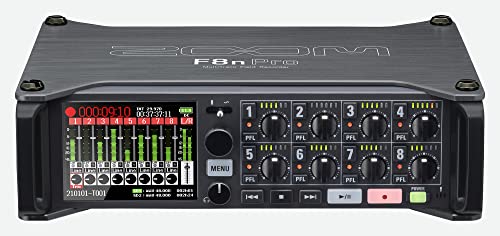
- 8 inputs and 10-track recording for production audio
- 32-bit float with dual AD converters helps prevent clipping
- Dual SD slots, timecode, and USB interface support
Best For: Film crews and location recordists needing pro-level multi-input capture
Compact XLR Option
PHILIPS DVT7500 VoiceTracer Recorder

- XLR and line-in inputs for external sources
- 24-bit/96kHz recording supports high-fidelity audio
- Lightweight body with rechargeable battery
Best For: Portable voice and interview recording with external input support
Dual XLR Float Recorder
Zoom F3 2-Input Field Recorder

- Dual locking XLR/TRS inputs for external mics
- 32-bit float capture helps avoid clipping
- Compact, battery-powered design for field use
Best For: Run-and-gun shooting and portable two-mic recording
Camera-Mount Production Recorder
TASCAM DR-70D 4-Input Recorder
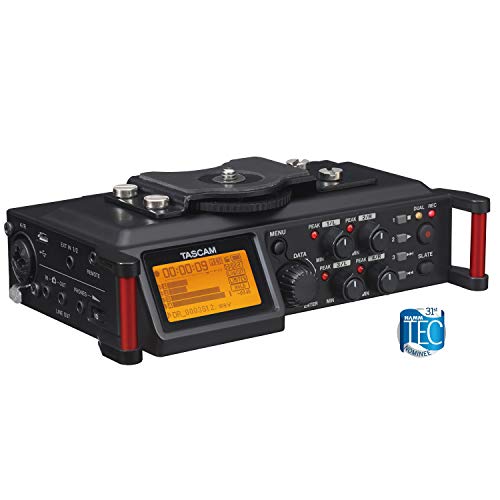
- Four XLR inputs with phantom power for external mics
- Built-in mics and dual recording add flexibility
- Compact camera-mount design for video rigs
Best For: Videographers needing a compact 4-input recorder for camera setups
Field Recording Flexibility
Zoom H5 4-Track Handheld Recorder
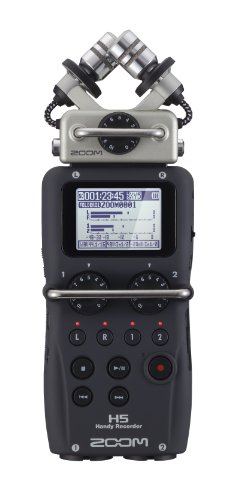
- Two XLR/TRS combo inputs with phantom power
- Interchangeable input capsules for flexible setups
- Four-track recording with detachable X/Y capsule
Best For: Filmmakers and musicians needing expandable external mic input
Compact 32-Bit Capture

- 32-bit float support with multiple sample rates
- 3.5mm MIC/EXT IN jack with plug-in power
- USB-C audio interface for direct computer recording
Best For: Creators who want simple external mic input and portable stereo recording
Dual XLR Input Value
Zoom H1 XLR 2-Channel Recorder

- Two XLR/TRS combo inputs plus 3.5mm stereo input
- 32-bit / 96kHz recording for detailed capture
- OLED waveform display for level monitoring
Best For: Interviews and small setups needing dual external mic inputs
Portable Stereo Recorder
TASCAM DR-05XP 32-Bit Float Handheld Recorder

- 32-bit float, 24-bit, 16-bit, and MP3 recording
- Built-in mics handle sources up to 125 dB SPL
- USB-C interface and up to 17.5 hours runtime
Best For: Portable stereo recording with flexible formats and computer interface use
XLR-Friendly Recorder
Zoom H4 Essential 4-Track Handheld Recorder

- Two XLR/TRS inputs for external mics or instruments
- 32-bit float capture helps avoid distorted takes
- Built-in stereo mics and USB-C recording/streaming
Best For: Users who need external microphone inputs and guided operation for field recording
Compact Float Recorder
Xvive XV1-R Portable Stereo Recorder

- 32-bit float WAV and AAC recording options
- X/Y mics handle up to 130 dB SPL
- USB-C mic mode for PC, Mac, iOS, and Android
Best For: Portable stereo capture with 32-bit float and USB-C microphone functionality
Pro Multi-Track Workhorse – Zoom F8n Pro 8-Input 10-Track Recorder
For field recorders with external microphone input, the Zoom F8n Pro is built for demanding film and location audio workflows. Its 8 inputs, 10-track recording, and 32-bit float capture help preserve takes across a wide dynamic range, while dual SD slots and timecode support make it a strong fit for professional production.
Best For: Filmmakers and production sound teams needing a high-end recorder with multiple external mic inputs, robust timecode, and redundant media.
Pros:
- 8-channel/10-track recording with 32-bit float and dual AD converters.
- Up to 75dB of gain and -127dBu EIN preamps for clean input capture.
- Dual SD card slots with redundant recording for added security on set.
- 8-in/4-out USB audio interface mode while recording to card.
Cons:
- Larger and heavier than compact two-input field recorders.
- May be more recorder than needed for simple solo interviews.
Overall, this is a serious production recorder for users who need multiple external microphone inputs and dependable backup options. If your workflow centers on film sets, timecode sync, and clean multi-track capture, the F8n Pro is one of the most capable choices here.
Compact XLR Option – PHILIPS DVT7500 VoiceTracer Recorder
If you want field recorders with external microphone input in a smaller voice-focused package, the PHILIPS DVT7500 VoiceTracer offers XLR and line-in connectivity alongside 24-bit/96kHz recording. It is designed to deliver high-fidelity audio from external instruments and sound sources while keeping the unit compact and portable.
Best For: Users who want a lightweight recorder with XLR/line-in support for interviews, voice work, and simple external-source capture.
Pros:
- XLR and line-in connectors for external instruments and sound sources.
- 24-bit/96kHz recording for higher-quality audio capture.
- Compact 0.13 kg design for easy carry.
- Rechargeable Li-polymer battery for extended recording sessions.
Cons:
- Less specialized for multi-track film production than larger field recorders.
- 16GB internal storage may be limiting for some workflows.
This model makes sense if you need external input support without moving up to a larger production recorder. It is a practical pick for straightforward high-quality recording where portability matters more than advanced field features.
Dual XLR Float Recorder – Zoom F3 2-Input Field Recorder
The Zoom F3 is a compact answer for field recorders with external microphone input when you want simple operation and strong headroom. Its dual locking XLR/TRS inputs, 32-bit float recording, and ultra-low-noise preamps are aimed at filmmakers and recordists working in unpredictable environments.
Best For: Run-and-gun filmmakers and mobile recordists who need a small recorder with secure dual XLR inputs.
Pros:
- Dual locking XLR/TRS inputs for secure external microphone connections.
- 32-bit float recording helps capture quiet dialogue and sudden peaks.
- Ultra-low-noise preamps for cleaner audio in uncontrolled environments.
- Compact and battery-powered for mobile setups.
Cons:
- Only two inputs, so it is not built for larger multi-mic sessions.
- No built-in mic array beyond the recorder’s core field workflow.
If you need a no-fuss external mic recorder for fast-moving shoots, the F3 is easy to recommend. It focuses on clean capture, stable connections, and lightweight portability instead of extra channel count.
Camera-Mount Production Recorder – TASCAM DR-70D 4-Input Recorder
For buyers comparing field recorders with external microphone input, the TASCAM DR-70D stands out as a compact 4-channel option built for camera workflows. It pairs four balanced XLR mic inputs with phantom power, built-in microphones, and dual recording mode to help keep takes under control on set.
Best For: Videographers and indie filmmakers who want a camera-friendly recorder with four external mic inputs.
Pros:
- Four balanced XLR mic inputs with phantom power.
- Built-in microphones add flexibility for on-set capture.
- Dual recording mode creates a lower-level safety copy.
- Compact form factor can mount above or below a camera.
Cons:
- Older design compared with newer 32-bit float recorders.
- Limited to 128GB supported media according to the supplied notes.
The DR-70D remains a practical choice when you want a recorder that fits neatly into a DSLR or video rig. It is especially useful if you value multiple XLR inputs and simple safety-recording features over the latest format advancements.
Field Recording Flexibility – Zoom H5 4-Track Handheld Recorder
If you want field recorders with external microphone input that can also scale up for more complex shoots, the Zoom H5 is built for that kind of flexibility. Its two XLR/TRS combo inputs, interchangeable capsule system, and four-track recording make it a practical choice for filmmakers, musicians, and anyone who needs more routing options than a simple handheld recorder.
Best For: Filmmakers, musicians, and creators who need XLR inputs plus expandable capsule-based recording.
Pros:
- Two XLR/TRS combo inputs with selectable phantom power and -20dB pad
- Interchangeable input capsules for added versatility
- Four-track simultaneous recording
- Detachable X/Y capsule includes shock-mounted mics to help reduce handling noise
Cons:
- Records to SD/SDHC cards up to 32GB, which is smaller than some newer options
- Runs on 2 AA batteries, so battery management matters on longer shoots
The H5 stands out when you need external microphone input along with room to grow beyond a basic stereo recorder. It balances practical input options with a modular design, making it a strong all-around field recorder for video and music work.
Compact 32-Bit Capture – TASCAM DR-07XP Field Recorder
For buyers comparing field recorders with external microphone input, the TASCAM DR-07XP is a straightforward handheld option with useful modern recording modes. It includes a 3.5mm MIC/EXT IN jack with plug-in power, plus built-in stereo AB/XY condenser microphones for capturing stereo sound in a wide range of situations.
Best For: Portable recording, audio-for-video, and podcasting with simple external mic support.
Pros:
- Supports 32-bit float, 24-bit, 16-bit, and multiple sample rates
- 3.5mm MIC/EXT IN jack provides external mic input with plug-in power
- Built-in stereo AB/XY condenser microphones handle loud sources up to 125dB SPL
- Works as a 2-in/2-out USB-C audio interface
Cons:
- Memory card is not included
- External input is 3.5mm-based rather than XLR
The DR-07XP is a good fit if you want a compact recorder that keeps setup simple while still offering external mic connectivity. Its 32-bit float support and USB-C interface make it especially appealing for creators who move between field recording and direct computer recording.
Dual XLR Input Value – Zoom H1 XLR 2-Channel Recorder
The Zoom H1 XLR is a compact pick for shoppers looking at field recorders with external microphone input and a cleaner, straightforward input layout. It offers two XLR/TRS combo inputs, a 3.5mm stereo input, and 32-bit/96kHz recording, giving it a practical mix of connection options for interviews, podcasts, and basic video work.
Best For: Interviews, podcasts, and small recording setups that need dual XLR/TRS inputs.
Pros:
- Two XLR/TRS combo inputs for microphones, instruments, and other sources
- Records in 32-bit / 96kHz for detailed audio
- 3.5mm stereo input and headphone output add flexibility
- OLED waveform display helps monitor levels at a glance
Cons:
- Battery life is listed at about 10 hours, which is modest for long sessions
- Uses 2 AA batteries and does not include a built-in rechargeable battery
This model is a sensible choice if your priority is getting reliable external mic input without a more complicated recorder. The dual combo inputs and 32-bit recording make it a versatile entry point for creators who want a small but capable field recorder.
Portable Stereo Recorder – TASCAM DR-05XP 32-Bit Float Handheld Recorder
If you want field recorders with external microphone input for simple, dependable capture, the TASCAM DR-05XP is a practical handheld option for music, voice, meetings, and audio-for-video work. It records in 32-bit float, 24-bit, 16-bit, and MP3, and its built-in omnidirectional condenser microphones are designed to handle loud sources up to 125 dB SPL.
Best For: Creators who want a compact handheld recorder with flexible formats and USB-C interface use.
Pros:
- Records in 32-bit float, 24-bit, 16-bit, plus MP3 for flexible use cases.
- Built-in omnidirectional condenser mics can handle loud environments up to 125 dB SPL.
- USB-C 2-in/2-out interface lets you record directly to a computer.
- Up to 17.5 hours of operation on 2 AA batteries.
Cons:
- SD card and batteries are not included.
- No external mic input is listed in the supplied details.
Overall, the DR-05XP is a straightforward choice if you want a portable recorder with strong built-in mics, broad format support, and easy computer connectivity. It is especially appealing when you need a lightweight recorder for on-the-go stereo capture.
XLR-Friendly Recorder – Zoom H4 Essential 4-Track Handheld Recorder
For buyers comparing field recorders with external microphone input, the Zoom H4 Essential stands out with two XLR/TRS inputs plus built-in stereo microphones. It is designed for music, interviews, podcasts, video audio, and live performances, and its 32-bit float capture helps reduce the risk of distorted takes.
Best For: Creators who need external mic input and a more guided recorder for interviews, podcasting, and field work.
Pros:
- Two XLR/TRS inputs support external mics, instruments, mixers, or soundboards.
- 32-bit float recording helps capture louder and quieter sources without worrying about distortion.
- Built-in stereo microphones add flexible on-board recording options.
- USB-C connectivity supports recording or streaming to a phone, tablet, or computer.
Cons:
- Digital recording time is listed at 10 hours.
- Requires 2 AA batteries.
The H4 Essential is a strong pick if you want a recorder that can handle external mics and still stay approachable. Its guided menu system makes it easier to use than many feature-heavy recorders, while still giving you the inputs needed for more serious projects.
Compact Float Recorder – Xvive XV1-R Portable Stereo Recorder
If you need field recorders with external microphone input in a portable form, the Xvive XV1-R focuses on clean stereo capture and easy digital workflow. It uses X/Y microphones, records in 32-bit float WAV or AAC, and supports USB-C microphone use with PC, Mac, iOS, and Android devices.
Best For: Portable recording where 32-bit float, USB-C mic mode, and compact design matter most.
Pros:
- 32-bit float recording helps avoid gain-setting problems in high-dynamic-range situations.
- X/Y microphones are rated up to 130 dB SPL for loud environments.
- USB-C microphone function works with PC, Mac, iOS, and Android.
- Auto-record, pre-record, and noise reduction add convenience for creators.
Cons:
- No headphone jack is listed in the details.
- Digital recording time is listed at 12 hours.
- The supplied details do not list an external mic input.
The XV1-R is a compact option for creators who want low-hassle recording and flexible USB-C use. Its 32-bit float workflow and high-SPL microphones make it useful when you need dependable stereo capture on the move.
How We Picked These Field Recorders with External Microphone Input
We prioritized input flexibility, preamp quality, recording format, portability, power options, and monitoring features. For buyers comparing Field Recorders with External Microphone Input, the most useful models are the ones that handle real-world sources cleanly and give you enough headroom to avoid clipping.
Quick Comparison
At a high level, the list splits into three groups: pro multi-input recorders for film sets and complex rigs, compact handheld recorders for run-and-gun use, and simple stereo or dual-input models for voice, music, and mobile production. More inputs and better routing usually mean more setup flexibility, while smaller units win on speed and portability.
Key Buying Factors for Field Recorders with External Microphone Input
Input Type and Count
Look for XLR, combo XLR/TRS, or dedicated mic inputs depending on your gear. If you regularly use professional microphones, phantom power support is essential. If you want a simple plug-and-go setup, a smaller recorder with fewer inputs may be enough.
Recording Format and Safety
32-bit float recording is a major advantage for unpredictable environments because it can reduce the risk of clipped takes. Traditional 24-bit recorders can still perform very well, but they require more careful gain staging.
Monitoring and Controls
Headphone output, physical level knobs, limiters, high-pass filters, and clear metering all help you monitor sound before it becomes a problem. These features matter even more when you are using an external microphone in changing conditions.
Portability and Power
Handheld recorders are best when you need speed and mobility. Larger multi-track units are better for dedicated production kits. Battery life, USB-C power, and interface mode can also make a big difference if you record for long sessions or transfer audio to a computer.
Who Should Buy Which Field Recorders with External Microphone Input?
If you need maximum flexibility for film production, choose a higher-end multi-input model. If you want the simplest path to better sound, a compact stereo recorder or a dual-input unit is usually enough. Musicians and podcasters may prefer a recorder that doubles as an audio interface, while videographers should favor models with reliable external mic input, easy monitoring, and rugged portability.
In short, the best choice depends on how many sources you record, how much control you want, and whether portability or production depth matters more for your workflow.