The right puzzle can turn geography, science, and early-learning practice into a hands-on homeschool activity. These picks include USA maps, world maps, national parks, and space themes for different ages and skill levels.
We selected options that balance educational value, piece count, materials, visual appeal, and independent-play potential so you can find a practical fit for your homeschool routine.
Best 10 Jigsaw Puzzles for Homeschool Picks for 2026
Best Multi-Theme Set
4-Pack Educational Map and Space Puzzles
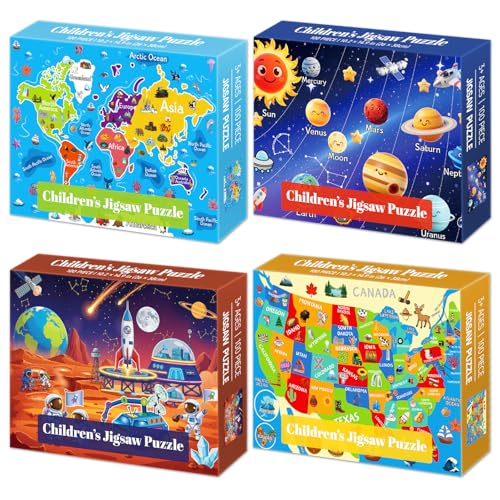
- Four 100-piece geography and space puzzles
- Includes reference posters and back-of-piece letters
- Supports screen-free learning ages 4–10
Best For: Homeschool families wanting varied topics in one set
Best Hands-On Geography Pick
Melissa & Doug USA Map Wooden Puzzle
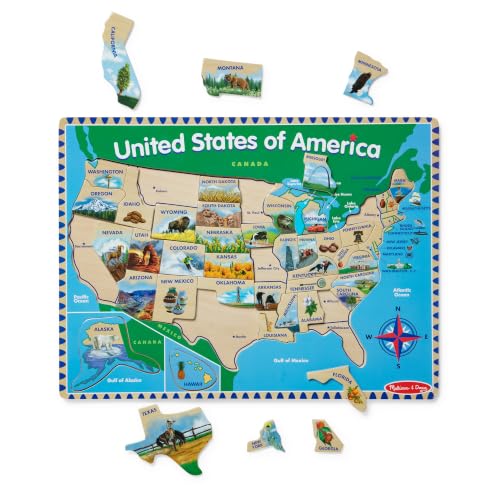
- Wooden map puzzle with 50 state pieces
- Identifies capitals and includes state facts
- Designed for hands-on learning ages 5–12
Best For: U.S. geography lessons and durable tabletop or floor play
Best Space-Themed Starter

- 100-piece format for ages 4–8
- Includes a 1:1 reference poster
- Supports concentration and problem-solving
Best For: Introductory astronomy-themed puzzle activities
Best Advanced Geography Activity
200-Piece United States Map Puzzle

- Covers states, capitals, and landmarks
- 200 unique pieces with a reference poster
- Large 19.29-by-13.78-inch finished map
Best For: U.S. geography and social studies for ages 6–12
Nature Study Challenge

- 16 individual 100-piece park puzzles
- Colorful geography and nature theme
- Magnetic storage box with bonus posters
Best For: Ages 9+ and intermediate homeschool puzzle work
Hands-On Geography Starter

- 40-piece raised USA map
- Designed for ages 3 and up
- Builds motor and thinking skills
Best For: Preschool geography and tactile learning
State Facts Practice

- 60 pieces with state-shaped designs
- Includes state facts insert
- Supports spatial and problem-solving skills
Best For: Ages 5–10 studying U.S. geography
World Geography Explorer
Imagimake Mapology World Map Puzzle

- 75 country-shaped foam pieces with three frames
- Includes flags, capital stickers, and a Europe map
- Designed for interactive geography and homeschool activities
Best For: Hands-on world geography lessons for children ages 5–13
USA Geography Starter
Montessori Mama USA Map Wooden Puzzle

- Covers all 50 states and state capitols
- Adds landmarks and state animals for context
- Beginner wooden puzzle for tabletop learning
Best For: Early U.S. geography and matching practice for ages 4–6
Illustrated U.S. Map Challenge
RoseArt Map of USA Puzzle for Kids
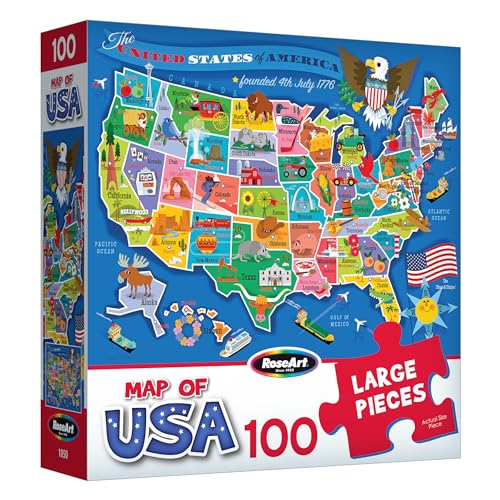
- 100 large pieces form a 24-by-18-inch map
- Includes state illustrations, landmarks, and regional icons
- Supports map skills, memory, and spatial awareness
Best For: Ages 6–10 and longer U.S. geography practice sessions
Best Multi-Theme Set – 4-Pack Educational Map and Space Puzzles
For families comparing jigsaw puzzles for homeschool, this four-puzzle set combines geography and space themes in a reusable, screen-free activity. Each 100-piece puzzle measures 15 by 10 inches when complete and includes a reference poster.
Best For: Homeschool learners ages 4–10 who benefit from varied topics, repeated practice, and family puzzle time.
Pros:
- Includes USA map, world map, solar system, and Mars Adventure designs.
- Thick cardboard, bright printing, precision-cut pieces, and letters on the backs support assembly.
- Offers practice with concentration, observation, problem-solving, and hand-eye coordination.
- Four individually boxed puzzles make the set suitable for gifting or rotating activities.
Cons:
- The 100-piece format may be challenging for younger children and relatively simple for older learners.
- The set is made from cardboard rather than wood.
This is a flexible choice when you want one purchase to cover introductory geography and astronomy activities. The four themes also make it easier to match puzzle difficulty and subject interest to different children.
Best Hands-On Geography Pick – Melissa & Doug USA Map Wooden Puzzle
This wooden USA map puzzle is a strong fit for jigsaw puzzles for homeschool lessons focused on state recognition and geography. Its pieces identify the 50 states by size, shape, and location, while state capitals and facts add learning value.
Best For: Children ages 5–12 working on U.S. geography, shape recognition, and hands-on motor skills.
Pros:
- Wooden construction provides a durable alternative to cardboard puzzles.
- State capitals are identified beneath the pieces.
- Fun facts about each state appear on the back of the puzzle board.
- Supports logical thinking, goal-setting, patience, and shape recognition.
Cons:
- It focuses specifically on the United States rather than offering multiple subjects.
- Small parts require appropriate supervision.
Choose this model when durability and direct geography instruction matter more than a high piece count. The built-in state information makes it useful as both a puzzle and a recurring reference activity.
Best Space-Themed Starter – 100-Piece Solar System Puzzle
For a space-focused addition to jigsaw puzzles for homeschool, this 100-piece design offers an approachable project for children ages 4–8. It includes a 1:1 poster, measures about 15 by 10 inches when assembled, and is sized for tabletop play.
Best For: Young learners beginning independent puzzle work or families using astronomy themes for collaborative learning.
Pros:
- Solar system artwork can support interest in space-based learning.
- Every piece is described as unique, helping with placement.
- Includes a reference poster for guided assembly.
- Supports concentration, motor skills, creativity, and problem-solving.
Cons:
- One 100-piece puzzle provides less subject variety than a multi-pack.
- The supplied listing information contains mixed references to prehistoric artwork and dinosaur themes, so buyers should verify the current design.
This is a practical starter puzzle when you want a manageable piece count and a space-learning theme. It can work for independent practice, quiet time, or a grandparent-child activity.
Best Advanced Geography Activity – 200-Piece United States Map Puzzle
Among jigsaw puzzles for homeschool, this 200-piece United States map is suited to older children ready for a more detailed geography activity. The design covers all 50 states, capitals, and landmarks, with a finished size of 19.29 by 13.78 inches.
Best For: Homeschool and classroom social studies for learners ages 6–12 who are developing geography knowledge and spatial awareness.
Pros:
- Combines state, capital, landmark, and U.S. geography content.
- Uses 200 uniquely shaped pieces with an extra-thick cardboard construction.
- Includes a 1:1 reference poster for guided assembly.
- Large finished format can serve as a visual learning display.
Cons:
- The 200-piece count may be demanding for beginners.
- The larger finished size requires more floor or table space.
- It focuses on U.S. geography rather than multiple curriculum subjects.
This puzzle is the strongest fit for learners who have outgrown simpler map activities and need more detail. Its large finished layout can extend the activity from assembly into review and discussion of states, capitals, and landmarks.
Nature Study Challenge – National Parks Puzzle Box Set
For older students, this National Parks collection adds geography, nature-study conversation, and screen-free problem solving to a homeschool routine. It includes 16 separate 100-piece puzzles, so families can rotate through scenic U.S. locations without committing to one large puzzle.
Best For: Homeschool families seeking an intermediate, geography- and nature-themed puzzle activity for ages 9 and up.
Pros:
- Includes 16 colorful puzzles featuring different U.S. National Parks.
- Each 100-piece puzzle offers a manageable challenge without being overwhelming.
- Uses recycled paperboard and vegetable-based inks, with fully interlocking pieces.
- Book-style magnetic box and bonus reference posters support storage and building.
Cons:
- The intermediate 100-piece format may be too challenging for younger learners.
- Its landscape theme may be less useful for students who prefer non-geographic subjects.
This set is a strong fit when you want jigsaw puzzles for homeschool that can reinforce place-based learning while providing repeated independent or shared activities.
Hands-On Geography Starter – Lift & Learn USA Map Puzzle
This raised-piece USA map is a practical early-learning choice for homeschool geography lessons. Its 40 brightly colored pieces are designed for small hands, while the lift-and-place format gives young learners a tactile way to explore the states.
Best For: Preschool and kindergarten learners ages 3 and up who are beginning map recognition, fine-motor work, and independent puzzle play.
Pros:
- Features 40 pieces representing the fifty states of America.
- Raised textures make pieces easier for little hands to grasp.
- Supports fine-motor skills, hand-eye coordination, concentration, and problem solving.
- Portable board format encourages independent play and hands-on learning.
Cons:
- The beginner format may not provide enough challenge for older students.
- As a single map puzzle, it offers less activity variety than a multi-puzzle set.
Choose this option when your homeschool needs an accessible introduction to U.S. geography paired with tactile practice and a clear sense of accomplishment.
State Facts Practice – Educational USA Map Puzzle
MasterPieces 60 Piece Educational Jigsaw Puzzle for Kids - USA Map State Shaped - 16.5"x12.75"
Check Price On AmazonThis 60-piece USA map puzzle combines a screen-free activity with state-focused learning. State-shaped pieces and a full-color insert with facts about each state give homeschoolers an opportunity to practice spatial awareness while extending the lesson beyond assembly.
Best For: Children ages 5 to 10 who are ready for a beginner-to-early-intermediate U.S. geography activity at the tabletop.
Pros:
- Uses state-shaped pieces to add a geography-focused assembly experience.
- Includes a full-color insert with fun facts about each state.
- Supports problem solving, logical thinking, fine-motor development, and spatial awareness.
- Thick recycled material and soy-based inks are designed for durable use.
Cons:
- The 60-piece format may be too simple for advanced puzzle solvers.
- It is intended for indoor, tabletop play rather than a portable lift-and-learn format.
This is a useful pick for jigsaw puzzles for homeschool when you want a traditional assembly challenge with an easy connection to state facts and map skills.
World Geography Explorer – Imagimake Mapology World Map Puzzle
For families seeking jigsaw puzzles for homeschool, the Imagimake Mapology World Map Puzzle turns geography practice into hands-on exploration. Children assemble country-shaped foam pieces, then use the included flags, capital stickers, and Europe map to reinforce lessons about borders, countries, and capitals.
Best For: Homeschool geography activities for children roughly ages 5–13, especially learners who benefit from visual and tactile practice.
Pros:
- Includes 75 country-shaped pieces, 65 flags, capital stickers, three foam frames, and a Europe map.
- Supports geography knowledge, spatial awareness, problem-solving, concentration, and fine motor skills.
- Uses 8 mm EVA foam pieces designed to fit snugly and meet stated ASTM toy standards.
- Bright colors can support visual recognition and engagement.
Cons:
- The wide age range may require parent guidance for younger children or more advanced learners.
- The set focuses on map-based learning rather than a traditional single-image jigsaw experience.
This is a strong choice when you want one activity to combine world geography, matching, and hands-on map work. The included flags and capital stickers add useful follow-up activities beyond assembling the map.
USA Geography Starter – Montessori Mama USA Map Wooden Puzzle
The Montessori Mama USA Map Wooden Puzzle is a compact option for jigsaw puzzles for homeschool, introducing young learners to all 50 states through a tabletop activity. Its wooden construction and beginner skill level make it suitable for early geography, matching, and problem-solving practice.
Best For: Beginning U.S. geography lessons for children ages 4–6 and other early learners who need a manageable map activity.
Pros:
- Features all 50 states, state capitols, major landmarks, and state animals.
- Wooden construction is designed for repeated use and piece durability.
- Supports matching, spatial awareness, creative thinking, and problem-solving skills.
- Measures approximately 14.8 by 10 inches for tabletop learning.
Cons:
- With 37 puzzle pieces, it may provide less assembly challenge for older children.
- The small format offers less display space than larger U.S. map puzzles.
For younger homeschool students, this puzzle offers a straightforward way to begin identifying states and connecting them with regional details. Its beginner format keeps the activity approachable while still supporting several foundational learning goals.
Illustrated U.S. Map Challenge – RoseArt Map of USA Puzzle for Kids
For older children ready for a larger challenge, the RoseArt Map of USA Puzzle combines 100 pieces with colorful state illustrations. It is a practical pick among jigsaw puzzles for homeschool because assembling the 24-by-18-inch map can reinforce state recognition, map skills, memory, and spatial reasoning.
Best For: U.S. geography practice for children ages 6–10, classroom or homeschool use, and family tabletop puzzle sessions.
Pros:
- Includes 100 large pieces designed for easier handling by young children.
- Features all 50 states, major landmarks, and regional artwork depicting animals, food, or landmarks.
- Finished puzzle measures 24 by 18 inches, creating a substantial map for review.
- Supports map skills, spatial awareness, memory, and problem-solving.
Cons:
- The larger finished size requires more table or storage space.
- Cardboard construction may be less durable than a wooden puzzle.
- The stated recommended age range is 6–10, so it may not suit very young beginners.
This puzzle works well when you want geography practice with enough pieces to sustain a longer activity. The playful state artwork gives children visual cues that can make regional facts easier to remember.
How We Picked the Best Jigsaw Puzzles for Homeschool
We focused on puzzles that support a clear learning goal while remaining engaging enough for repeated use. The selection includes wooden and cardboard designs, simple lift-and-learn formats, mini-puzzle sets, and larger-piece options for developing puzzlers. We also considered age guidance, piece count, subject matter, durability, and how easily each puzzle can fit into a lesson, quiet-time block, or family activity.
Because children develop visual-spatial skills at different rates, age labels are useful starting points rather than strict rules. Always consider a child’s puzzle experience, attention span, and need for adult assistance.
Quick Comparison
- Best for early learners: Lift-and-learn and wooden USA map puzzles with chunky, easy-to-handle pieces.
- Best for geography: USA state maps and world maps featuring landmarks, countries, capitals, or flags.
- Best for science lessons: Solar system puzzles that reinforce planet names and basic space vocabulary.
- Best for variety: Multi-pack and mini-puzzle sets that provide several themes or shorter activities.
- Best for older children: 100- to 200-piece puzzles with more detailed maps and illustrations.
Key Buying Factors for Jigsaw Puzzles for Homeschool
Age and Difficulty
Choose piece size and count based on the child’s current ability. Beginners often do better with large, sturdy pieces and strong visual cues. Older or experienced puzzlers may prefer 100- or 200-piece designs that require more sustained concentration.
Educational Focus
Map puzzles can reinforce state shapes, locations, landmarks, countries, capitals, and flags. Space puzzles support planet recognition and science vocabulary, while national-park themes can extend lessons into geography, nature, and conservation.
Materials and Durability
Wooden puzzles are a useful choice for preschoolers and frequent handling, while cardboard puzzles are often lighter and available in more detailed formats. Check whether pieces are thick, precisely cut, and easy to store between lessons.
Independent Versus Guided Use
Some puzzles work well for independent practice; others are better for discussion and instruction. If you plan to teach alongside the activity, look for maps or illustrations that provide opportunities to ask questions and connect the puzzle to books, maps, or field studies.
Who Should Buy Which Jigsaw Puzzles for Homeschool?
Families teaching preschool or kindergarten should prioritize chunky wooden or lift-and-learn USA map puzzles. They offer manageable challenges while introducing state names, landmarks, animals, and basic geography.
For elementary students studying American geography, a 100- or 200-piece United States puzzle provides more detail and a stronger review activity. Choose a design with labels or illustrations that match your curriculum.
For world geography units, a world map puzzle with flags and capitals can turn memorization into a visual, hands-on exercise. For science-focused homeschool plans, a solar system puzzle is a simple supplement to planet, space, and astronomy lessons.
Finally, consider a multi-pack if several children share materials or you want flexible activities across the week. A set with multiple puzzles can offer better variety, while a single high-quality wooden or detailed map puzzle may be the better investment for repeated, focused practice.