The best laser engravers make it easier to personalize wood, leather, acrylic, metal, and other materials with repeatable detail. This roundup compares 10 options ranging from compact beginner machines to faster, more capable cutters.
Use the buying guide below to match laser power, work area, enclosure, software, and specialty features to the projects you actually plan to make.
Best 10 Laser Engravers Picks for 2026
Powerhouse Pick

- 40W laser cuts up to 18mm cherry wood in one pass
- Large bed supports signs and batch projects
- Enclosed Class 1 design with rotary features
Best For: Large projects, batch engraving, and curved items
Business-Ready Pick

- Combines 20W fiber and 20W diode lasers
- Engraves metals and nonmetals at up to 10,000mm/s
- Supports 3D embossing and batch-production workflows
Best For: Professional customization and high-volume production
Precision Value Pick

- Fine 0.06mm spot supports detailed work
- Cuts up to 12mm wood and 5mm black acrylic
- Works with LightBurn, LaserGRBL, and offline SD cards
Best For: DIY makers working with varied craft materials
Compact Starter Pick

- Lightweight 4.7-pound design suits portable work
- Fine spot supports detailed engraving
- Compatible with LightBurn and LaserGRBL
Best For: Beginners, classrooms, and compact craft setups
Premium Pick
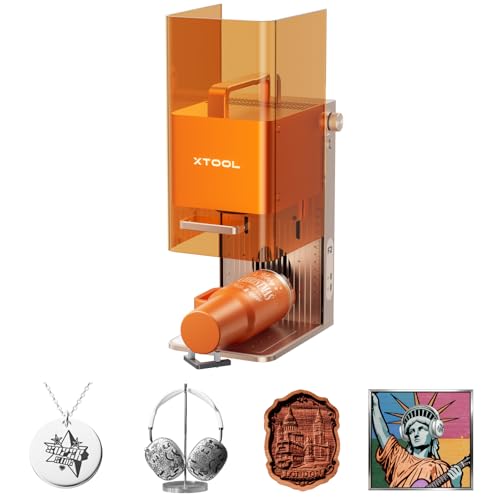
- 15W diode plus 5W IR laser
- 50MP camera for precise alignment
- Enclosed, portable design for batch work
Best For: On-site customization and versatile small-batch engraving
Budget Maker Pick
Twotrees TTS-55 Pro Laser Engraver

- 5.5W laser with 300 x 300mm work area
- Supports LaserGRBL and LightBurn
- Wi-Fi and TF-card offline control
Best For: Hobbyists and makers working on smaller flat projects
Rotary Bundle Pick
Creality Falcon 10W Laser Engraver

- 10W laser with adjustable air assist
- Includes 4-in-1 rotary roller
- Supports flat and cylindrical materials
Best For: Tumblers, cylindrical objects, and versatile maker projects
Best Open-Frame Power

- 10W optical-power laser
- 390 × 410 mm engraving area
- Works with LaserGRBL and LightBurn
Best For: DIY cutting and larger wood or acrylic projects
Best Enclosed Crafting Station

- Enclosed Class 1 design
- Built-in dual cameras
- Beginner-friendly templates and software
Best For: Home crafting and personalized gifts
Powerhouse Pick – xTool S1 40W Rotary Bundle
For shoppers seeking versatile laser engravers for large projects, the xTool S1 combines a powerful 40W laser, a spacious bed, fast operation, and a rotary bundle for curved items. Its enclosed Class 1 design and beginner-focused software make it a practical choice for home workshops and ambitious makers.
Best For: Large signs, batch projects, tumblers, curved items, and users who want guided setup.
Pros:
- 40W power can cut 18mm cherry wood in a single pass.
- Large 23.93-by-15.16-inch bed and speeds up to 600mm/s support sizable projects.
- Rotary capability, AutoPassthrough, autofocus, and xTool Creative Space add flexibility.
- Enclosed Class 1 design includes flame sensors, lid-open protection, and an emergency stop.
Cons:
- At 86.8 pounds, it is relatively heavy and less convenient to relocate.
- Its extensive feature set may be more than casual hobbyists need.
The S1 is a strong all-around option when cutting power, workspace, safety features, and rotary engraving matter more than portability. It is especially compelling for makers handling larger or repeated projects.
Business-Ready Pick – xTool F1 Ultra Dual Laser
The xTool F1 Ultra stands out among laser engravers with both 20W fiber and 20W diode lasers. It is designed for fast, detailed work across metals and nonmetals, making it suited to professional customization, batch production, and makers who need deep or 3D engraving capabilities.
Best For: Businesses, in-store personalization, metal engraving, 3D embossing, and high-throughput production.
Pros:
- Dual lasers cover metals as well as wood, acrylic, leather, glass, fabric, and more.
- Speeds up to 10,000mm/s support rapid production.
- Supports 3D embossing, deep engraving, and a 220-by-220mm work area.
- Enclosed design includes smoke extraction, a fire alarm, and an emergency stop.
Cons:
- The Auto Conveyor for expanded batch production is sold separately.
- It is a Class 4 laser, so its safety requirements may be less suitable for casual users.
This is the most production-oriented option in the group. Its dual-laser system offers exceptional material range and speed, but the Class 4 designation and separate conveyor cost make it better suited to prepared workshops or businesses.
Precision Value Pick – Creality Falcon 10W
The Creality Falcon 10W is a practical choice among laser engravers for makers who want a capable open-style machine with a generous work area and fine spot size. It supports common materials, works with popular software, and can handle both engraving and cutting tasks.
Best For: DIY projects, wood and acrylic cutting, leather work, and users who prefer LightBurn or LaserGRBL.
Pros:
- 0.06-by-0.06mm compressed spot supports detailed engraving.
- 15.7-by-16.3-inch workspace accommodates larger pieces.
- Can cut up to 12mm wood and 5mm black acrylic in one pass.
- Compatible with LightBurn, LaserGRBL, Windows, macOS, Linux, and offline SD-card operation.
Cons:
- Open-style operation requires careful attention to the included eye protection and workspace safety.
- The listed product dimensions appear incomplete, making physical fit harder to assess.
Falcon 10W balances precision, workspace, and software compatibility well for hobbyists. It is a sensible middle-ground pick for varied craft materials, provided you can set up a properly controlled working area.
Compact Starter Pick – ELIDOR Z6 6W
The ELIDOR Z6 is a lightweight option for shoppers comparing laser engravers for home crafts, classrooms, or portable projects. Its 300-by-300mm working area, 6W laser, broad software support, and low 4.7-pound weight make it approachable for beginners and mobile makers.
Best For: Hobbyists, classrooms, craft fairs, personalized gifts, and compact workspaces.
Pros:
- Lightweight 4.7-pound design is convenient for portable use.
- Fine 0.04-by-0.14mm spot and stated 0.01mm engraving accuracy support detailed designs.
- Works with wood, leather, acrylic, cardboard, ceramic, glass, and metal.
- Supports LaserGRBL and LightBurn on Windows, macOS, and Linux.
Cons:
- The 6W module is less suited to demanding cutting than higher-powered models.
- Its 11.8-by-11.8-inch work area is smaller for large signs or batch jobs.
The Z6 makes the most sense when portability, software flexibility, and detailed engraving are priorities. Its compact format is convenient, though users planning frequent heavy cutting may prefer a more powerful machine.
Premium Pick – xTool F2 Dual-Laser Engraver
The xTool F2 stands out among laser engravers for users who want two laser types in one compact machine. Its 15W diode handles cutting and 3D embossing, while the 5W IR laser is designed for dark or color marking on metal. A built-in 50MP camera, enclosed design, and fast 6000mm/s operation make it especially practical for detailed personalization work and small-batch production.
Best For: On-site customization, metal marking, detailed personal projects, and small-batch business work.
Pros:
- Dual 15W diode and 5W IR lasers support work across 300+ materials.
- 50MP camera provides workspace visualization and up to 0.1mm alignment accuracy.
- Fully enclosed, leak-proof design with built-in fan support for indoor use.
- Arrives assembled and supports batch work with optional accessories.
Cons:
- Optional accessories such as the purifier, rotary accessory, and slide extension expand the system’s cost.
- The compact 4.6kg design may be better suited to smaller projects than oversized workpieces.
The xTool F2 is a versatile choice when precision placement, metal marking, portability, and speed matter more than having the largest work area. Its dual-laser setup gives it broader creative range than a basic diode engraver.
Budget Maker Pick – Twotrees TTS-55 Pro Laser Engraver
The Twotrees TTS-55 Pro is a practical option for hobbyists and makers seeking capable laser engravers without a dual-laser setup. Its 5.5W diode laser offers a 300 x 300mm working area, fine 0.08 x 0.46mm spot focus, and support for materials including wood, leather, acrylic, paper, and stainless steel.
Best For: Hobby projects, maker spaces, and small business work involving standard flat materials.
Pros:
- Supports cutting up to 5mm plywood, 3mm acrylic, and 0.7mm leather.
- 32-bit control board enables speeds up to 30,000mm/min.
- Works with LaserGRBL and LightBurn on supported operating systems.
- Includes Wi-Fi, TF-card offline engraving, and an air-assist-ready nozzle.
Cons:
- The 300 x 300mm work area limits the size of projects.
- Its 5.5W output is less powerful than higher-output laser cutters for demanding cuts.
- Air-assist hardware is supported, but the supplied notes do not state that a complete air pump is included.
The TTS-55 Pro balances useful connectivity, software compatibility, and fine engraving detail in a relatively compact machine. It is a sensible starting point for creators who primarily work with smaller flat projects.
Rotary Bundle Pick – Creality Falcon 10W Laser Engraver
The Creality Falcon 10W is one of the more flexible laser engravers for users who want to work on both flat materials and cylindrical objects. It combines a 10W laser with adjustable air assist and a 4-in-1 rotary kit for items such as tumblers, spheres, rings, and other round workpieces.
Best For: Makers engraving wood, acrylic, tumblers, cylindrical objects, and other varied shapes.
Pros:
- 10W output can cut up to 12mm wood or 3mm black acrylic in one pass under stated conditions.
- Included rotary system supports cylinders, spheres, and ring-shaped items.
- Adjustable air assist helps clear smoke and dust for cleaner edges.
- Supports LightBurn, LaserGRBL, Windows, macOS, and TF-card offline operation.
Cons:
- At 20.4 pounds, it is less portable than compact desktop alternatives.
- Assembly is required, even though setup is estimated at 10–20 minutes.
- The larger footprint requires more dedicated workspace.
The Falcon 10W is a strong fit when rotary engraving is a priority. Its included accessories and air-assist system make it better equipped for varied production tasks than a basic flat-bed diode machine.
Best Portable Pick – LP1 Plus Mini Laser Engraver
The LaserPecker LP1 Plus is a practical choice for beginners who want a compact laser engraver for portable DIY projects. It can run from a power bank, starts in about two minutes, and supports compatible non-metal materials such as wood, leather, and acrylic.
Best For: Beginners, mobile crafting, and personalizing small non-metal items.
Pros:
- Pocket-sized design weighs 2.4 pounds and travels easily.
- Adjustable stand and magnetic base support flexible, 360° engraving.
- Simple cross-platform app can import photos or doodles.
- Works with a power bank for outdoor use.
Cons:
- Metal engraving is not supported.
- Requires a precise 200 mm lens-to-material distance.
- Its compact format is better suited to small projects than large workpieces.
The LP1 Plus emphasizes convenience over heavy-duty capacity. Choose it if portability and an easy start matter more than metal capability or a large engraving area.
Best Open-Frame Power – ORTUR Laser Master 2 S2 10W
The ORTUR Laser Master 2 S2 is a high-power laser engraver for DIY users who need a larger working area and stronger cutting performance. Its 10W optical-power module, metal frame, air-assist interface, and compatibility with LaserGRBL and LightBurn make it suited to more demanding projects.
Best For: DIY makers seeking a larger open-frame machine for wood, acrylic, and software-flexible projects.
Pros:
- 10W optical-power laser with a 390 × 410 mm engraving area.
- Built-in air-assist interface is designed for cutting.
- Modular metal construction supports assembly, repair, and upgrades.
- Includes multiple safety shutoff features and protective eyewear.
Cons:
- It is a Class 4 laser, so careful safety practices are essential.
- Assembly is required, even though setup generally takes 10–15 minutes.
- Its open-frame design may require more workspace planning than an enclosed model.
This ORTUR model offers substantially more working capacity than a pocket engraver, but its Class 4 classification and open construction demand a safety-conscious setup. It is a strong fit for makers prioritizing power and flexibility.
Best Enclosed Crafting Station – xTool M2 10W Laser Engraver
The xTool M2 is an enclosed laser engraver designed for home crafters who value guided positioning and a cleaner workflow. Built-in dual cameras provide a real-time workspace preview, while xTool Studio supplies templates and an AI image generator for projects using materials such as wood, leather, felt, fabric, and paper.
Best For: Home crafters, beginners, and personalized-gift projects where enclosure and camera-assisted placement matter.
Pros:
- Fully enclosed Class 1 design with real-time safety monitoring.
- Dual cameras support preview-based “Place & Go” positioning.
- 10W laser handles a broad range of listed craft materials.
- xTool Studio includes ready-to-use templates and an AI image generator.
Cons:
- CMYK inkjet and 3W IR laser modules are sold separately.
- Rotary accessory is not included.
- At 36.2 pounds, it is less portable than compact engravers.
The M2 is a polished home-crafting option for users who want an enclosed Class 1 machine and camera-guided setup. Remember that its expanded printing and metal-capability options require separately purchased modules.
How We Picked These Laser Engravers
We selected these machines by comparing practical factors that affect real-world results: laser type and power, working area, engraving speed, cutting capability, material compatibility, camera or alignment features, included accessories, safety design, and ease of use. The list includes enclosed and open-frame models, diode and infrared systems, dual-laser machines, and compact engravers for different budgets and skill levels.
Advertised wattage and speed are useful starting points, but they do not tell the whole story. Lens quality, air assist, focus adjustment, software support, motion accuracy, and ventilation requirements can have an equally important effect on finished projects.
Quick Comparison
| Best For | What to Prioritize |
|---|---|
| Beginners and occasional crafts | Simple setup, guided focusing, enclosed design, and dependable software |
| Wood and leather projects | Diode power, air assist, a stable frame, and a useful work area |
| Metal marking | Infrared or fiber capability rather than diode power alone |
| High-volume production | Fast motion, repeatable positioning, ventilation, and rotary compatibility |
| Small workspaces | Compact footprint, enclosure, and straightforward storage |
Key Buying Factors for Laser Engravers
Laser Type and Material Compatibility
Diode lasers are versatile for wood, leather, paper, cardboard, and some opaque acrylic. Infrared and fiber systems are better suited to marking many metals and certain plastics. A dual-laser machine can expand material options, but it usually costs more and may require additional setup.
Power, Speed, and Work Area
Higher optical power generally improves cutting depth and reduces the number of passes, while speed matters for large or repeated engravings. Check the actual working area—not just the machine’s outside dimensions—and consider whether it can handle your largest planned item. Rotary accessories are valuable for tumblers, bottles, and other cylindrical objects.
Safety and Ventilation
Choose an enclosed Class 1 design when possible, especially for shared homes, classrooms, or small studios. Open-frame models can be capable and affordable, but they need careful placement, eye protection, supervision, and effective fume extraction. Never engrave unknown plastics or materials that can release hazardous fumes.
Software and Ease of Use
Camera positioning, autofocus, presets, and clear software can shorten the learning curve. Confirm operating-system compatibility and supported file formats before buying. Air assist, honeycomb beds, exhaust systems, and rotary attachments may be included or sold separately.
Who Should Buy Which Laser Engravers?
Beginners should favor a compact or enclosed machine with automatic focusing, camera alignment, and accessible software. Makers focused on wood signs, leather goods, and craft blanks should look for a higher-power diode model with air assist and enough bed space. Users marking jewelry, tools, coated metal, or detailed metal parts should prioritize infrared or fiber technology.
For small businesses, prioritize repeatability, cooling, ventilation, accessory availability, and service support over headline speed alone. If you are unsure how often you will use an engraver, start with a versatile diode model and a manageable work area rather than paying for specialty capabilities you may not need.