Moving a sewing or embroidery machine between rooms, classes, studios, and events is easier with a case that combines cushioning, reliable wheels, and useful organization. The right design can protect your machine while keeping accessories close at hand.
These 10 rolling cases cover compact machine carriers, detachable trolley bags, and extra-large options for heavier equipment. Use the guide below to compare fit, construction, maneuverability, and storage before choosing.
Best 10 Padded Sewing Machine Rolling Cases Picks for 2026
Best Carry-On Option
Compact Rolling Sewing Machine Case

- Padded sidewalls and removable hard base
- Six pockets plus thread spool holders
- Two-wheel frame with carry-on-friendly sizing
Best For: Compact travel and sewing classes
Best for Embroidery Machines
CURMIO Rolling Embroidery Case

- Adjustable straps secure compatible machines
- Foam padding and removable support board
- 13 compartments for embroidery supplies
Best For: Brother sewing and embroidery machine transport
Best Compact Trolley

- Thick padding and removable bottom pad
- Detachable dolly plus shoulder strap
- Front and side accessory pockets
Best For: Compact transport of standard sewing machines
Best Large-Capacity Design
Everything Mary XXL Rolling Case

- XXL interior for machines and craft supplies
- Four 360-degree spinner wheels
- Reinforced polyester with interior straps
Best For: Full sewing projects with fabric and tools
Best Overall Protection
Timoxi Hard-Sided Rolling Case

- Rigid 2mm boards plus thick padding
- Detachable trolley supports up to 30kg
- Water-resistant shell and accessory pockets
Best For: Sewists seeking structured protection and flexible transport
Best Organization
LUXJA Rolling Sewing Machine Case

- Wide-open interior with padded bottom insert
- Lid and exterior pockets organize supplies
- Detachable dolly and shoulder strap included
Best For: Crafters carrying machines plus numerous accessories
Best Maneuverability

- Four double-spinner wheels turn easily
- Padded walls and removable bottom pad
- Carry, shoulder, or cart transport options
Best For: Sewists frequently traveling to classes or craft events
Best Compact Pick
Detachable Rolling Sewing Machine Case

- Fits most standard SINGER, Brother, and Janome machines
- Detachable trolley with shoulder-strap carrying option
- Organized pockets and reinforced protective construction
Best For: Standard-sized machines, classes, and everyday transport
Best Premium Protection

- 23-inch capacity for oversized sewing and embroidery machines
- Shock-absorbing padding with a rigid internal support board
- Lockable hybrid wheels, YKK zippers, and fold-flat storage
Best For: Professional crafters transporting large, heavy machines
Best Heavy-Duty Value
CAB55 XXL Rolling Sewing Machine Case
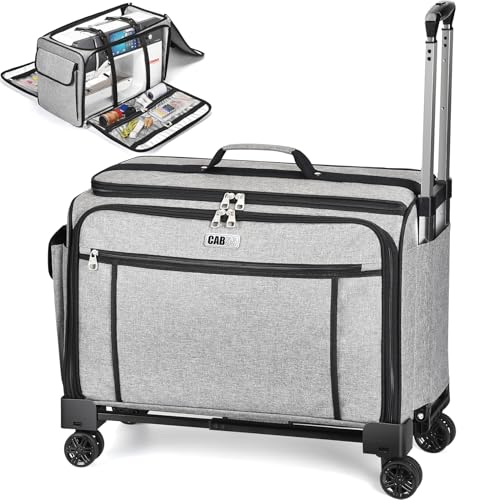
- 23-inch case made for professional machines
- Rigid bottom board supports heavy equipment
- Hybrid wheels combine steering flexibility and tracking
Best For: Large machines, retreats, classes, and heavy-duty transport
Best Carry-On Option – Compact Rolling Sewing Machine Case
For shoppers comparing padded sewing machine rolling cases, this model combines padded sidewalls with a removable hard base and a two-wheel frame. Its 17 x 13 x 14-inch exterior and carry-on-friendly 13.25-inch size make it practical for classes, meetups, and many trips.
Best For: Sewists who want a compact, padded case with organized accessory storage and a two-wheel trolley.
Pros:
- Removable hard base, padded sidewalls, and sturdy wheels add protection during transport.
- Fits machines up to 17 x 10.2 x 13.3 inches and works with many standard Brother, Singer, and Janome machines.
- Six custom pockets, thread spool holders, and see-through storage help organize supplies.
- Can be rolled, carried by its handle, or worn with the detachable shoulder strap.
Cons:
- Its two-wheel design may be less maneuverable than a four-wheel spinner.
- Compatibility should be checked carefully against the listed interior capacity.
Choose this case if portability and structured protection matter more than maximum capacity. The foldable frame and two carrying options add flexibility for stairs and storage.
Best for Embroidery Machines – CURMIO Rolling Embroidery Case
Among padded sewing machine rolling cases, this CURMIO model is designed specifically for several Brother sewing and embroidery machines. Adjustable straps, foam padding, a removable support board, and 13 compartments make it a storage-focused choice for embroidery gear.
Best For: Brother embroidery-machine owners who need dedicated machine restraints and extensive organization for hoops, tools, and cords.
Pros:
- Compatible with listed Brother models including SE600, PE535, SE700, SE2000, PE900, PE800, and PE545.
- Two pairs of adjustable straps help secure the machine, while foam padding surrounds the bag.
- Includes transparent pockets, mesh pockets, an inner project layer, a front pocket, and side pouches.
- Detachable dolly, reinforced handles, and removable shoulder straps provide multiple carrying options.
Cons:
- The specialized fit means other machine models require careful dimension checking.
- At 3.27 kg, it is heavier than some simpler sewing-machine bags.
This is a strong organizational pick when embroidery accessories are part of the load. Verify your machine against the 22.2 x 9.5 x 13.4-inch size before ordering.
Best Compact Trolley – LUXJA Sewing Machine Case
This LUXJA option is one of the more compact padded sewing machine rolling cases, with a wide-opening design, thick-padded lining, and a removable bottom pad. Its detachable dolly lets you roll the case when needed or carry it with the included handles and shoulder strap.
Best For: Sewists seeking a compact standard-machine bag with straightforward accessory storage and flexible carrying methods.
Pros:
- Thick-padded lining and removable bottom padding help protect the machine.
- Front and side pockets provide room for a foot pedal, power cable, manuals, materials, and notions.
- Wide opening makes loading and removing a machine easier.
- Detachable dolly, grab handles, and shoulder strap support different transport needs.
Cons:
- The 16.5 x 7.5 x 11-inch interior is smaller than some larger rolling cases.
- It is intended for most standard machines, so unusually large models may not fit.
Consider this case when you want padded protection without moving up to an XXL tote. Its compact dimensions are convenient, but measuring your machine first is essential.
Best Large-Capacity Design – Everything Mary XXL Rolling Case
For shoppers who need more than a machine compartment, this XXL case offers a spacious alternative among padded sewing machine rolling cases. Its 22 x 12.5 x 16-inch interior is designed to hold a machine alongside fabric, threads, and tools, while four spinner wheels improve maneuverability.
Best For: Crafters transporting a sewing or embroidery machine with substantial fabric, notions, and project supplies.
Pros:
- Large interior accommodates a machine plus craft supplies.
- Four 360-degree spinner wheels support smooth movement in tight spaces.
- Reinforced polyester, zippers, interior straps, and multiple pockets help with durability and organization.
- Listed as compatible with Brother, Singer, and Babylock embroidery machines.
Cons:
- Its XXL exterior and 5.35 kg weight make it less convenient for lightweight travel.
- The larger footprint may require more storage space at home or in transit.
This is the capacity-first choice in the group. It makes sense for classes, travel, or projects where carrying fabric and tools with the machine is more important than minimizing bulk.
Best Overall Protection – Timoxi Hard-Sided Rolling Case
For shoppers comparing padded sewing machine rolling cases, the Timoxi stands out with rigid 2mm plastic boards, thick padding, and a detachable trolley. Its 17 x 8 x 12.5-inch main compartment is designed for most standard sewing machines, while the water-resistant nylon shell adds practical protection for travel and storage.
Best For: Sewists who prioritize structure, padding, and a detachable rolling setup.
Pros:
- Built-in plastic boards and thick padding help protect against drops and bumps.
- Reinforced trolley base supports up to 30kg and folds for storage.
- Extra-thick scissor pocket and multiple larger pockets organize accessories.
- Can be used with the trolley, shoulder strap, or handles.
Cons:
- The main compartment may not fit oversized or unusually shaped machines.
- The trolley and protective structure may feel bulkier than a basic soft bag.
With its hard-sheet reinforcement and flexible carrying options, this is a strong choice when machine protection matters as much as mobility.
Best Organization – LUXJA Rolling Sewing Machine Case
The LUXJA is one of the more storage-focused padded sewing machine rolling cases, combining a thickly padded polyester bag with a removable bottom insert. Its wide-open main section, lid organizers, and numerous exterior pockets make it convenient for classes, workshops, and organized equipment transport.
Best For: Crafters who carry many sewing tools and want dedicated compartments.
Pros:
- Thick padding and a removable padded bottom help reduce impact.
- Lid includes a clear pocket, six elastic loops, and two small pouches.
- Front and side compartments provide extensive accessory storage.
- Includes a detachable dolly, shoulder strap, and multiple handles.
Cons:
- The bag is sold without a sewing machine.
- Its 16.25 x 7.75 x 13-inch dimensions may limit compatibility with larger machines.
- It uses soft-sided polyester rather than built-in rigid panels.
If keeping thread, needles, manuals, and tools sorted is a priority, the LUXJA offers especially practical organization in a mobile case.
Best Maneuverability – Rolling Sewing Machine Tote
This rolling sewing machine tote is a practical option among padded sewing machine rolling cases, with padded sidewalls and a bottom pad for everyday protection. Its 17.3 x 9 x 13.4-inch compartment fits most standard machines, while the lightweight aluminum cart and four double-spinner wheels support smoother movement.
Best For: Sewists who want a versatile tote for classes, travel, and quick transport.
Pros:
- Four double-spinner wheels are designed for easy turning and movement.
- Padded sidewalls and bottom help guard against bumps and scratches.
- Multiple pockets and mesh compartments keep accessories accessible.
- Offers carry-handle, shoulder-strap, and cart carrying modes.
Cons:
- The floral blue design may not suit every preference.
- Its soft nylon shell does not provide the rigid structure of a hard-sided case.
- Compatibility is aimed at standard-size machines, not oversized models.
Its spinner-style wheel setup and three carrying methods make this tote appealing for sewists who frequently move between home, classes, and events.
Best Compact Pick – Detachable Rolling Sewing Machine Case
For everyday classes, gatherings, and short trips, this padded sewing machine rolling case combines a compact design with practical organization. Its 17 x 9.5 x 12-inch main compartment fits most standard-sized SINGER, Brother, and Janome machines, while the detachable trolley and shoulder strap add carrying flexibility.
Best For: Beginners and sewists who need a versatile case for standard-sized machines and accessories.
Pros:
- Multiple pockets, a spool holder, and a transparent front pocket keep supplies organized.
- Detachable folding trolley, shoulder strap, and four double-spinner wheels support different carrying options.
- Reinforced nylon, thickened side walls, and a rigid base panel add structure and protection.
- Water-resistant material and a full-length zipper suit regular transport.
Cons:
- The compact dimensions may not accommodate oversized professional machines.
- The case is designed around portability rather than maximum-capacity storage.
This is a practical choice when you want a padded sewing machine rolling case that can be wheeled, carried, or folded away between uses.
Best Premium Protection – XXL Professional Rolling Case
This extra-large padded sewing machine rolling case is built for oversized sewing and embroidery machines. Its 23-inch capacity, internal support board, thick shock-absorbing padding, and heavy-duty fabric are aimed at professional crafters who need substantial protection and room for project accessories.
Best For: Professional crafters, sewing instructors, retreat attendees, and quilters with oversized equipment.
Pros:
- Extra-large interior is designed for oversized machines and has a high-density support board to reduce sagging.
- Thick padding and tear-resistant fabric provide a protective outer layer.
- Expansive pockets hold foot pedals, embroidery hoops, and thread collections.
- Lockable wheels, YKK zippers, and a fold-flat design add practical convenience.
Cons:
- At 12 pounds, it is substantially heavier than a compact rolling case.
- The XXL size may be excessive for standard home sewing machines.
- Its listed dimensions require considerable storage space when set up.
Choose this model when machine size and protection matter more than minimizing weight. The support board and lockable hybrid trolley are especially useful for transporting heavier equipment.
Best Heavy-Duty Value – CAB55 XXL Rolling Sewing Machine Case
The CAB55 is a padded sewing machine rolling case for oversized professional machines, with a 23-inch format and reinforced bottom support. Its hybrid four-wheel layout balances spinner-style steering with fixed-wheel tracking, while the foldable body helps reduce storage demands when the case is not in use.
Best For: Quilters, instructors, and embroidery users carrying large machines to retreats or classes.
Pros:
- XXL 23-inch design provides room for professional sewing and embroidery machines.
- High-density bottom board helps prevent sagging and keeps equipment level.
- Two front spinner wheels and two rear fixed wheels support maneuverability and directional stability.
- Thick padding, tear-resistant fabric, large accessory pockets, and foldable storage add utility.
Cons:
- The large format is unlikely to be necessary for compact or standard machines.
- The supplied details do not specify zipper type, water resistance, or handle configuration.
This case stands out for shoppers prioritizing a rigid base and stable rolling setup without giving up foldable storage. Confirm your machine’s measurements before choosing this XXL carrier.
How We Picked the Best Padded Sewing Machine Rolling Cases
We focused on the features that matter most when transporting sewing and embroidery machines: interior padding, structural support, machine compatibility, wheel stability, handle design, storage capacity, and ease of loading. The selection includes compact cases for everyday use, models with detachable dollies, and larger bags designed for machines with more accessories.
Because dimensions and internal layouts vary, confirm your machine’s measurements against the seller’s specifications before ordering. A case should provide enough room for the machine without allowing excessive movement during transport.
Quick Comparison
| Best For | Look For | Most Useful Feature |
|---|---|---|
| Classes and short trips | Compact padded tote | Lightweight construction |
| Frequent rolling | Detachable trolley or reinforced base | Stable wheels and telescoping handle |
| Large machines | XXL capacity and rigid support | Extra interior clearance |
| Accessory-heavy setups | Multiple pockets and compartments | Organized storage |
Key Buying Factors for Padded Sewing Machine Rolling Cases
Fit and Interior Protection
Measure the machine’s width, depth, and height, including removable parts that you plan to transport. Look for thick padding, a secure closure, and straps or a snug interior that reduce shifting. A reinforced or hard-sheet base can help prevent sagging and protect the machine from uneven surfaces.
Wheels, Handle, and Portability
Two-wheel designs are often lighter and easier to pull up ramps or over thresholds. Four-wheel cases may offer better upright maneuverability, especially in classrooms or studios. Check whether the wheels are lockable, how far they extend from the bag, and whether the telescoping handle feels stable under load.
Capacity and Organization
Count the accessories you normally carry: presser feet, thread, rulers, fabric, cords, manuals, and embroidery hoops can quickly fill a small bag. Exterior pockets are convenient for quick access, while larger compartments help keep delicate items separated from the machine.
Construction and Maintenance
Durable fabric, reinforced seams, strong zippers, and a stable bottom improve long-term usability. Water-resistant material is helpful for brief exposure to moisture, but it should not be treated as full waterproof protection. Detachable bases can make the bag easier to store when it is not in use.
Who Should Buy Which Padded Sewing Machine Rolling Cases?
Choose a compact rolling tote if you transport a smaller machine and want an easier-to-lift option for classes or occasional trips. A case with a detachable dolly is a versatile choice when you want to carry the bag separately or store it more conveniently.
Frequent travelers should prioritize sturdy wheels, a reinforced base, durable zippers, and comfortable handling over decorative details. If you use a large embroidery machine or carry extensive supplies, an XXL case with extra clearance and multiple compartments is usually the better fit. Finally, verify compatibility carefully: a case advertised for a particular Brother, Singer, Baby Lock, or embroidery model may still have a different internal fit than your machine requires.