Choosing the right recorder can make the difference between usable audio and a ruined take. The best portable field recorders give you cleaner capture, more control, and the flexibility to work anywhere.
In this roundup, we focus on practical features that matter most on location: input options, 32-bit float recording, mic quality, battery life, and ease of use.
Best 10 Portable Field Recorders Picks for 2026
Run-and-Gun 32-Bit Option
Zoom F3 Field Recorder for Filmmakers

- 32-bit float recording for unpredictable levels
- Dual locking XLR inputs for secure rigs
- Ultra-low-noise preamps and flexible power
Best For: Filmmakers and field recordists working in changing conditions
Compact Stereo Choice
TASCAM DR-05XP Handheld Recorder

- 32-bit float, 24-bit, and 16-bit recording modes
- Built-in stereo mics handle up to 125dB SPL
- USB-C interface for direct computer recording
Best For: Travel-friendly recording of music, voice, and meetings
Flexible Dual-Input Pick
Zoom H1 XLR 2-Channel Recorder

- Two XLR/TRS combo inputs for flexible sources
- 32-bit / 96kHz recording with waveform display
- SDXC support up to 1TB for longer sessions
Best For: Podcasters and interviewers needing compact pro-style inputs
Feature-Rich Bundle Pick
Zoom H5studio Handy Recorder Bundle

- 32-bit float recording for clear capture
- Detachable XY mic plus accessory bundle
- Compact rugged body for on-the-go work
Best For: Creators who want a ready-to-use handheld recorder bundle
Portable Field Recorder Pick
Zoom H4 Essential for Musicians & Creators

- 32-bit float recording helps prevent clipped takes.
- Built-in stereo mics plus 2 XLR/TRS inputs.
- USB-C recording and SD card backup support flexible workflows.
Best For: Creators who need a versatile handheld recorder for music, interviews, podcasts, and field audio.
Portable Field Recorder Bundle
Zoom H4essential with Accessory Pack
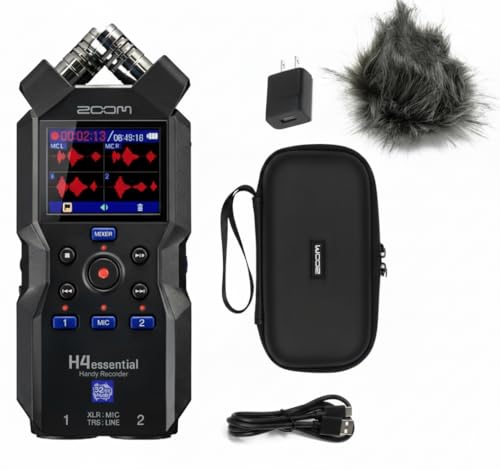
- Bundle includes windscreen, case, AC adapter, and USB-C cable.
- 32-bit float recording helps avoid clipping in tough environments.
- Up to 20 hours of battery life suits long sessions.
Best For: Buyers who want a recorder bundle with useful accessories for extended recording sessions.
Compact Portable Field Recorder
Zoom H1 Essential for Everyday Capture

- Extremely lightweight at 92 g for easy portability.
- X/Y stereo mics and 32-bit float recording.
- USB-C microphone mode works for calls and livestreams.
Best For: Solo creators who want a lightweight stereo recorder for voice, ambience, and quick content capture.
Portable Starter Kit
Zoom H1essential Bundle with 64GB Card
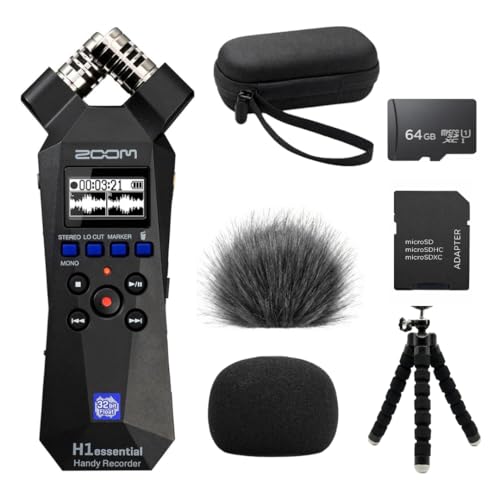
- 32-bit float recording reduces clipping risk.
- Includes case, windscreens, tripod, and 64GB card.
- USB-C doubles as a USB microphone.
Best For: Beginners and mobile recordists who want a complete starter kit.
Songwriting Multitrack Pick

- Records up to 4 tracks with bounce workflow.
- 32-bit float and combo inputs simplify capture.
- Also works as a 2-in/2-out USB interface.
Best For: Songwriters and musicians who need a compact multitrack recorder.
Interview Bundle Choice
Zoom H1essential with Lavalier Mic

- 32-bit float keeps levels simple.
- Includes lav mic, windscreen, batteries, and 32GB card.
- Useful extras like pre-record and auto record.
Best For: Podcasters and interviewers who want a lavalier-ready bundle.
Run-and-Gun 32-Bit Option – Zoom F3 Field Recorder for Filmmakers
If you need portable field recorders that can handle unpredictable audio without constant level riding, the Zoom F3 is built for exactly that kind of work. Its 32-bit float recording is aimed at run-and-gun filmmaking, while the dual locking XLR inputs and low-noise preamps suit more demanding field setups.
Best For: Filmmakers, recordists, and on-location users who need clean capture in uncontrolled environments.
Pros:
- 32-bit float recording helps capture quiet dialogue and sudden peaks without manual adjustments.
- Dual locking XLR inputs are useful when the recorder is part of a larger rig.
- Ultra-low-noise preamps support cleaner sound in unpredictable conditions.
- Flexible power and standalone or USB workflows help on long location days.
Cons:
- Designed around XLR-based setups, so it is less centered on simple built-in-mic recording.
- May be more recorder than needed for very casual voice-only use.
The F3 is a practical pick when reliability matters more than extra features, especially for field work where audio levels can change fast. It keeps the focus on clean capture and secure connections rather than a complicated control layout.
Compact Stereo Choice – TASCAM DR-05XP Handheld Recorder
For portable field recorders that are easy to carry and simple to use, the TASCAM DR-05XP focuses on straightforward stereo capture with flexible recording formats. It is set up for music, audio-for-video, meetings, dictation, and similar everyday recording jobs, and it also works as a USB-C audio interface.
Best For: Users who want a lightweight handheld recorder for music, voice, and general-purpose field recording.
Pros:
- Supports 32-bit float, 24-bit, and 16-bit recording for flexible workflows.
- Omnidirectional condenser microphones handle louder sources up to 125dB SPL.
- USB-C 2-in/2-out interface adds direct computer recording capability.
- Lightweight handheld design suits travel and quick setups.
Cons:
- Uses AA batteries and SD card storage, which are not included.
- Best suited to stereo recording rather than multi-input setups.
The DR-05XP makes sense if you want a simple recorder that covers a lot of common use cases without a steep learning curve. It is especially appealing for users who value portability and the extra flexibility of USB-C audio interfacing.
Flexible Dual-Input Pick – Zoom H1 XLR 2-Channel Recorder
Among portable field recorders, the Zoom H1 XLR stands out for simple setup and two XLR/TRS combo inputs that make it easy to connect mics or instruments. Its 32-bit / 96kHz recording, OLED waveform display, and 3.5mm input/output give it a versatile balance of convenience and control.
Best For: Podcasters, interviewers, and creators who want a compact recorder with pro-style input flexibility.
Pros:
- Two XLR/TRS combo inputs support microphones, instruments, and other sources.
- 32-bit / 96kHz recording offers detailed capture for interviews and everyday use.
- OLED waveform display helps monitor levels at a glance.
- SDXC support up to 1TB provides room for longer recording sessions.
Cons:
- Battery life is rated at about 10 hours, which may be limiting for long shoots.
- Built-in microphone design is less specialized for multi-mic field rigs than larger recorders.
The H1 XLR is a smart middle-ground recorder if you need more than a basic handheld unit but do not want a bulky setup. It is especially useful when you want easy monitoring and flexible input options in a compact body.
Feature-Rich Bundle Pick – Zoom H5studio Handy Recorder Bundle
If you are comparing portable field recorders and want a bundle that is ready to go, the Zoom H5studio adds useful extras alongside its recorder. The 32-bit float recording, detachable XY microphone, and included accessory pack make it a flexible choice for field documentation, interviews, training, and research capture.
Best For: Users who want a bundled handheld recorder with accessories and expandable microphone options.
Pros:
- 32-bit float recording helps control sudden spikes and preserve clarity.
- Detachable XY microphone capsule adds flexibility for different recording needs.
- Bundle includes a 64GB microSDHC card, batteries, and cleaning cloth.
- Compact, rugged design suits travel and on-the-go work.
Cons:
- Does not include a headphone jack according to the supplied details.
- As a bundle, it may be more recorder than needed for very basic tasks.
The H5studio bundle is compelling if you want a more complete starter package instead of buying accessories separately. It blends portability with modular recording options, which is helpful when your projects vary from one location to the next.
Portable Field Recorder Pick – Zoom H4 Essential for Musicians & Creators
If you want portable field recorders that can handle music, interviews, podcasts, and video audio, the Zoom H4 Essential is built for that kind of mixed-use workflow. Its 4-track design, built-in stereo mics, and two XLR/TRS inputs give you room to capture more sources without needing a separate rig.
Best For: Creators who need a flexible handheld recorder for field recording, live audio, and simple multi-input sessions.
Pros:
- 32-bit float recording helps reduce distortion risk on unpredictable sources.
- Built-in stereo microphones plus two XLR/TRS inputs support more recording setups.
- USB-C lets you record or stream to a phone, tablet, or computer.
- SD card backup adds another layer of recording security.
Cons:
- Requires 2 AA batteries, so power management matters on longer outings.
- The 2-inch screen is relatively small for users who prefer larger displays.
Overall, this is one of the more versatile portable field recorders in the lineup if you need a single device that can move between music, spoken-word, and location audio. The spoken menu guidance also makes it easier to use than many compact recorders.
Portable Field Recorder Bundle – Zoom H4essential with Accessory Pack
This Zoom H4essential bundle is a practical choice for portable field recorders buyers who want the recorder and key accessories in one box. With 32-bit float recording, XLR/TRS combo jacks, and a stereo mini-jack input, it is set up for flexible capture in a range of real-world recording situations.
Best For: Buyers who want a ready-to-use recorder bundle with accessories for location recording and longer sessions.
Pros:
- Includes the APH-4e accessory pack with windscreen, padded case, AC adapter, and USB-C cable.
- 32-bit float recording is designed to reduce clipping concerns in changing environments.
- Up to 20 hours of battery life supports extended sessions.
- Clear 2.0-inch color LCD makes navigation and monitoring easier.
Cons:
- It is a bundle, so it may be more than you need if you already own accessories.
- The product details still center on a compact handheld form, not a larger control surface.
For shoppers comparing portable field recorders, this bundle stands out because it adds the most immediately useful accessories upfront. That makes it a strong fit when you want to start recording with less extra buying later.
Compact Portable Field Recorder – Zoom H1 Essential for Everyday Capture
The Zoom H1 Essential is a compact option for portable field recorders shoppers who mainly need clean stereo audio in a small, easy-to-carry package. It is aimed at content creation, interviews, ambient capture, and USB microphone use, so it works well when you want better sound without a larger setup.
Best For: Solo creators and mobile users who want a lightweight recorder for voice, ambience, and simple stereo capture.
Pros:
- Very lightweight at 92 g, making it easy to carry on the go.
- X/Y stereo mics and 32-bit float recording support clear, polished capture.
- USB-C microphone mode works for livestreams, calls, podcasts, and voiceovers.
- Useful for voice, ambience, room tone, sound effects, and quick content shoots.
Cons:
- Only a single stereo recorder, so it is less expandable than models with XLR/TRS inputs.
- Uses 2 AAA batteries, which may be less convenient than rechargeable power setups for some users.
Among portable field recorders, this one makes the most sense when size and simplicity matter more than input flexibility. It is a strong fit for creators who want dependable stereo capture in the smallest possible package.
Portable Starter Kit – Zoom H1essential Bundle with 64GB Card
This portable field recorder bundle is aimed at quick capture without extra shopping. The Zoom H1essential gives you 32-bit float recording, X/Y mics, and up to 96kHz sample rate, while the included case, windscreens, tripod, and 64GB card make it easier to get outside and start recording right away.
Best For: Beginners, interviewers, and travel recordists who want a ready-to-go portable field recorder kit.
Pros:
- 32-bit float recording helps prevent clipping on vocals, instruments, interviews, and ambient sound.
- X/Y microphones are rated to capture clean audio up to 120 dB SPL.
- Includes a 64GB microSD card, EVA case, furry windscreen, foam windscreen, and flexible tripod.
- USB-C function lets it work as a USB microphone for PC, Mac, iOS, or Android.
Cons:
- Records to a 64GB card rather than a larger storage bundle.
- Uses AAA batteries, which means you’ll need spares for longer sessions.
- The included tripod is small and mainly suited to tabletop or lightweight use.
As a portable field recorder package, this one stands out for convenience more than complexity. It is a practical pick if you want clean audio capture plus the basic accessories needed for field work, podcasting, or simple mobile recording.
Songwriting Multitrack Pick – Zoom R4 Multi-Track Recorder
The Zoom R4 is a more studio-leaning option in the portable field recorders category, built for layering ideas and capturing sources without gain staging fuss. With 4-track recording, 32-bit float, combo inputs, and onboard rhythms, it suits musicians who want a compact recorder that can also function as a USB audio interface.
Best For: Musicians and songwriters who need a portable recorder for sketching, layering, and bouncing tracks.
Pros:
- Records up to 4 tracks and supports bouncing to a dedicated track.
- 32-bit float audio means no clipping and no gain adjustments needed.
- Two XLR/TS combo inputs handle microphones, instruments, keyboards, and more.
- Built-in rhythms and USB audio interface mode add flexibility for practice and production.
Cons:
- It is more focused on music production than simple field interview use.
- Battery-powered operation uses 4 AA batteries rather than built-in rechargeable power.
- Heavier feature set may be more recorder than a casual user needs.
For creators who need a portable field recorder with real multitrack workflow, the R4 offers the most depth of the three. It makes the most sense when your recordings need layering, bouncing, and instrument-friendly inputs.
Interview Bundle Choice – Zoom H1essential with Lavalier Mic
This portable field recorder bundle is built for spoken-word work where a lavalier mic can be useful. The Zoom H1essential adds 32-bit float recording, onboard X/Y mics rated up to 120 dB SPL, and features like overdubbing, pre-record, auto record, and playback speed adjustment, while the bundled lav and windscreen expand your setup options.
Best For: Podcasters and interviewers who want a lightweight recorder bundle with a lavalier microphone included.
Pros:
- 32-bit float recording removes the need to manually adjust levels.
- Onboard X/Y mics can capture loud sources up to 120 dB SPL.
- Includes a professional lavalier condenser microphone, furry windscreen, 32GB card, and batteries.
- Pre-record, auto record, overdubbing, and playback speed adjustment add useful utility.
Cons:
- Uses mono operation mode, so it is less centered on stereo capture than some alternatives.
- Accessory bundle is practical, but storage is limited to the included 32GB card.
- Best suited to voice capture rather than more elaborate music recording setups.
If you want a portable field recorder that leans toward interviews and dialogue, this bundle is a strong fit. The included lav mic makes it easier to set up for speaking tasks without buying extra pieces separately.
How We Picked These Portable Field Recorders
We prioritized models that are genuinely useful for real-world recording, not just spec-heavy on paper. That means solid preamps, reliable build quality, flexible input options, straightforward operation, and features that help prevent clipped or noisy recordings.
We also favored recorders that suit different workflows, from simple handheld capture to multi-input setups for filmmaking, music, interviews, and field work.
Quick Comparison: What Matters Most
If you want the simplest setup, compact handheld models are easiest to carry and fastest to deploy. If you need more control, look for XLR or combo inputs, dedicated gain control, and 32-bit float recording. For creators who record both voice and music, hybrid units that can function as an audio interface can be especially versatile.
Among Portable Field Recorders, the most important tradeoff is usually size versus flexibility. Smaller units are easier to travel with, while larger recorders typically offer better connectivity and more advanced track management.
Key Buying Factors for Portable Field Recorders
Inputs and Mic Support
Check whether you need built-in microphones, XLR inputs, combo jacks, or all three. Built-in mics are convenient for quick captures, while external mic support gives you much better control for dialogue and production audio.
Recording Format
32-bit float recording is a major advantage because it helps reduce clipping risk and makes gain staging easier. If you often record unpredictable sources, this feature is worth prioritizing.
Portability and Power
Handheld recorders should be easy to carry, mount, and power in the field. Consider battery type, USB-C support, and whether the unit can double as an interface for desktop use.
Monitoring and Workflow
Headphone output, clear screen feedback, and simple transport controls can save time when you are working fast. For larger sessions, track count and file management matter more than raw portability.
Who Should Buy Which Portable Field Recorders?
Filmmakers should focus on clean preamps, XLR support, and dependable monitoring. Podcasters and interviewers may prefer compact handheld recorders with built-in mics and easy USB connectivity. Musicians often benefit most from multi-track capability, flexible inputs, and 32-bit float recording for loud sources and live sessions.
If you want the best balance, choose a recorder that matches your most common workflow rather than the one with the longest feature list. The right portable field recorder is the one you will actually bring, set up quickly, and trust in the moment.