A USB hub with Ethernet can add dependable wired networking while expanding a laptop or desktop with extra USB ports, display outputs, and charging support. The right model depends on your computer’s connector, preferred port mix, and how much performance you need.
We compare 10 versatile options, from compact USB-A adapters to feature-rich USB-C hubs with Gigabit Ethernet and 4K display support.
Best 10 USB Hub with Ethernet Picks for 2026
Best All-in-One Value
ABLEWE 4-in-1 USB Hub with Gigabit Ethernet
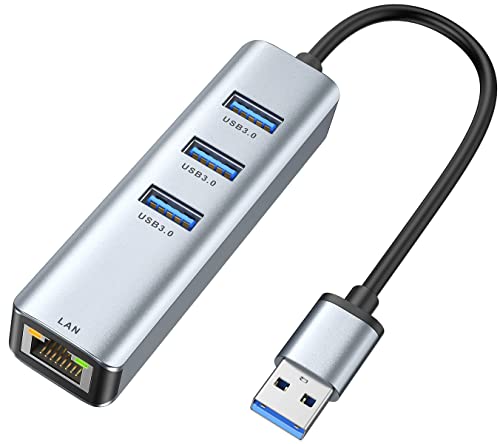
- Gigabit RJ45 network connection
- Three USB 3.0 ports
- Compact aluminum design with 24-month warranty
Best For: Adding wired networking and USB-A connectivity to a USB 3.0 laptop
Best for Peripheral Power
UGREEN 5-in-1 USB Hub with Ethernet
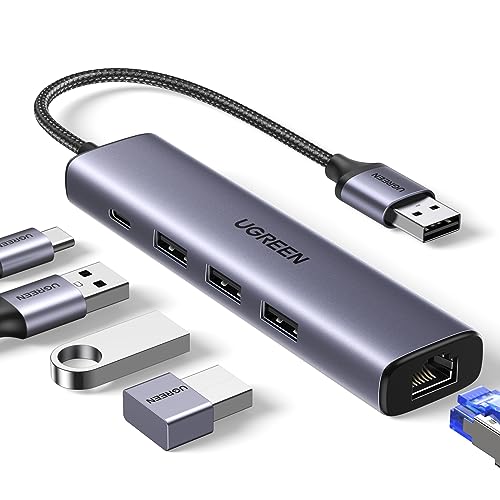
- 1000Mbps gigabit Ethernet
- Three USB 3.0 ports with 5Gbps syncing
- USB-C input for high-power peripherals
Best For: Connecting storage and accessories that may need supplemental power
Best Port Variety
7-in-1 USB-C Hub with Gigabit Ethernet

- Four USB-A and two USB-C data ports
- 10/100/1000Mbps Ethernet
- 5Gbps data transfer with 1-foot cable
Best For: USB-C laptops needing many data ports and wired networking
Best Established Brand
TP-Link UE330 USB 3.0 Hub with Ethernet

- Gigabit Ethernet plus three USB 3.0 ports
- Compact and lightweight for travel
- 24-month warranty with 24/7 technical support
Best For: Portable USB-A networking and peripheral expansion
Best All-Around Pick

- Gigabit Ethernet and 4K@30Hz HDMI
- Three USB-A 3.0 ports for peripherals
- Up to 85W pass-through charging
Best For: Everyday laptop connectivity and home offices
Best Compact USB-A/C Option

- Works with USB-A and USB-C devices
- Three USB 3.0 ports plus Gigabit Ethernet
- Compact design with plug-and-play setup
Best For: Mixed USB-A and USB-C device users
Best for High-Speed Expansion

- 10Gbps USB data transfer speeds
- 4K HDMI plus Ethernet and card readers
- Up to 85W pass-through charging
Best For: Media workflows and feature-rich USB-C setups
Long-Cable Ethernet Expansion
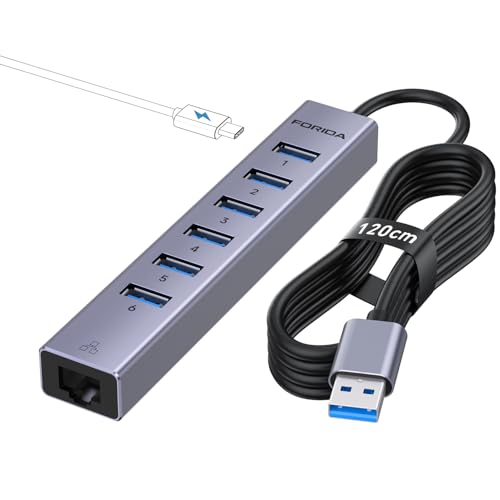
- Six USB 3.0 ports with up to 5Gbps transfer speeds
- Gigabit Ethernet for stable wired networking
- 3.9-foot cable and USB-C power input
Best For: USB-A laptops and desktops needing multiple peripherals and Ethernet
All-in-One USB-C Connectivity

- Gigabit Ethernet and 4K HDMI output
- Three USB 3.0 ports up to 5Gbps
- 100W USB-C Power Delivery support
Best For: USB-C laptops needing Ethernet, HDMI, USB ports, and charging
Pro Media and Display Hub

- 4K HDMI at 60Hz and Gigabit Ethernet
- SD/TF card readers for media transfers
- Up to 10Gbps data and 85W pass-through charging
Best For: USB-C users building media, display, and wired-networking workstations
Best All-in-One Value – ABLEWE 4-in-1 USB Hub with Gigabit Ethernet
If you need a practical USB hub with Ethernet, the ABLEWE combines a gigabit RJ45 connection with three USB 3.0 ports. It is a useful way to add wired networking and connect peripherals through one USB 3.0 port.
Best For: Laptop users who want gigabit Ethernet plus several USB-A ports in a compact aluminum hub.
Pros:
- Gigabit Ethernet supports 10/100/1000Mbps connections.
- Three USB 3.0 ports can operate simultaneously with the network port.
- Offers up to 5Gbps USB data transfer and broad Windows, Mac, Linux, and Chrome OS compatibility.
Cons:
- Designed for USB 3.0 hosts rather than USB-C-only devices.
- Its listed operating-system compatibility varies by platform and version.
The ABLEWE is a strong fit when you want a straightforward wired connection without giving up multiple USB ports. Its compact aluminum design and included 24-month warranty add practical value for mobile or everyday use.
Best for Peripheral Power – UGREEN 5-in-1 USB Hub with Ethernet
The UGREEN 5-in-1 is a flexible USB hub with Ethernet for laptops and desktops that need both stable wired networking and extra USB-A ports. Its additional USB-C power input can help support higher-power peripherals.
Best For: Users connecting hard drives and other USB accessories while maintaining a gigabit wired network connection.
Pros:
- Gigabit Ethernet provides network speeds up to 1000Mbps.
- Three USB 3.0 ports support data synchronization up to 5Gbps.
- USB-C power input can help provide stable performance for high-power peripherals.
Cons:
- The USB-C power port does not charge the host laptop.
- Driver installation is required on some older Windows and Linux systems.
UGREEN’s hub balances everyday expansion with a useful power option for demanding accessories. It is especially practical if your setup includes external storage, though buyers should check their operating system and remember that the power input is for peripherals only.
Best Port Variety – 7-in-1 USB-C Hub with Gigabit Ethernet
This 7-in-1 USB hub with Ethernet provides a broad mix of connections for a USB-C laptop or tablet. It combines gigabit RJ45 networking with four USB-A and two USB-C data ports, all rated for up to 5Gbps transfers.
Best For: USB-C users who need several USB-A and USB-C data connections at a desk.
Pros:
- Offers four USB-A and two USB-C data ports alongside Ethernet.
- Gigabit networking supports 10/100/1000Mbps connections.
- A 1-foot cable and optional 5V/3A power support make desk placement and peripheral use convenient.
Cons:
- The USB-C ports do not support video output or PD charging.
- Power adapter and cable are not included.
The ABFCRTTW hub stands out for port count and connector variety rather than display expansion. It makes sense for data-focused setups, provided you do not need USB-C video, laptop charging, or included supplemental power.
Best Established Brand – TP-Link UE330 USB 3.0 Hub with Ethernet
The TP-Link UE330 is a compact USB hub with Ethernet that adds one gigabit RJ45 port and three USB 3.0 ports to a compatible computer. It is designed for users who want stable wired networking and basic peripheral expansion in a travel-friendly format.
Best For: Travelers and laptop users who prefer a compact USB-A adapter from an established networking brand.
Pros:
- Adds gigabit Ethernet and three USB 3.0 ports.
- USB 3.0 ports support faster transfers than USB 2.0 and remain backward compatible.
- Includes a 24-month warranty and free 24/7 technical support.
Cons:
- It uses a USB-A connection and may require an adapter for USB-C-only hosts.
- It offers fewer expansion ports than larger multiport hubs.
The UE330 is a sensible, no-frills choice when reliability, portability, and straightforward connectivity matter more than maximum port variety. Its broad listed compatibility and long support coverage make it a reassuring option for everyday travel or office use.
Best All-Around Pick – UGREEN Revodok 6-in-1 Hub
If you need a practical USB hub with Ethernet for a laptop or tablet, the UGREEN Revodok combines Gigabit networking, HDMI, USB-A expansion, and pass-through charging in one compact adapter.
Best For: Home offices, online meetings, streaming, and everyday laptop connectivity.
Pros:
- Gigabit Ethernet supports speeds up to 1000Mbps for a stable wired connection.
- Includes 4K@30Hz HDMI, three USB-A 3.0 ports, and USB-C PD input.
- Supports up to 85W pass-through charging from a 100W charger.
- USB-A ports support data transfers up to 5Gbps.
Cons:
- HDMI does not support HDR or 3D.
- The USB-C port is for charging only, not data or video.
- HDMI output is limited to 30Hz at 4K.
This is a well-rounded choice when you want wired internet plus display and peripheral expansion without carrying a larger dock. Its limitations are mainly the charging-only USB-C port and 4K@30Hz video output.
Best Compact USB-A/C Option – ALL-LUCKY 4-in-1 Ethernet Hub
This versatile USB hub with Ethernet supports both USB-A and USB-C connections, making it useful for adding wired networking and extra USB ports to a range of computers and tablets.
Best For: Users who switch between USB-A and USB-C devices and need a simple wired network adapter.
Pros:
- Provides three USB 3.0 ports plus a Gigabit RJ45 Ethernet port.
- Convertible connector works with USB-A and USB-C devices.
- Supports network speeds up to 1000Mbps with a suitable CAT6-or-better cable.
- Plug-and-play compatibility covers Windows 10/11, macOS, ChromeOS, and iPadOS.
Cons:
- Does not support charging connected devices.
- Windows 7 requires a driver.
- It has no HDMI or other video output.
The ALL-LUCKY is a focused, portable solution for wired internet and USB accessories. Its convertible connector adds flexibility, but shoppers needing display output or power delivery should choose a more feature-rich hub.
Best for High-Speed Expansion – Anker 8-in-1 USB-C Hub
For demanding setups, this Anker USB hub with Ethernet adds Gigabit networking, fast USB data ports, HDMI, card readers, and USB-C power delivery through a single USB-C connection.
Best For: USB-C laptops, photographers, presenters, and users transferring large files.
Pros:
- USB-C and USB-A data ports support transfers up to 10Gbps.
- HDMI supports 4K@60Hz with a DP 1.4 laptop or 4K@30Hz with DP 1.2.
- Includes Gigabit Ethernet, SD and microSD readers, and USB-C PD input.
- Supports up to 85W pass-through charging with a suitable 100W charger and cable.
Cons:
- Not compatible with Linux.
- The USB-C port does not provide video output.
- Connected laptops must support DP Alt Mode and Power Delivery for the listed features.
The Anker offers the broadest expansion here, especially for high-speed storage and media workflows. It costs some simplicity in exchange for more ports, and compatibility requirements should be checked before buying.
Long-Cable Ethernet Expansion – 8-Port USB Hub
This USB hub with ethernet is a practical choice when you need several USB-A connections plus wired networking from one port. It provides six USB 3.0 ports, a USB-C power input, and Gigabit Ethernet, while the 3.9-foot cable offers extra placement flexibility.
Best For: Desktops and laptops that need many USB-A ports, wired internet, and a longer connection cable.
Pros:
- Six USB 3.0 ports support data speeds up to 5Gbps.
- Gigabit Ethernet offers a faster, more stable wired connection than Wi-Fi.
- USB-C 5V/3A power input can provide up to 15W for connected devices.
- Aluminum enclosure and an 18-month warranty add practical durability and support.
Cons:
- It connects through USB-A rather than USB-C.
- The USB-C port is for power and does not add USB-C data connectivity.
Choose this model if port quantity and cable reach matter most. It is less suited to users seeking video output or a compact USB-C dock.
All-in-One USB-C Connectivity – 6-in-1 Ethernet Hub
This USB hub with ethernet combines Gigabit networking, 4K HDMI, three USB 3.0 ports, and USB-C power delivery in one USB-C adapter. It is a convenient way to add core desktop connectivity to compatible laptops, tablets, and other Type-C devices.
Best For: USB-C laptops and portable devices that need Ethernet, an external display, USB accessories, and charging.
Pros:
- 1000Mbps Ethernet supports reliable wired connectivity.
- 4K HDMI output is useful for streaming, presentations, and extended displays.
- Three USB 3.0 ports support transfers up to 5Gbps.
- USB-C Power Delivery supports up to 100W input for compatible devices.
Cons:
- It requires a USB-C host device.
- HDMI output is specified at 4K and 30Hz.
This is a well-rounded option for a USB-C workstation, especially if HDMI and charging are as important as Ethernet. Confirm that your device supports USB-C video output before relying on the HDMI port.
Pro Media and Display Hub – 9-in-1 USB-C Ethernet Adapter
This USB hub with ethernet expands a compatible USB-C port into nine connections, including Gigabit Ethernet, 4K HDMI at 60Hz, SD and TF card readers, USB-A and USB-C data ports, and USB-C charging. It is designed for users who want a broad desktop setup from a single connection.
Best For: MacBook and other compatible USB-C users working with external displays, memory cards, wired networking, and high-speed storage.
Pros:
- Gigabit Ethernet provides a stable 1000Mbps wired connection.
- 4K HDMI supports a smoother 60Hz display refresh rate.
- SD and TF card readers simplify photo and video file transfers.
- USB data ports support transfer speeds up to 10Gbps, with up to 85W laptop pass-through charging.
Cons:
- The USB-C port is for charging only and does not support data or video.
- The supplied compatibility details emphasize macOS and specific MacBook models.
This hub is the strongest fit for media workflows and multi-purpose USB-C workstations. Its card readers, 4K/60Hz HDMI, and faster data connectivity make it more versatile than a basic Ethernet adapter, provided your host device is compatible.
How We Picked the Best USB Hub with Ethernet
We focused on the features that matter most in everyday laptop, desktop, and workstation setups: Ethernet speed, host connectivity, USB port selection, display support, power delivery, build quality, and ease of use. Most picks support Gigabit Ethernet, which is substantially faster than 10/100Mbps adapters when your network, router, and cabling support it.
We also included different layouts and price tiers so you can choose between a simple wired-network adapter, a practical multiport hub, or a more complete desktop-docking solution. Compatibility should always be verified before buying, particularly for USB-C video output and charging.
Quick Comparison
| Best For | What to Look For |
|---|---|
| Basic wired networking | USB 3.0 or USB-C, Gigabit Ethernet, compact design |
| Extra peripherals | Three or more USB-A ports and adequate bandwidth |
| Modern USB-C laptops | USB-C host connection, HDMI, USB-A, and power delivery |
| Desk setups | Multiple display and USB ports, stable power support |
| Flexible compatibility | USB-A or USB-C connectivity and broad operating-system support |
Key Buying Factors for a USB Hub with Ethernet
Ethernet Speed and Real-World Bandwidth
Choose Gigabit Ethernet for fast downloads, network storage, video calls, and large file transfers. Actual speeds depend on your internet plan, network equipment, USB standard, and system load. A USB 2.0 connection can limit performance, so USB 3.0 or newer is preferable.
Host Connector and Compatibility
USB-A hubs suit older laptops and desktops, while USB-C hubs are a better fit for newer computers. Check whether the USB-C port supports data, DisplayPort Alt Mode, and USB Power Delivery if you plan to use video output or pass-through charging. Some operating systems may require drivers for Ethernet functionality.
Port Selection and Power
Count the ports you will use at the same time. USB-A ports are useful for keyboards, mice, drives, and printers; USB-C ports are better for newer accessories. Bus-powered hubs are convenient, but a powered model is safer for multiple drives or power-hungry devices. Look for clearly stated charging wattage rather than assuming every USB-C port supports laptop charging.
Display Support and Design
If you want one-cable desk connectivity, consider HDMI resolution and refresh-rate limits. A compact hub is ideal for travel, while a longer cable or larger aluminum body can be more convenient at a permanent desk. Confirm the hub’s supported resolution, especially if you need 4K at 60Hz.
Who Should Buy Which USB Hub with Ethernet?
Choose a compact USB-A model if you mainly need wired internet for an older laptop or desktop. Pick a USB-C hub with three or more USB ports if you regularly connect peripherals while traveling. A 6-in-1 or 7-in-1 model is a strong general-purpose choice for modern laptops that need Ethernet, HDMI, and accessory ports.
For a complete workstation, choose an 8-in-1 or 9-in-1 hub with display output, multiple USB ports, and power delivery. Buyers with demanding storage or charging needs should prioritize powered operation and clearly specified data rates. If your setup is especially complex, compare a multiport hub with a full docking station before purchasing.