The right docking station can turn a laptop into a more capable desktop, adding DisplayPort monitors, USB accessories, wired networking, and charging through one convenient connection.
These 10 picks cover common needs, from straightforward dual-display docks to triple-monitor models designed for demanding home offices and workstations. Before choosing, confirm your laptop’s USB-C capabilities, monitor requirements, and operating-system compatibility.
Best 10 Docking Station with Displayport Picks for 2026
Best Enterprise Pick
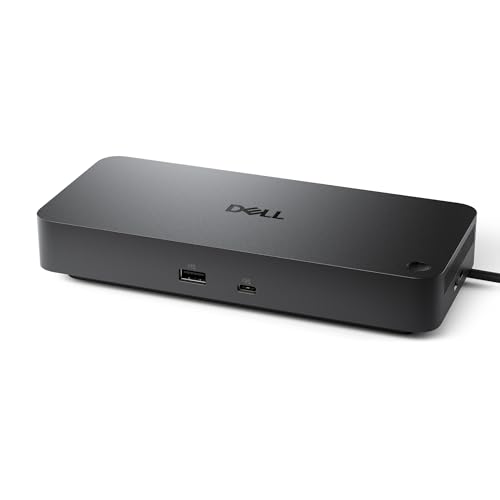
- Up to four high-resolution displays
- Up to 100W power delivery
- Three-year advanced-exchange warranty
Best For: Managed business workstations and quad-display setups
Best for Triple Displays

- Up to 4K + 2K + 2K output
- 100W charging with adapter included
- Six 10Gbps USB ports
Best For: Productivity users building a three-monitor desk
Best Dual-Monitor Value

- Dual 4K monitor support at 60Hz
- Works with USB-C and USB 3.0 hosts
- Six USB 3.0 ports plus Ethernet
Best For: Productivity desks needing two external monitors
Best All-Around Expansion

- HDMI and DisplayPort support for dual monitors
- 10Gbps USB, Ethernet, audio, and card readers
- Up to 85W pass-through charging
Best For: Versatile home-office and productivity setups
Best for High-Refresh Windows Setups

- Dual DisplayPort with up to dual 4K at 60Hz
- Up to 8K at 30Hz on one display
- 2.5Gbps Ethernet and 10Gbps USB
Best For: Windows multi-monitor and high-bandwidth desks
Best Budget Dual-Display Option

- Two DisplayPort outputs plus HDMI and VGA
- 4K at 60Hz through DP and HDMI
- 100W PD input with basic USB connectivity
Best For: Simple dual-monitor office setups and mixed displays
Flexible Triple-Screen Hub
WAVLINK 12-in-1 DisplayPort Dock

- Dual DisplayPort plus HDMI output
- Up to three 1080p displays on Windows
- 85W charging, Ethernet, SD/TF, and audio
Best For: Windows multi-monitor workstations needing extensive peripheral connectivity
Versatile Video Output

- Dual HDMI, DisplayPort, and VGA outputs
- Up to 4K output on selected connections
- 87W charging and three USB 2.0 ports
Best For: Mixed-monitor setups requiring VGA alongside HDMI and DisplayPort
Best Enterprise Pick – Dell Pro WD25 Docking Station
If you need a docking station with DisplayPort for a managed office or hybrid-work setup, the Dell Pro WD25 combines broad compatibility with up to 100W power delivery. It supports up to four high-resolution displays and includes DisplayPort, HDMI, USB, and Ethernet connectivity.
Best For: Business users and IT-managed workstations that need quad-display support, dependable connectivity, and long-term manageability.
Pros:
- Supports up to four high-resolution displays.
- Delivers up to 100W of power to compatible laptops.
- Works with Windows, Ubuntu, Red Hat Enterprise Linux, and ChromeOS systems.
- Includes a three-year limited hardware warranty with advanced exchange.
Cons:
- Its enterprise-focused features may be more than casual users need.
- Display support and charging depend on the connected computer and setup.
The WD25 is a strong choice when workplace manageability and multi-monitor expansion matter as much as port selection. Its recycled-material construction and reduced standby power use add useful sustainability benefits.
Best for Triple Displays – WAVLINK DisplayLink Dock
The WAVLINK is a docking station with DisplayPort designed for users who want up to three external monitors from one USB-C connection. It combines 4K and 2K display outputs with 100W charging, six 10Gbps USB ports, and Gigabit Ethernet.
Best For: Home offices, coding desks, stock-trading dashboards, online learning, and mixed Mac-and-Windows environments.
Pros:
- Supports up to 4K + 2K + 2K across three displays.
- Provides 100W power delivery with a 130W adapter included.
- Offers six 10Gbps USB ports and Gigabit Ethernet.
- Supports many USB-C, USB4, and Thunderbolt 3/4 computers.
Cons:
- DisplayLink driver installation is required for M-series Macs.
- It does not support USB-A laptops or gaming consoles.
- It is not recommended for gaming or HDCP-protected 4K streaming.
This dock is especially practical for productivity-focused triple-screen setups. Check that the laptop supports USB-C video output, and plan for driver installation when using a compatible Mac.
Best Dual-Monitor Value – Plugable UD-6950Z Dock
For a straightforward docking station with DisplayPort and dual-monitor support, the Plugable UD-6950Z provides DisplayPort and HDMI outputs, six USB 3.0 ports, Gigabit Ethernet, and an audio jack. It supports two 4K monitors at 60Hz through DisplayLink technology.
Best For: Office productivity users who want dual 4K displays and broad Windows, macOS, or ChromeOS compatibility.
Pros:
- Supports two 4K monitors at 60Hz through DisplayPort or HDMI.
- Works with USB-C and USB 3.0 host connections.
- Includes six USB 3.0 ports, Gigabit Ethernet, and audio connectivity.
- Offers plug-and-play operation on Windows and ChromeOS.
Cons:
- It does not charge the host computer.
- Mac users need to install a driver, and Linux is not supported.
- It is intended for productivity rather than gaming or protected streaming.
The UD-6950Z makes sense if monitor expansion and peripheral connectivity are the priorities and laptop charging is not required. Its flexible host support is useful for shared desks and mixed-computer environments.
Best Windows Expansion Hub – Selore 17-in-1 Dock
The Selore 17-in-1 is a docking station with DisplayPort for Windows users who need extensive expansion in a single vertical unit. It combines three HDMI ports, two DisplayPort outputs, fast USB, card readers, Gigabit Ethernet, and approximately 85W laptop charging from a 100W PD input.
Best For: Windows multitaskers, creative professionals, and data-heavy workstations using multiple monitors and memory cards.
Pros:
- Offers 17-in-1 connectivity with three HDMI and two DisplayPort outputs.
- Supports three extended displays on compatible Windows laptops.
- Includes 10Gbps USB, SD and microSD readers, and Gigabit Ethernet.
- Provides approximately 85W pass-through charging from 100W PD input.
Cons:
- Windows triple-display operation uses specific MST port combinations and resolution limits.
- Mac use is limited to mirror mode rather than three independent displays.
- An 87W-or-higher PD power adapter is required and sold separately.
This dock is a feature-rich option for a Windows workstation that needs displays, storage-card access, and high-speed peripherals together. Before buying, verify the laptop’s video capabilities and budget for the separate power adapter.
Best All-Around Expansion – Anker 11-in-1 USB-C Dock
If you need a docking station with DisplayPort for everyday productivity, the Anker 11-in-1 hub combines dual-display support with a broad mix of connectivity. It includes HDMI, DisplayPort, Ethernet, SD and microSD card slots, audio, and fast USB data ports in a compact aluminum enclosure.
Best For: Windows, ChromeOS, and compatible Mac users who want versatile desk connectivity and dual-monitor support.
Pros:
- Includes both 4K HDMI and 4K DisplayPort outputs for two external displays.
- Offers 11 ports, including 10Gbps USB-C and USB-A data connections, Ethernet, audio, and card readers.
- Supports up to 85W pass-through charging and comes with an 18-month warranty.
Cons:
- Dual displays are limited to identical mirroring on macOS.
- Requires a separate charger for pass-through charging.
- Not compatible with Linux, and display output requires HDMI or DisplayPort rather than USB-C.
This is a strong general-purpose choice when port variety matters as much as DisplayPort support. Check your laptop’s DP Alt Mode and Power Delivery compatibility before buying.
Best for High-Refresh Windows Setups – WAVLINK Triple-Monitor Dock
For a Windows laptop that needs a docking station with DisplayPort and high-refresh display support, the WAVLINK 12-in-1 dock offers two DisplayPort outputs, HDMI, fast USB, 2.5Gbps Ethernet, and card readers. Its headline display capabilities depend on a compatible DP 1.4 and DSC setup.
Best For: Windows users building multi-monitor workstations, gaming desks, or presentation setups.
Pros:
- Supports up to 8K at 30Hz on a single display and dual 4K at 60Hz through DisplayPort under the stated conditions.
- Provides two DisplayPort outputs, HDMI, 10Gbps USB-A and USB-C, SD/TF slots, audio, and 2.5Gbps Ethernet.
- Offers up to 85W laptop charging from a 100W Power Delivery input and includes a two-year warranty.
Cons:
- Not compatible with macOS.
- High-resolution and high-refresh modes require DP 1.4 with DSC; older systems may provide less.
- The charger is not included, and the laptop must support charging and video over USB-C.
The WAVLINK is the most display-focused option here for compatible Windows hardware, especially if refresh rate and network speed are priorities. Verify your laptop’s USB-C, DP 1.4, and DSC support first.
Best Budget Dual-Display Option – MOKiN 8-in-1 DisplayPort Dock
The MOKiN 8-in-1 is a straightforward docking station with DisplayPort for laptops that need two DP connections plus HDMI or VGA. It also adds 100W PD input and basic USB 2.0 ports, making it suited to simpler monitor and peripheral setups.
Best For: Dell, HP, and Lenovo laptop users who need flexible video outputs and basic USB connectivity.
Pros:
- Includes two DisplayPort outputs, HDMI, and VGA for flexible monitor compatibility.
- Supports up to 4K at 60Hz through the DisplayPort and HDMI outputs, with VGA up to 1080p at 60Hz.
- Provides a 100W PD charging input and an 18-month brand warranty.
Cons:
- USB-C and USB-A data ports are USB 2.0, limited to 480Mbps.
- MacBook connections support mirror mode only, not extended mode.
- Requires a full-featured USB-C port supporting display, charging, and data protocols.
This compact adapter makes sense when video-output flexibility is more important than fast file transfers. It is a practical fit for office monitors and legacy VGA displays, provided your laptop has the required USB-C capabilities.
Flexible Triple-Screen Hub – WAVLINK 12-in-1 DisplayPort Dock
If you need a docking station with DisplayPort for a Windows workstation, the WAVLINK 12-in-1 model combines dual DisplayPort outputs with HDMI, charging, networking, and storage connections in one compact aluminum dock. It can drive one 4K display or up to three 1080p displays when the host supports DP 1.4.
Best For: Windows users building a multi-monitor workstation for meetings, presentations, stock analysis, or programming.
Pros:
- Supports a single 4K@60Hz display or triple 1080P@60Hz displays under DP 1.4.
- Includes dual DisplayPort, HDMI, Gigabit Ethernet, SD/TF slots, USB ports, and audio/mic connections.
- Provides up to 85W laptop charging output from a compatible 100W input.
- Offers broad operating-system compatibility and a two-year product guarantee in the listing notes.
Cons:
- The charger and charging cable are not included.
- The host USB-C port must support video output and charging.
- On macOS, connected external displays can only show the same content.
WAVLINK is a feature-rich choice when connectivity matters as much as DisplayPort output. Check your laptop’s USB-C specifications first, particularly if you plan to use multiple extended displays.
High-Resolution Display Hub – Selore Triple-Monitor DisplayPort Dock
The Selore dock is a strong option if your search for a docking station with DisplayPort prioritizes high-resolution output and flexible monitor connections. It offers DisplayPort, dual HDMI, VGA, USB ports, Gigabit Ethernet, and up to 85W laptop charging from a compatible power supply.
Best For: Windows users who want three independent 4K displays or a single 8K DisplayPort monitor.
Pros:
- Supports one 8K@30Hz DisplayPort display or three independent 4K monitors on Windows with DP 1.4.
- Includes dual HDMI, DisplayPort, VGA, USB-A/USB-C data ports, Ethernet, and a monitor-control button.
- Delivers up to 85W to the laptop when supplied with a compatible 100W input.
- Its aluminum chassis is designed for heat dissipation during extended multi-monitor use.
Cons:
- macOS supports mirrored content rather than independent extended displays.
- The connected laptop must have Thunderbolt 3/4/5 or a full-featured USB-C port with DisplayPort Alt Mode.
- The 8K DisplayPort mode is specified at 30Hz.
Choose this Selore model for Windows setups where display flexibility is the main priority. Its monitor button and wired Gigabit Ethernet add practical convenience for desk-based productivity.
Versatile Video Output – HoDo 8-in-1 DisplayPort Dock
For shoppers seeking a docking station with DisplayPort and several legacy video options, this HoDo 8-in-1 dock provides dual HDMI, DisplayPort, VGA, USB 2.0, and USB-C power input. It supports up to 4K output on selected connections, though using VGA limits the connected displays to 1080p.
Best For: Laptop users who need to connect HDMI, DisplayPort, and VGA monitors or projectors from one compatible USB-C port.
Pros:
- Offers dual HDMI, one 4K@60Hz DisplayPort, and 1080p VGA video outputs.
- Can support dual or triple 4K display configurations when the laptop and signal standards allow.
- Provides up to 87W laptop charging output from up to 100W input.
- Three USB 2.0 ports suit keyboards, mice, and other lower-speed peripherals.
Cons:
- Using VGA reduces all connected displays to a maximum of 1080p.
- USB data ports are limited to USB 2.0 speeds of up to 480Mbps.
- The power adapter and cable are not included, and macOS mirrors the external displays.
This HoDo dock makes sense for mixed-monitor environments, especially offices that still use VGA projectors or displays. Confirm that your laptop’s USB-C port supports DisplayPort Alternate Mode and power delivery before buying.
How We Picked the Best Docking Station with Displayport
We focused on docks that offer at least one DisplayPort output and evaluated the features that matter in everyday laptop setups: display support, connection standards, power delivery, port variety, operating-system compatibility, and ease of use. The selection includes USB-C and USB 3.0 models, dual- and triple-monitor options, and docks with HDMI or VGA for mixed-display environments.
Display technology is especially important. Some docks use native video output through USB-C DisplayPort Alt Mode, while DisplayLink models rely on software and can support additional screens on compatible systems. That difference affects setup, performance, and compatibility, so check the manufacturer’s requirements before buying.
Quick Comparison
- Best for a business laptop: Dell’s WD25 emphasizes mainstream office compatibility, charging, and familiar DisplayPort and HDMI connections.
- Best for several monitors: WAVLINK and Selore triple-display docks are suited to expanded workspaces, provided your computer supports the required video technology.
- Best for mixed peripherals: Plugable and Anker options balance monitor outputs with USB accessories and everyday connectivity.
- Best for flexible legacy setups: Models with VGA, multiple DisplayPort outputs, or USB-A ports can accommodate older monitors and accessories.
Key Buying Factors for a Docking Station with Displayport
Monitor Count and Resolution
Decide whether you need one, two, or three external displays, then verify the supported resolution and refresh rate for each output. “Triple monitor” claims may depend on the host laptop, operating system, and whether DisplayLink software is required.
Host Connection and Compatibility
A USB-C port does not always support video. Look for DisplayPort Alt Mode, Thunderbolt, or USB4 support when using a native video dock. DisplayLink docks can work differently, but they typically require drivers and may have limitations for protected video, gaming, or high-frame-rate content.
Power Delivery
For a one-cable desk, compare the dock’s pass-through wattage with your laptop’s charger requirement. A dock rated for 85W or 100W may still deliver less power in practice, and many do not include a wall charger.
Ports and Bandwidth
Count the USB-A and USB-C ports you actually use, and check whether they are USB 2.0, USB 3.x, or faster. Ethernet, audio, SD card access, and a second video output can be more valuable than a long list of low-speed ports.
Who Should Buy Which Docking Station with Displayport?
Choose a compact hub-style model if you travel frequently or only need a monitor, keyboard, mouse, and basic charging. Pick a full-size dock with robust power delivery when it will remain on a desk and connect several accessories every day. A DisplayLink model is worth considering for multiple screens on compatible Mac or Windows systems, while a native USB-C or Thunderbolt dock is usually preferable for simpler setup and latency-sensitive work.