Keeping sewing patterns, fabric pieces, and works in progress together can make every project easier to start and finish. The best organizers with labels help you identify contents quickly while protecting supplies from dust, folds, and misplaced pieces.
We selected 10 options ranging from button-closure folders and zippered project bags to fabric storage boxes, organizer boards, and sew-it-yourself patterns. Use the guide below to match the format and capacity to your sewing routine.
Best 10 Sewing Pattern Organizers with Labels Picks for 2026
Best Upright Storage
Button-Closure Pattern Organizer

- 20 folders with rigid 1.2-inch spines
- Spine label area for pattern numbers and sizes
- Holds envelopes or cut pattern pieces
Best For: Shelf-based sewing pattern storage
Best Fabric Inventory System
Labeled Storage Box and Boards
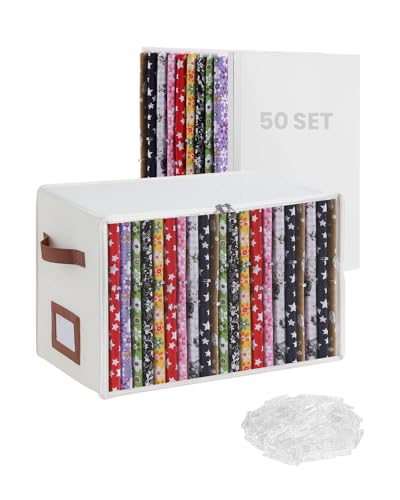
- Includes box, 50 boards, and 200 clips
- Side label slot and transparent front window
- Zippered design helps protect stored fabric
Best For: Structured, visible quilting-fabric storage
Best Label Quantity
A3 Project Bags with Floss Stickers

- Five gusseted bags with mesh visibility
- Index label windows and front pockets
- Includes 2,400 numbered floss labels
Best For: Thread-heavy sewing and embroidery projects
Best for Bulk Fabric Storage
300-Piece Fabric Organizer Board Set

- 300 boards in three sizes
- Includes bags and 500 clips
- Upright, visible storage system
Best For: Large fabric and pattern collections
Best for a Simple Sewing Organizer

- Designed for sewing use
- Steel construction
- Single one-size organizer
Best For: Simple sewing organization
Best for Labeled Projects

- Five bags with label areas
- Clear mesh for quick viewing
- Zippers and handles for portability
Best For: Multiple compact sewing and craft projects
Best Fabric Storage System

- Includes 2 boxes, 50 boards, and 300 clips
- Clear windows make fabrics easy to identify
- Foldable, stackable 600D Oxford construction
Best For: Quilters and sewists organizing fabric by project or color
Best Organizer Tote Pattern
Simplicity S9527 Organizer Tote Pattern

- Printed tissue pieces and illustrated instructions
- Lists suggested fabrics and required notions
- Customizable tote, bag, and pouch designs
Best For: Beginner and intermediate sewists making organizer bags
Best Makeup Organizer Pattern
Simplicity S8859 Organizer Pattern

- One-size physical pattern for organizers
- Includes illustrated instructions and tissue pieces
- Lists suggested fabrics and required notions
Best For: Intermediate sewists making personalized makeup or supply organizers
Best Upright Storage – Button-Closure Pattern Organizer
If you want sewing pattern organizers with labels that stay orderly on a shelf, this 20-pack uses rigid 1.2-inch spines and kraft paper construction. Each folder is sized for common Simplicity, McCall’s, and Butterick envelopes, while the spine label area helps you identify patterns without sorting through a stack.
Best For: Sewists storing pattern envelopes and cut pattern pieces vertically on a shelf.
Pros:
- Rigid spines let the folders stand like books and resist collapsing.
- Spine label areas support quick pattern-number and size identification.
- Fits 1–2 uncut envelopes or up to 15–20 sheets of cut pieces with instructions.
- Button-and-loop closures help keep contents contained.
Cons:
- The paper construction may offer less moisture resistance than plastic storage.
- The fixed 1.2-inch capacity is less flexible for unusually bulky projects.
This is a focused choice for shelf-based pattern storage, especially if visible spine labels and upright organization matter more than expandable capacity.
Best Multi-Project Carrier – Color-Coded Sewing Project Bags
For crafters seeking sewing pattern organizers with labels for active projects, this six-pack combines vibrant colors, clear mesh windows, and built-in label pockets. The roomy gusseted bags separate larger materials from small notions and make several works in progress easier to identify.
Best For: Quilters and sewists carrying multiple projects, supplies, or works in progress.
Pros:
- Six colors make it easy to sort projects quickly.
- Clear PVC mesh windows provide at-a-glance visibility.
- Built-in label pockets support project names or category markings.
- Double-pocket design separates fabric and patterns from smaller notions.
Cons:
- These are project bags rather than dedicated envelope-sized pattern folders.
- The 17.7 × 13 × 2.8-inch format may be more storage than a small project requires.
Choose this set when project mobility and quick visual identification are priorities. The labels complement the color coding, while handles and gussets make the bags practical for classes, retreats, and travel.
Best Fabric Inventory System – Labeled Storage Box and Boards
If your sewing pattern organizers with labels need to extend to fabric inventory, this 251-piece set provides a more comprehensive storage system. It includes a reinforced Oxford bin, 50 fabric boards, 200 transparent U-clips, a full-front window, and a side label slot for categorizing fabric or projects.
Best For: Quilters organizing folded fabric collections with visible categories and protective storage.
Pros:
- Includes one storage box, 50 boards, and 200 U-shaped clips.
- Boards and clips help keep fabric folded and secured.
- Transparent front window makes colors and patterns easy to inspect.
- Enclosed zippered construction helps shield fabric from dust, lint, and pet hair.
Cons:
- It is primarily a fabric organizer, not a dedicated sewing-pattern folder.
- The box occupies a substantial 15.7 × 9 × 11.6-inch footprint.
This system suits makers who want fabric organization and labeling together. The included boards and clips add preparation work, but they create a more consistent inventory than loose folded yardage.
Best Label Quantity – A3 Project Bags with Floss Stickers
For sewing pattern organizers with labels that also support detailed thread sorting, this five-pack includes A3 gusseted project bags and 20 floss sticker sheets. The mesh windows, index label windows, front pockets, and color variety help separate several projects while the stickers organize bobbins, floss drops, and thread collections.
Best For: Embroidery, cross-stitch, needlepoint, quilting, and sewing projects with extensive floss or thread supplies.
Pros:
- Five colors help distinguish projects by type or owner.
- Index label windows provide a dedicated place for project identification.
- Includes 2,400 self-adhesive number labels across 20 sheets.
- Gussets, handles, and separate pockets accommodate larger project supplies and notions.
Cons:
- The bags are sized for projects and supplies rather than standard pattern-envelope filing.
- The small number stickers are specialized for floss organization and may be unnecessary for pattern-only storage.
This is a strong option when labeling goes beyond naming projects. It offers flexible project storage plus an unusually large quantity of numbered stickers, making it especially useful for thread-heavy crafts.
Best for Bulk Fabric Storage – 300-Piece Fabric Organizer Board Set
For shoppers comparing sewing pattern organizers with labels, this large fabric-board set offers a book-style system for sorting patterns, fabrics, and other flat craft materials. The included clips and storage bags add structure and help keep supplies visible and protected.
Best For: Crafters who need a high-capacity organizer for fabric, sewing patterns, and related materials.
Pros:
- Includes 300 boards in three sizes, 300 storage bags, and 500 clips.
- Boards can be stood upright for visible, book-like storage.
- Thick 24 pt. cardstock provides sturdy support.
- Smooth-tooth clips are designed to hold materials without snagging.
Cons:
- The 300-piece quantity may be more than smaller sewing spaces require.
- Boards are cardstock rather than a rigid plastic material.
This is a strong choice when quantity and upright organization matter most. Its flexible sizing and included bags make it useful beyond patterns, though smaller collections may not need such a large set.
Best for a Simple Sewing Organizer – Sew Organized Pattern
Among sewing pattern organizers with labels, the Sew Organized Pattern is a straightforward sewing-focused option. The supplied details identify it as a single, one-size product made from steel, making it suited to shoppers seeking a simple dedicated organizer rather than a large multi-piece system.
Best For: Sewists who want a basic, single-item organizer for sewing use.
Pros:
- Designed specifically for sewing organization.
- One-size format keeps the choice simple.
- Steel construction offers a durable material option.
Cons:
- The supplied information does not specify included labels or labeling features.
- Only one item is included, so it may not suit large pattern collections.
- Dimensions and storage capacity are not provided.
This product may appeal to shoppers prioritizing simplicity and a sewing-specific design. However, buyers needing clearly documented labeling features or substantial capacity should verify the listing details before purchasing.
Best for Labeled Projects – Five-Pack Sewing Project Bags
For sewing pattern organizers with labels that also keep works in progress together, these five project bags combine labeled storage with visibility and portability. Their clear mesh construction lets you identify contents quickly while the zipper and handle make each bag practical between crafting sessions.
Best For: Crafters managing several sewing, quilting, embroidery, knitting, or crochet projects at once.
Pros:
- Five individual bags help separate multiple projects.
- Built-in label areas support identifying patterns, materials, or projects.
- Clear mesh makes contents visible without opening the bag.
- Full zippers and handles support secure, portable storage.
Cons:
- At 9 x 8 x 0.7 inches, each bag may be limiting for bulky supplies.
- The bags are better suited to project kits than oversized fabric storage.
This is the most directly label-focused option in the roundup and a practical fit for rotating projects. It keeps patterns and supplies together, but shoppers with large or bulky materials should consider the compact listed dimensions.
Best Fabric Storage System – 2-Pack Fabric Organizer Boxes
If you want sewing pattern organizers with labels to work alongside a broader fabric-sorting system, this two-box set offers a practical way to arrange materials by project, color, or fabric type. It includes boards and clips for wrapping and securing fabric, while the clear windows make contents easier to identify.
Best For: Quilters and sewists who need organized, visible fabric storage for multiple projects.
Pros:
- Includes two fabric boxes, 50 organizer boards, and 300 clear U-shaped clips.
- Clear front windows help you view colors and patterns without opening the boxes.
- Reinforced 600D Oxford construction, rigid panels, removable bottom boards, and side handles support upright, stackable storage.
Cons:
- Fabrics are not included.
- Capacity varies with fabric thickness, and each box holds at least 16 wrapped poster boards.
- The boxes are not water resistant.
This is a storage-focused option rather than a pattern-making kit, but its boards, clips, and viewing windows can make a sewing area easier to sort and maintain.
Best Organizer Tote Pattern – Simplicity S9527 Organizer Tote Pattern
Simplicity S9527 is a physical sewing pattern for making organizer totes, bags, and pouches. For shoppers comparing sewing pattern organizers with labels, the envelope provides printed pattern pieces, illustrated instructions, suggested fabrics, and required notions to help plan the project.
Best For: Beginner and intermediate sewists making a customizable organizer tote or related bags.
Pros:
- Includes printed tissue pattern pieces and step-by-step illustrated instructions.
- The envelope identifies suggested fabrics and needed notions before cutting.
- Supports personalization with fabrics, prints, trims, and embellishments.
Cons:
- It is a one-size physical pattern, so finished measurements should be checked before cutting.
- The product is a pattern rather than a completed organizer.
This pattern suits sewists who want to make a reusable organizer bag with their own fabric choices. Its labeled envelope information makes material planning more straightforward.
Best Makeup Organizer Pattern – Simplicity S8859 Organizer Pattern
Simplicity S8859 is a one-size physical sewing pattern for organizers, making it a useful choice for sewists researching sewing pattern organizers with labels. The envelope includes printed tissue pieces, illustrated instructions, suggested fabrics, and notions so you can prepare before starting.
Best For: Intermediate sewists who want to make personalized makeup or supply organizers.
Pros:
- Includes printed pattern pieces and clear step-by-step sewing instructions.
- Provides suggested fabric and notions information on the envelope.
- Allows customization with selected fabrics, prints, trims, and embellishments.
Cons:
- It is marked for intermediate skill level.
- One-size sizing means finished measurements should be reviewed before cutting.
- This listing supplies the pattern, not a finished organizer.
Choose this pattern if you are comfortable with intermediate sewing and want a personalized organizer project. It offers the planning details needed to gather materials before cutting.
How We Picked the Best Sewing Pattern Organizers with Labels
We focused on organization systems that make sewing supplies easier to identify, store, and transport. The selection includes ready-to-use bags and boxes, labeled project storage, organizer boards, and sewing patterns for making custom storage. We considered capacity, closure style, portability, labeling options, material protection, and how well each format suits patterns, fabric, notions, or active projects.
Because storage needs vary, a large multi-pack is not automatically better than a compact organizer. The right choice depends on whether you are sorting flat paper patterns, grouping fabric cuts, carrying embroidery supplies, or building a dedicated sewing-room system.
Quick Comparison
| Organizer type | Best for | What to check |
|---|---|---|
| Button-closure folders | Flat paper patterns and small sets | Capacity and closure security |
| Zippered project bags | Active quilting, needlepoint, and embroidery projects | Dimensions, handles, and label visibility |
| Fabric storage boxes | Fabric cuts and organized stacks | Board size, rigidity, and dust protection |
| Organizer boards | Folding fabric into uniform bundles | Quantity, board dimensions, and storage space |
| Sewing patterns | Custom-made totes or organizers | Finished size, skill level, and required materials |
Key Buying Factors for Sewing Pattern Organizers with Labels
Capacity and Dimensions
Check the usable interior dimensions against your largest patterns, fabric boards, rulers, and notions. A3 or 8.5-by-11-inch formats can suit many paper patterns, but bulky projects may need deeper bags or boxes.
Labeling and Visibility
Labels are most useful when they can be read without opening the container. Look for dedicated label slots, included sticker sheets, transparent panels, or a surface that accepts removable tags. Clear labels such as “quilting,” “unfinished,” or a project name make retrieval faster.
Protection and Construction
Zippers and button closures help contain loose pieces, while sealed dust bags and lidded boxes provide extra protection during long-term storage. For fabric, sturdy boards reduce wrinkling and keep stacks uniform. Handles are valuable when projects move between a sewing room, class, and storage area.
Portability and Flexibility
Choose lightweight project bags for mobile work and rigid boxes for stable shelf storage. Multi-packs offer flexibility for separating projects, but confirm that each individual organizer is large enough for the intended contents.
Who Should Buy Which Sewing Pattern Organizers with Labels?
Choose button-closure organizers if your priority is sorting paper patterns in a compact format. Zippered bags are better for active projects that include fabric, thread, needles, and instructions. Fabric storage boxes or board sets suit sewists who want folded fabric to remain visible and uniform on shelves.
Buy a larger multi-pack if you rotate several projects or organize by garment, season, or technique. If you prefer a customized solution, a sewing pattern for an organizer tote or supply organizer lets you select fabrics, pockets, and dimensions, but it requires time and sewing skill. Before buying, measure your storage shelves and largest supplies, then choose the simplest format that keeps each project labeled and together.